

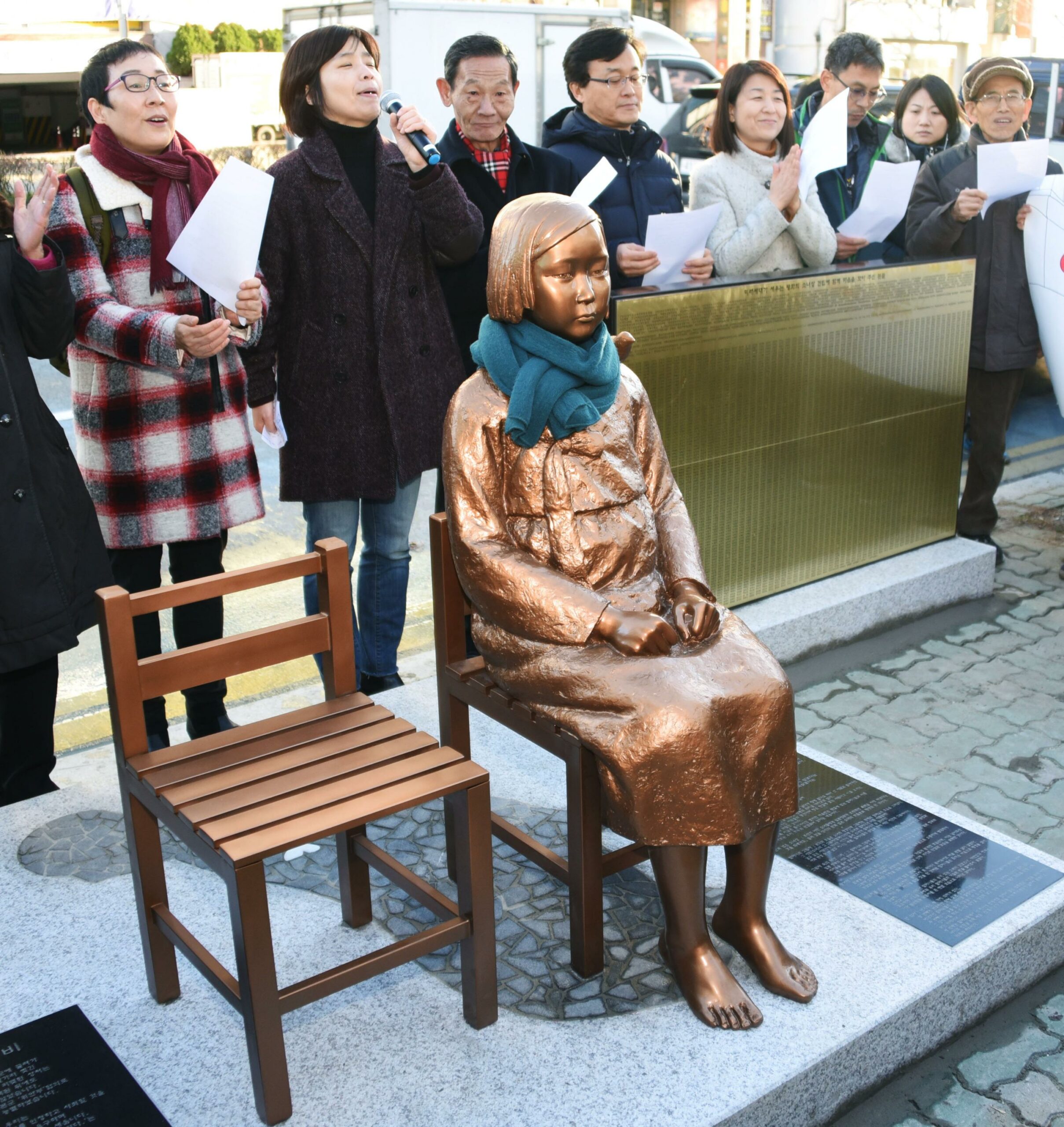
In late December 2015, Japan and South Korea reached an agreement regarding Korean sex slaves taken during World War II—the thousands upon thousands of rape victims whom the Japanese imperial forces euphemistically referred to as “comfort women.” After decades of denial, obfuscation, and minimization, Tokyo finally acknowledged the plight of the Korean victims and agreed to pay more than $8 million million to a fund that would assist the 46 who were then still living.
It was a risky move by both governments: Japanese prime minister Shinzo Abe is an ardent nationalist with a deeply “revisionist” political base—even acknowledging the plight of the women required a bit of a Sister Souljah act for him. And then-still ruling South Korean president Park Geun-hye’s had her own reasons to be wary. Her father, the late Korean dictator Park Chung-hee, had once been an officer in the Japanese colonial forces in Korea; given lingering suspicions, she could scarcely afford to look like she was toadying up to Tokyo. (Then again, as we’ve subsequently learned, Madame Park’s political instincts are far from stellar.)
Stay informed.Stay ahead.
Join Washington Examiner for unlimited access to the news, analysis, and commentary that matter most.
Already a member? Log in
