

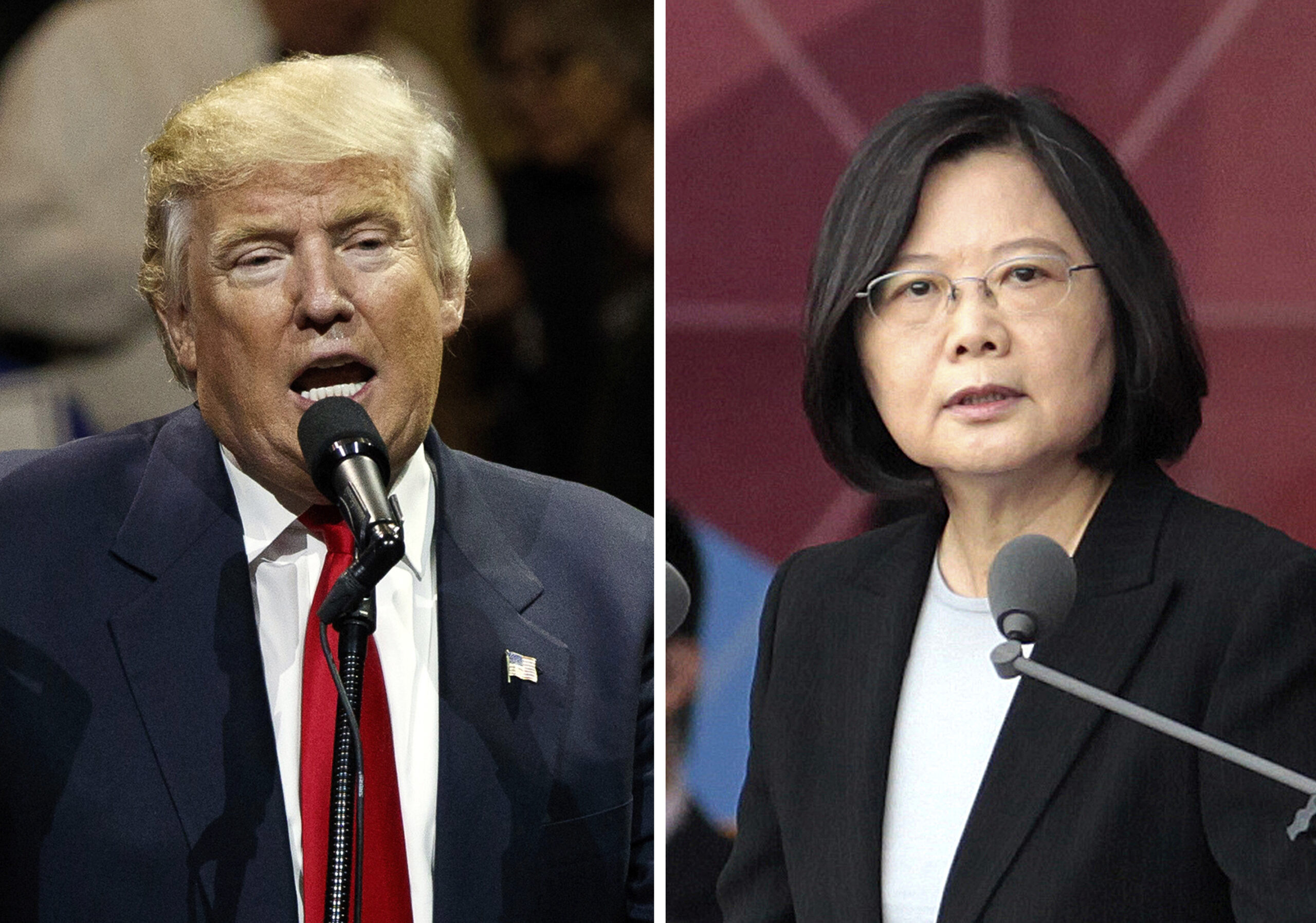
President-elect Donald Trump’s historic phone call with the leader of Taiwan was meant to be provocative.
The phone call on Friday between Trump and Taiwan President Tsai Ing-wen had been planned for months, people involved with the planning told the Washington Post.
Recommended Stories


It was the first time leaders of the two countries have spoken since 1979.
After Trump won the election, his team compiled a list of foreign leaders to arrange calls with.
“Very early on, Taiwan was on that list,” said Stephen Yates, a national security official during the presidency of George W. Bush and an expert on China and Taiwan. “Once the call was scheduled, I was told that there was a briefing for President-elect Trump. They knew that there would be reaction and potential blowback.”
Trump’s team on Sunday downplayed the discussion as a routine congratulatory call. But critics have said it could risk an international incident with China as it broke longstanding U.S. policy.
“There was no policy discussion, and everyone involved is well aware of the ‘One China’ policy,” said Richard Grenell, a former State Department official who has advised the Trump transition effort.
“There are a lot of things that previous Republican presidents, and Democratic presidents, would do that Donald Trump won’t do,” he added. “He’s a man that understands that typical Washington rules are not always best for our foreign policy.”
After China slammed the phone call on Saturday, Trump took to Twitter on Sunday to criticize the country.
Did China ask us if it was OK to devalue their currency (making it hard for our companies to compete), heavily tax our products going into..
— Donald J. Trump (@realDonaldTrump) December 4, 2016
their country (the U.S. doesn’t tax them) or to build a massive military complex in the middle of the South China Sea? I don’t think so!
— Donald J. Trump (@realDonaldTrump) December 4, 2016
On the campaign trail, Trump often lashed out at China, accusing it of manipulating its currency and vowing to take a harsher stance against the country.
“He campaigned on an ‘America first’ platform,” GOP pollster Frank Luntz told the Washington Post. “Calls like this may upset the diplomats, but they communicate to Americans that he’s not going to play by the same rules and isn’t just talking differently but will act differently.”
