

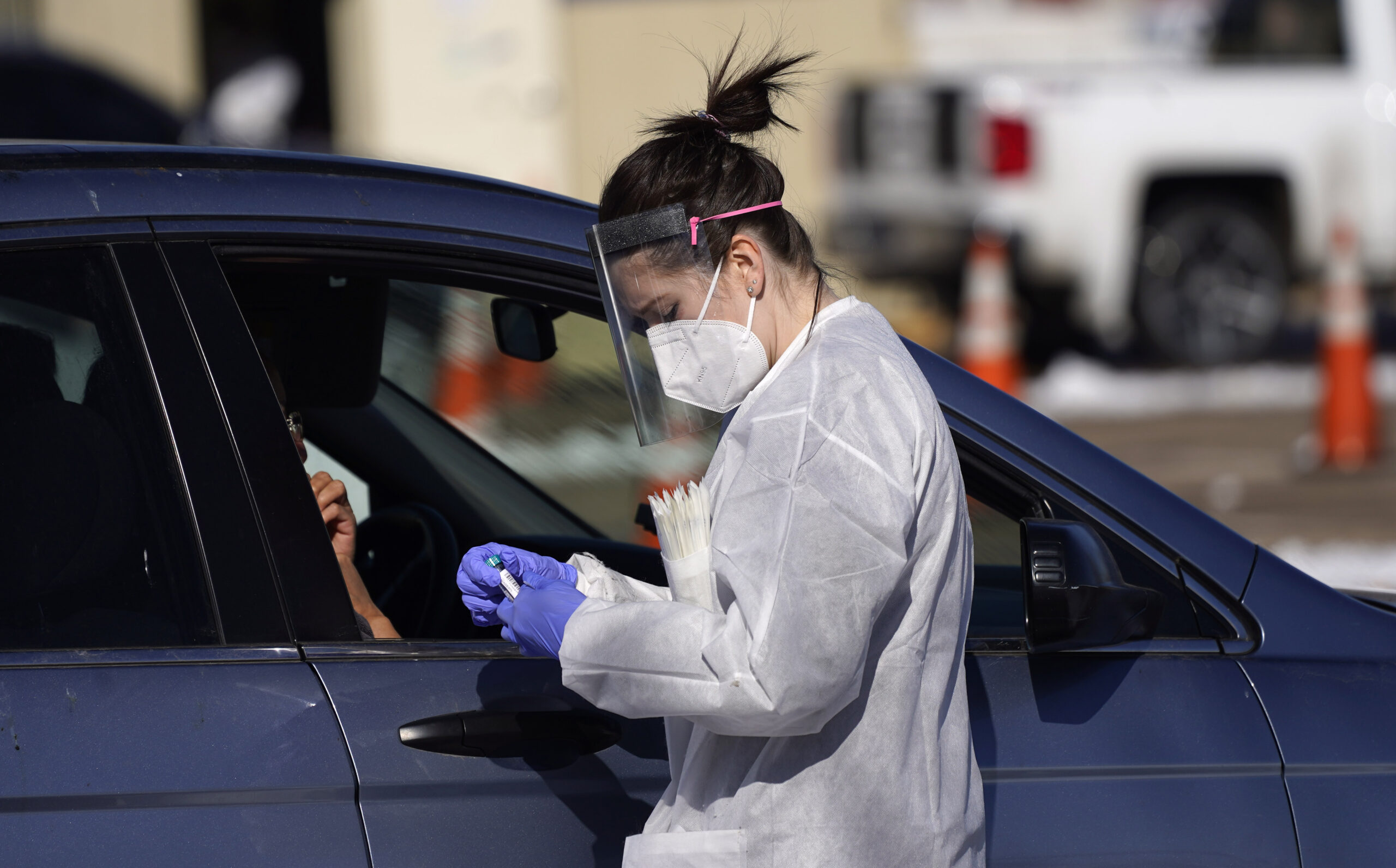
The United States has reported record-high cases over the past week, while hospitalization rates climbed.
The rolling average of new cases confirmed each day hit an all-time high at more than 70,000, according to Johns Hopkins University data. To date, the U.S. has confirmed more than 8.8 million cases.
Recommended Stories


The latest surge has pummeled the Midwest, where test positivity rates have sometimes exceeded 30%. Surges in the Dakotas have been the most acute, with South Dakota’s average test positive rate now at 43.4% and North Dakota’s at 11%.
About 44,000 patients were hospitalized Tuesday, and the rate is approaching the most recent peak in July, when a surge in cases ravaged the Sun Belt. Spikes in cases portend increases in hospitalizations, followed by high death rates.
Hospital admissions in some Midwestern states have already reached record highs. In Iowa, 596 COVID-19 patients are hospitalized, up from 564 on Tuesday. Hospitalizations on Tuesday and Monday were also highs for Iowa, the Des Moines Register reported. Meanwhile, cases in Michigan have spiked to levels higher than they were in March and April, yet hospitalizations and deaths have not reached highs close to peaks in the spring, the Detroit Free Press reported.
The federal government struck a deal worth $375 million with Eli Lilly to provide the first doses of its experimental antibody treatment for COVID-19 if the therapy is authorized by the Food and Drug Administration. The government will get an initial 300,000 doses over the next two months and up to 650,000 doses next year, the Department of Health and Human Services announced Wednesday.
If the FDA approves the treatment for public use, the federal government will allocate the doses to state and territorial health departments, which, in turn, will determine which healthcare facilities get access to the new treatment. The drug would be free to patients, though healthcare professionals can charge for administering the drug through an IV.
Medicare and Medicaid announced a plan Tuesday to make the first approved coronavirus vaccines free for beneficiaries.
“The rule removes any existing ambiguity surrounding Medicare’s coverage of the COVID-19 vaccine,” said Seema Verma, administrator of the Centers for Medicare & Medicaid Services.
The plan eliminates all out-of-pocket costs for the poor and the elderly, a change from current policy, which allows for vaccine administration charges. Additional costs for administering the vaccines are “strictly prohibited,” Verma told reporters Wednesday.
Dr. Anthony Fauci, the government’s top infectious disease expert, predicted the U.S. will not return to pre-pandemic normal for at least another year. During a teleconference interview for the University of Melbourne, he said that reopening the country to the way it was before the coronavirus pandemic will be a “gradual process.”
“I think it will be easily by the end of 2021 and perhaps even into the next year before we start having some semblances of normality,” Fauci said. The health expert defined “normal” as members of the public being able to attend movie theaters without fear of being infected with the virus and restaurants being able to open at 100% capacity.
Newark, New Jersey, was placed under a citywide shutdown Tuesday evening to remain in effect through Nov. 10. All stores except supermarkets, pharmacies, and gas stations will have to close at 8 p.m. Restaurants and bars must close indoor operations at that time but can resume service to customers outside until 11 p.m.
French President Emmanuel Macron announced sweeping restrictions for a second time to stem the coronavirus pandemic on Wednesday. The shutdowns start Thursday and will be in effect through Dec. 1, at least. All nonessential businesses, such as retail stores and restaurants, will close with financial assistance from the government. Schools and supermarkets will remain open.
German Chancellor Angela Merkel reinstated coronavirus restrictions to last through November as new coronavirus cases grow by the thousands each day. The restrictions, to go into effect Nov. 4, will not be as all-encompassing as they were in the spring, when the pandemic ravaged Europe. Bars and restaurants would have to close, and large events would be banned. Schools and nurseries, though, could remain open.
Next year’s Boston Marathon, scheduled for the third Monday in April, has been postponed due to concerns about the coronavirus. The organizers will try to choose a later date in the fall.
“Prioritizing the safety of participants, volunteers, spectators, and community members, we continue to assess all elements of the race including a potential reduced field size or weekend date,” said Tom Grilk, CEO of the Boston Athletic Association.
