

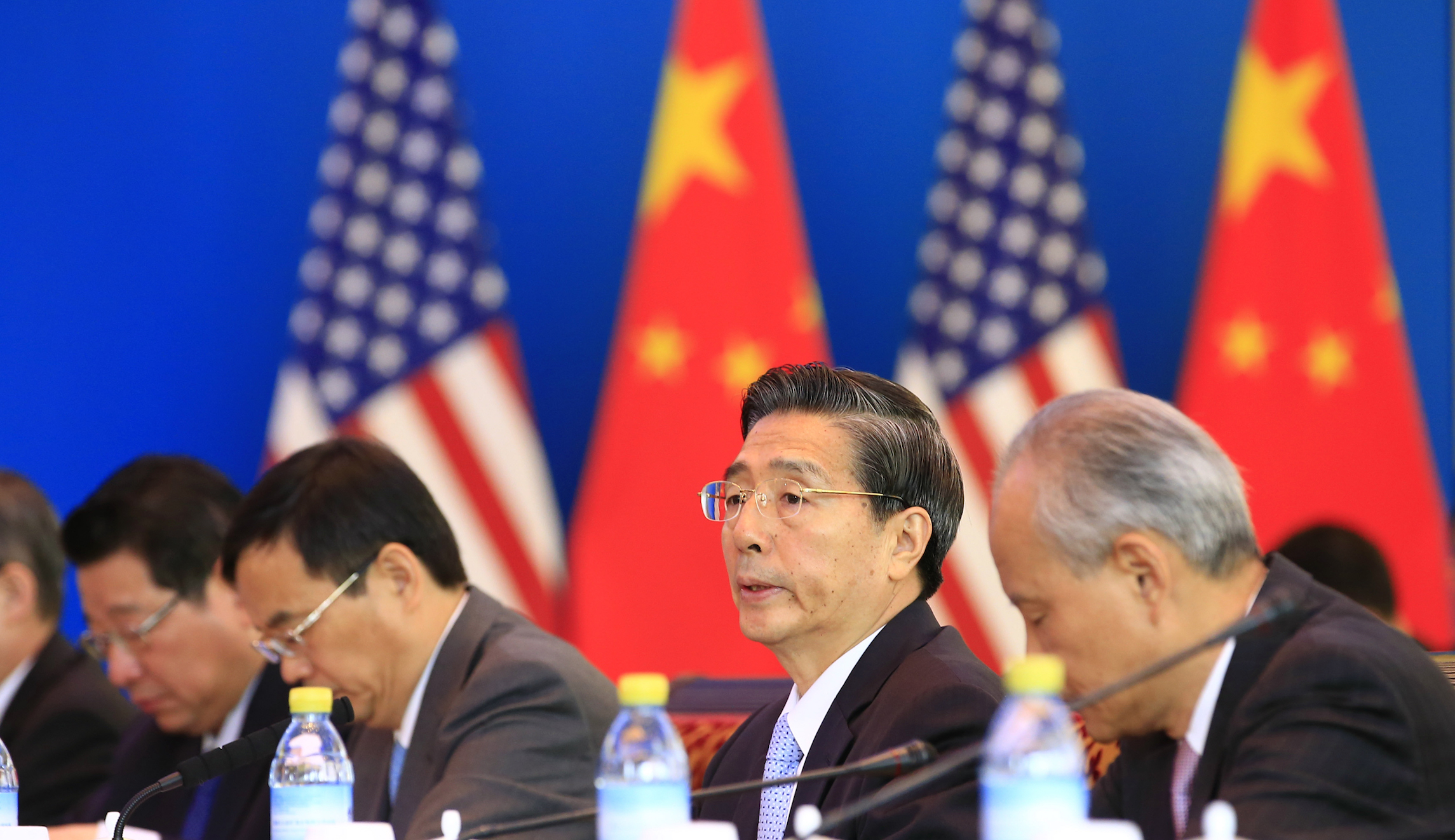
China has used Western struggles with the coronavirus pandemic to help avoid domestic political backlash against Beijing, according to the security official tasked with maintaining regime stability.
“During the pandemic, we seized important achievements in a short time and have posed a great contrast between ‘China’s orderliness’ and ‘the West’s chaos,’” Politburo member Guo Shengkun wrote in a new book of articles published by the Chinese Communist Party.
Recommended Stories


That statement calls attention to how Beijing regards the coronavirus pandemic as an opportunity to gain credibility at home at the expense of the democratic nations, an effort that stands to benefit from the resurgence of the coronavirus in Europe and the United States. Guo’s reflection illuminates one aspect of a broader messaging strategy that seeks to argue that Chinese Communist rule is more efficient than Western systems of government.
“With its magical power, the ‘Five-Year Plan’ has ushered in more and more surprises to China and the world, bringing out the unique and tremendous charm of the Chinese system and Chinese governance,” Chinese vice minister of civil affairs Zhan Chengfu wrote last month, according to the China Media Project. “While China is drawing up plans for the next generation, Western countries are planning only for the next election.”
Chinese officials have defended their political system in comparison to the Western democratic model from the early days of the pandemic, Chinese Foreign Minister Wang Yi argued that Beijing’s implementation of strict lockdowns to contain the pandemic displayed “the advantage of China’s system” at the Munich Security Conference in February.
“The West needs to eschew the subconscious belief in the superiority of its civilization and abandon its prejudices and anxieties regarding China,” he said.
Still, Guo’s boast accompanies an acknowledgment that Chinese Communist officials also fear that “the backdrop of U.S.-China confrontation” could set the table for the instability of the regime on the mainland.
“Conventional and unconventional security challenges are on the rise, they are now more overlapped, interconnected, penetrating and can be easily magnified,” wrote Guo, the regime’s domestic security chief, according to the South China Morning Post. “[They] could constitute systemic risks if not handled properly.”
That comment exposes the motive for arresting the Chinese academics who criticized the party bureaucracy’s initial response to the emergence of the coronavirus pandemic. The dissidents anchored their rebuke in the way party officials censored and punished the doctors who first tried to warn about the emergence of a novel coronavirus.
“It only shows that the government’s long-term tight control of society and people has almost completely destroyed the organization and self-help capabilities of Chinese society,” Shanghai-based constitutional scholar Zhang Xuezhong wrote in May.
Zhang and other dissident intellectuals were detained following such criticisms for varying lengths of time before being released, but Chinese officials have begun targeting the activists who promote their work.
“Anyone who helps dissidents to contact journalists, lawyers, or offer help to their families will be prosecuted,” Chinese human rights activist Hu Jia told Voice of America, a U.S.-funded media outlet. “So many people have been ‘disappeared,’ or invited to ‘drink tea,’ or just locked up.”
Secretary of State Mike Pompeo and other senior U.S. officials have amplified the complaints about censorship levied by internal dissidents. White House deputy national security adviser Matt Pottinger argued that central government was directly responsible for the censorship in a speech earlier this year delivered in Mandarin. Chinese officials protested that U.S. officials were trying “to drive a wedge between the CPC and the Chinese people,” and Guo underscored the importance of defending the Chinese Communist Party’s governance system going forward.
“[We] must firmly safeguard the state’s political safety, regime safety and ideological safety,” he wrote. “[We] must defend against and strike hard on sabotage, subversion and ‘splittism’ by hostile forces.”
