
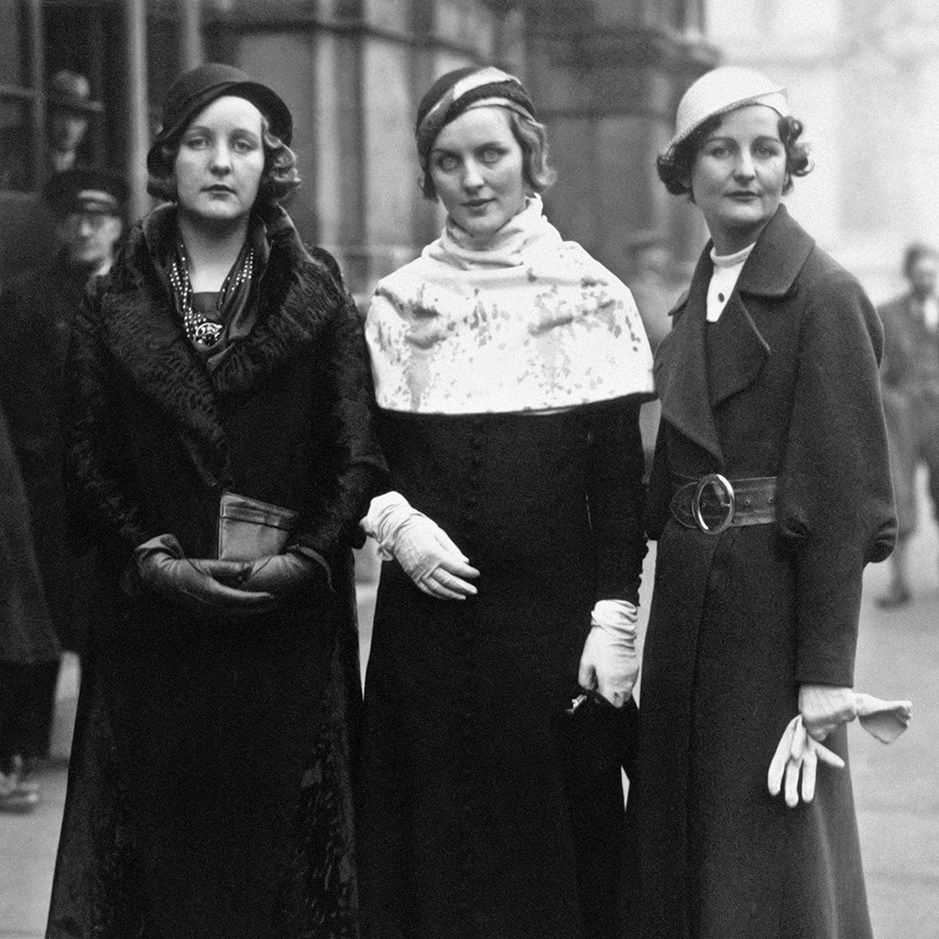
All right, so Diana had Britain’s Fascist-in-Chief in tow, smouldering at her across the dinner table and chatting in baby talk down the telephone. But Hitler: do admit. That was something more. The man with the real power, the one who had putsched his way to the top and had the whole of Germany swaying to his oratory, whom even hard-headed British people sought to encounter on their visits to Munich. If Unity were able to write to her sister and say oh, by the way Nard, you’ll never guess who I’ve met. . . Well. In that sense, therefore, Hitler represented something comprehensible in the context of a young girl’s imagination, a bizarre crush plus an ace of trumps in the lifelong Mitford game of sister whist.
Do you understand the full meaning of any sentence—any phrase at all—in the above paragraph? I ask only because it is just one of many, many in The Six, a peculiar, jumbled account by Laura Thompson of the famous British Mitford sisters (yes, there were six of them, daughters all of David Freeman-Mitford, Baron Redesdale) who lived in an era when lovely grammatical English—which at least two of the sisters actually mastered—flourished. When a reader was spared such startling imagery as: “Death, which had sat fidgeting in the waiting room since the first day of war, had at last risen to claim great galumphing Boud, who had rampaged through life like an innocent puppy but had held so much unfathomable darkness.”
Real journalism.Trusted by millions.
Unlimited access to in-depth reporting, expert analysis, and the stories that shape our country.
Already a member? Log in