

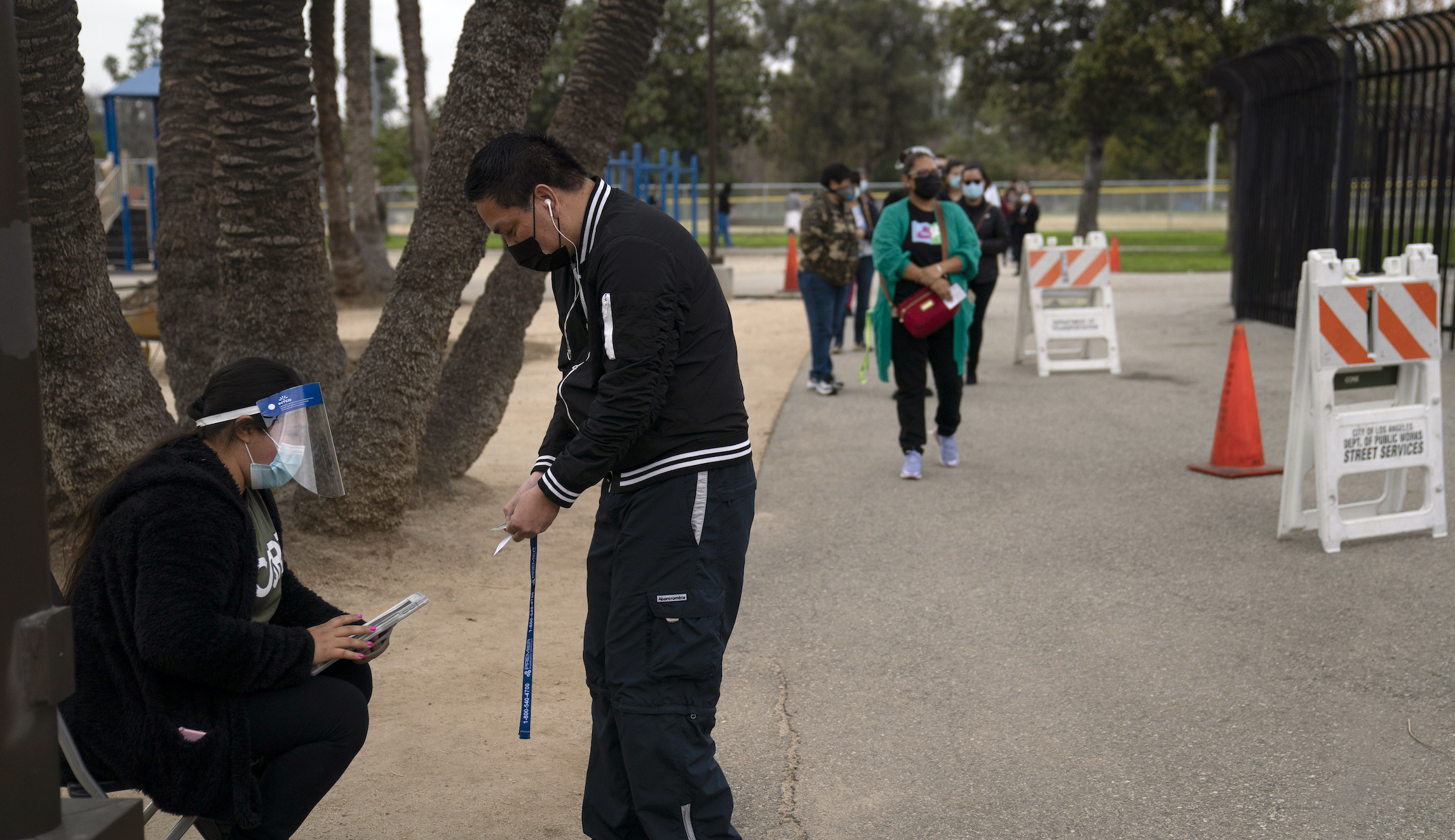
The Centers for Disease Control and Prevention reported that hesitancy to get the COVID-19 vaccine had dipped between September 2020 and December 2020, though only about half of U.S. adults said they intended to get the shots.
The CDC reported that the percentage of adults who were certain or very likely to get the coronavirus vaccine increased to 49% in December, up from 39% in September. Meanwhile, about 66% of adults 65 and older, who are among the most vulnerable in the population to severe illness, said they were certain or very likely to get the shots. The report also found that the percentage of people who were unlikely to get the shots had decreased in that same time period from 38% in September to 32% in December.
Stay informed.Stay ahead.
Join Washington Examiner for unlimited access to the news, analysis, and commentary that matter most.
Already a member? Log in
