

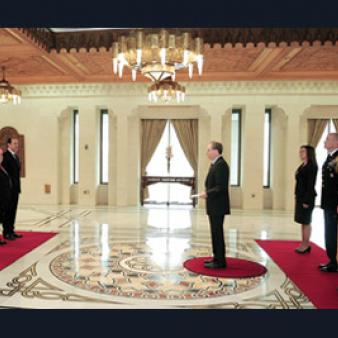
Lebanese prime minister Najib Mikati has finally managed to form a cabinet. Since Saad Hariri’s “national unity” government was toppled in January, due to disagreements over the Special Tribunal for Lebanon (STL) investigating the assassination of Hariri’s father Rafiq, it is hardly surprising that this cabinet is dominated by pro-Syrian figures eager to end Lebanon’s cooperation with the STL.
The Hariri-led March 14 coalition has wisely decided to stay out of the government and remain in the opposition, pushing its campaign against Hezbollah’s weapons. What’s most noteworthy about the formation of the government is that it includes only two ministers actually affiliated with Hezbollah—which is to say, the party doesn’t need to control the government itself in order to determine the direction of Lebanese politics. So much for advocates of the so-called “Lebanonization” thesis, like the White House’s counterterrorism czar John Brennan, who believe that giving Hezbollah more of a stake in the country’s political system will moderate the terrorist organization. Here’s concrete evidence that the reverse is true—the Party of God participates in state institutions only to enhance its extra-governmental power.
Stay informed.Stay ahead.
Join Washington Examiner for unlimited access to the news, analysis, and commentary that matter most.
Already a member? Log in
