

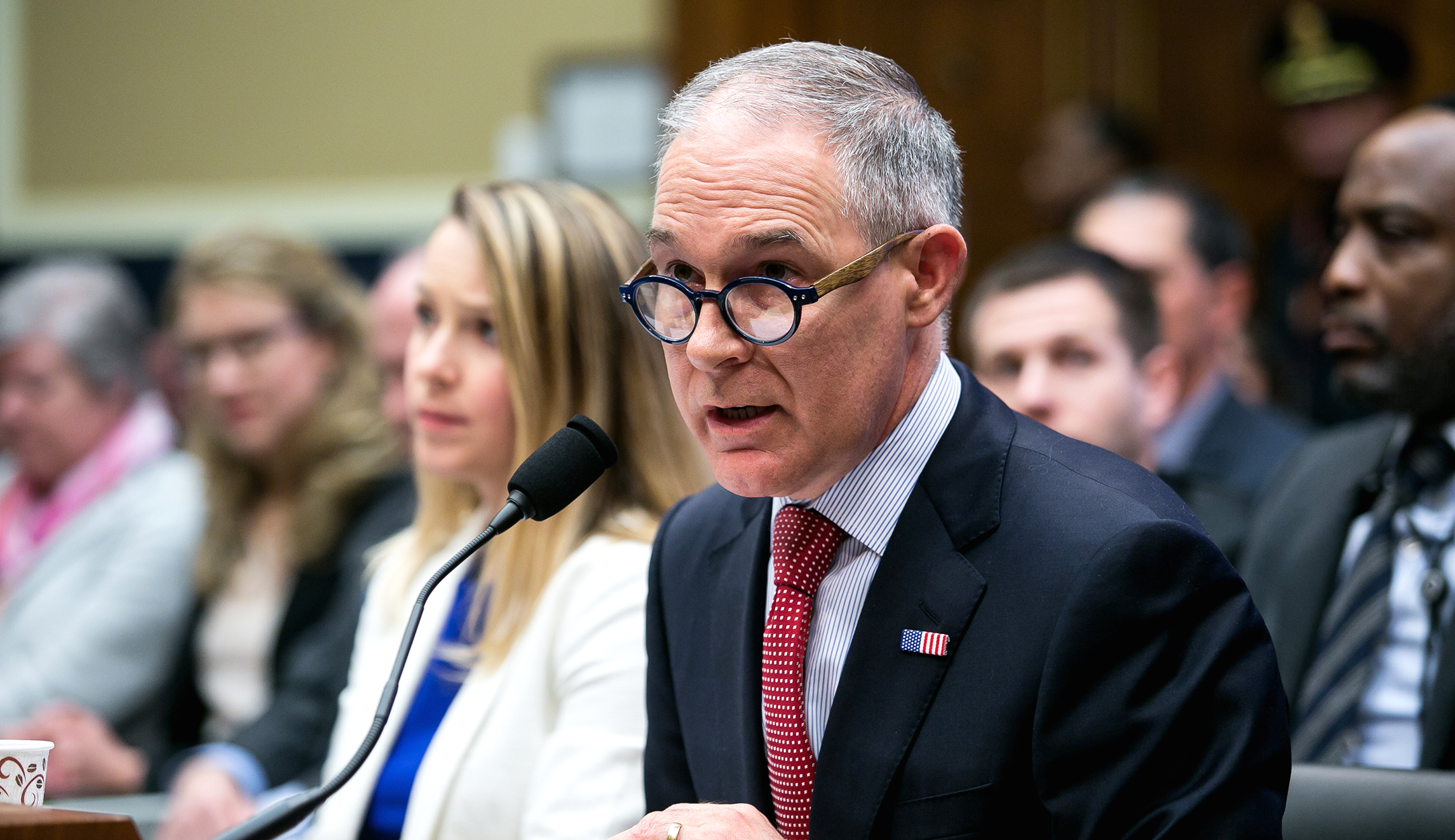
A coalition led by the ethanol industry launched a major legal challenge against Environmental Protection Agency Administrator Scott Pruitt Tuesday night.
The lawsuit joins another filed by the Advanced Biofuel Association about a month earlier, lending the full weight of ethanol producers, farm unions, and others in opposing Pruitt’s use of the EPA’s waiver authority to exempt more than two dozen refineries from complying with the Renewable Fuel Standard.
Recommended Stories


“EPA left us with no choice but to challenge their systematic cuts to ethanol blending in the U.S. by distorting the intent of the law to grant secret hardship waivers to refineries which in some cases exceed the definition of ‘small’ and fall short of demonstrating ‘disproportionate economic hardship,’” said Brian Jennings, CEO of the American Coalition for Ethanol.
“We cannot sit by and allow EPA to violate the RFS which requires increasing the use of renewable fuels in the U.S.,” Jennings said.
The groups argue that the criteria EPA uses to grant a waiver does not keep with the spirit of the law. They also argue that by not publishing the waivers in the Federal Register, the EPA did not make the exemption waivers public and subject to review.
Jennings’ group was joined by the Renewable Fuels Association, National Corn Growers Association, and the National Farmers Union, with the support of Farmers Union Enterprises. They filed their legal challenge in the 10th Circuit Court of Appeals.
Small refiners and their lobbyists in Washington argue that a decision by the 10th Circuit last year, Sinclair v. EPA, granted the EPA broad discretion in how it implements the waiver process.
But that argument is false, according to Mike McAdams, president and CEO of the Advanced Biofuel Association, which touts major oil company BP as a member. McAdams was the first to sue the EPA over the refinery waivers.
“They are trying to say the 10th Circuit gave him the authority to do this, and all the 10th Circuit said was ‘you must look at each of the elements in determining whether someone has disproportionate economic harm’ … and that economic harm doesn’t necessarily mean that they are bankrupt,” McAdams told the Washington Examiner in an interview ahead of the ethanol lawsuits.
But the case also placed a limit on the waivers, he said. “It specifically says from the court that this is not to be used as a precedent to just grant waivers,” McAdams said.
“I have found this administration under Mr. Pruitt’s leadership at EPA to do everything they can to undercut the RFS across the board,” McAdams added. “I have found him to do everything possible to try to make the whole law less appealing to society at large.’
The law states that the “EPA could not just arbitrarily lower” the renewable fuel blending requirement, which is what EPA has done in granting the small refinery waivers to some of the largest refiners in the country.
In granting the waivers, Pruitt has lowered renewable fuel demand by 1.2 billion gallons, which undermines the agency’s blending requirements.
McAdams says Pruitt’s goal is to create more ethanol renewable identification numbers, which refiners buy to meet the goals of the renewable fuel mandate. The RINs would be used to comply with targets going back to 2015, he said.
“He granted ’15 and ’16 waivers, and the RINs are only good for two years. So, how do you grant a waiver in ’15 and then give them the credits in ’18?” he asked. “There are all kinds of games here that need to be looked at.”
