

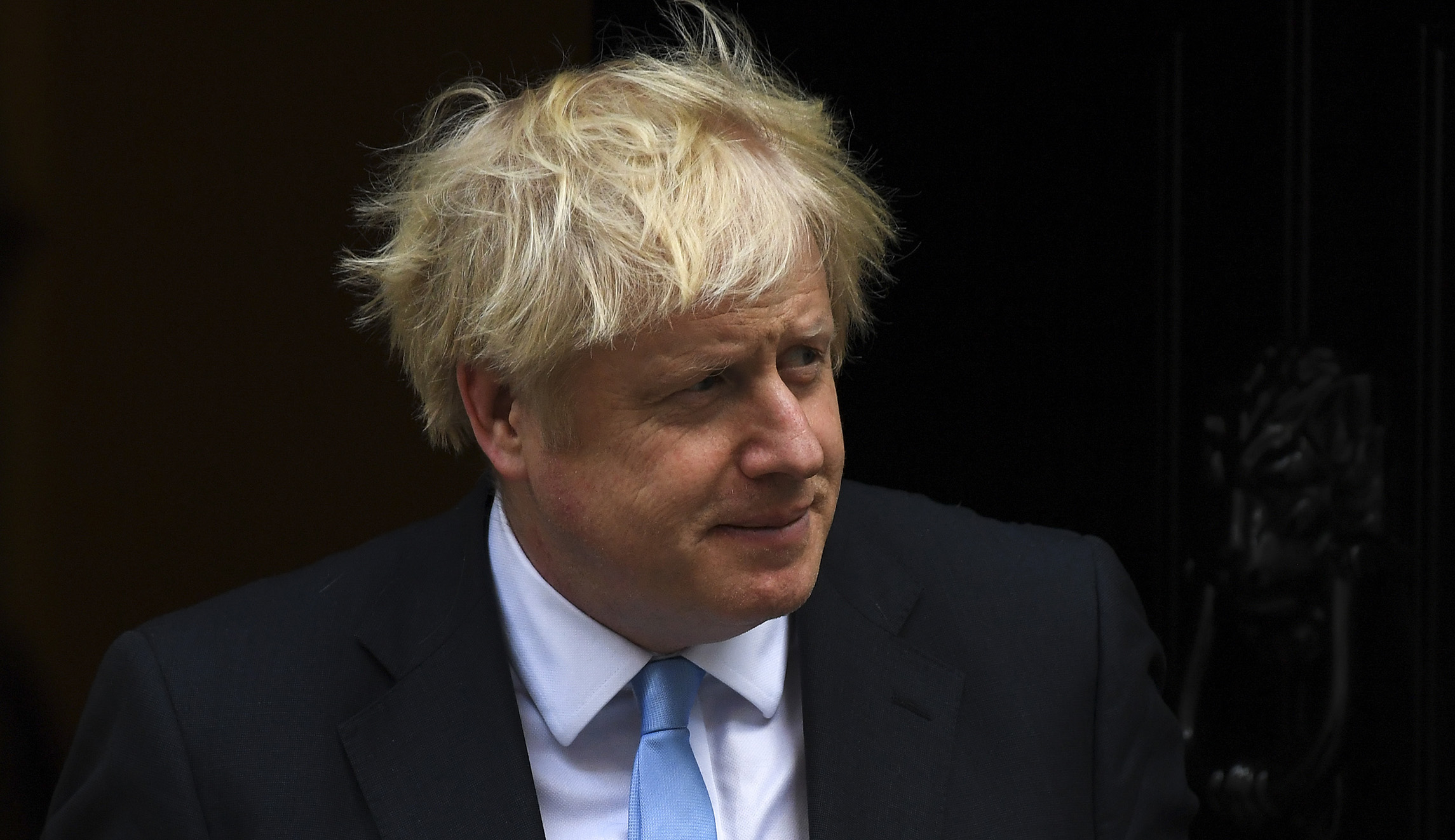
British Prime Minister Boris Johnson insisted he’d “rather be dead in a ditch” than ask the European Union to delay Brexit again by granting an extension.
Johnson made the comments while speaking at an event for police recruits in West Yorkshire, which also signaled the unofficial start to his call for a general election to be held on Oct. 15.
Recommended Stories



A reporter directly asked him after the speech if he could promise not to delay Brexit.
“Yes I can. I’d rather be dead in a ditch,” Johnson responded.
Johnson was then pressed if that meant he would rather resign than ask Brussels to delay Brexit, but he instead criticized members of Parliament for strong-arming him into an extension that would cost “a billion pounds a month” and achieve “absolutely nothing.”
Earlier this week, MPs approved legislation that would avert a no-deal Brexit on Oct. 31 by compelling Johnson to accept a Brexit extension through January 2020 if no deal is agreed upon by Oct. 19. The bill is expected to become law next week.
Parliament failed to approve an early election in a vote Wednesday, and the government is preparing to vote on the issue again on Monday.
Opposition parties, which are in favor of an election but so far have refused to hold one until a Brexit extension is in motion, met Thursday to discuss their options.
MPs could continue to hold out on supporting Johnson’s call for an election until the extension is granted or hold a vote of no confidence in the prime minister’s government, which could lead to an election late next month.
Johnson on Thursday admitted he reluctantly called for the election, saying he did not want one “at all” but that he could not see another way forward.
The prime minister has faced a number of defections from his Conservative Party in recent days, including his brother, Jo Johnson, who resigned from the Cabinet and said he would stand down as an MP in the next election.
Johnson said he had been “torn between family loyalty and the national interest.”
The prime minister said in response to his brother’s resignation that “people disagree about the EU, but the way to unite the country is to get this thing done.”
Johnson expelled 21 members of the Conservative Party who voted against his decision to hold a general election, including Sir Nicholas Soames, who is the grandson of former British Prime Minister Winston Churchill.
