

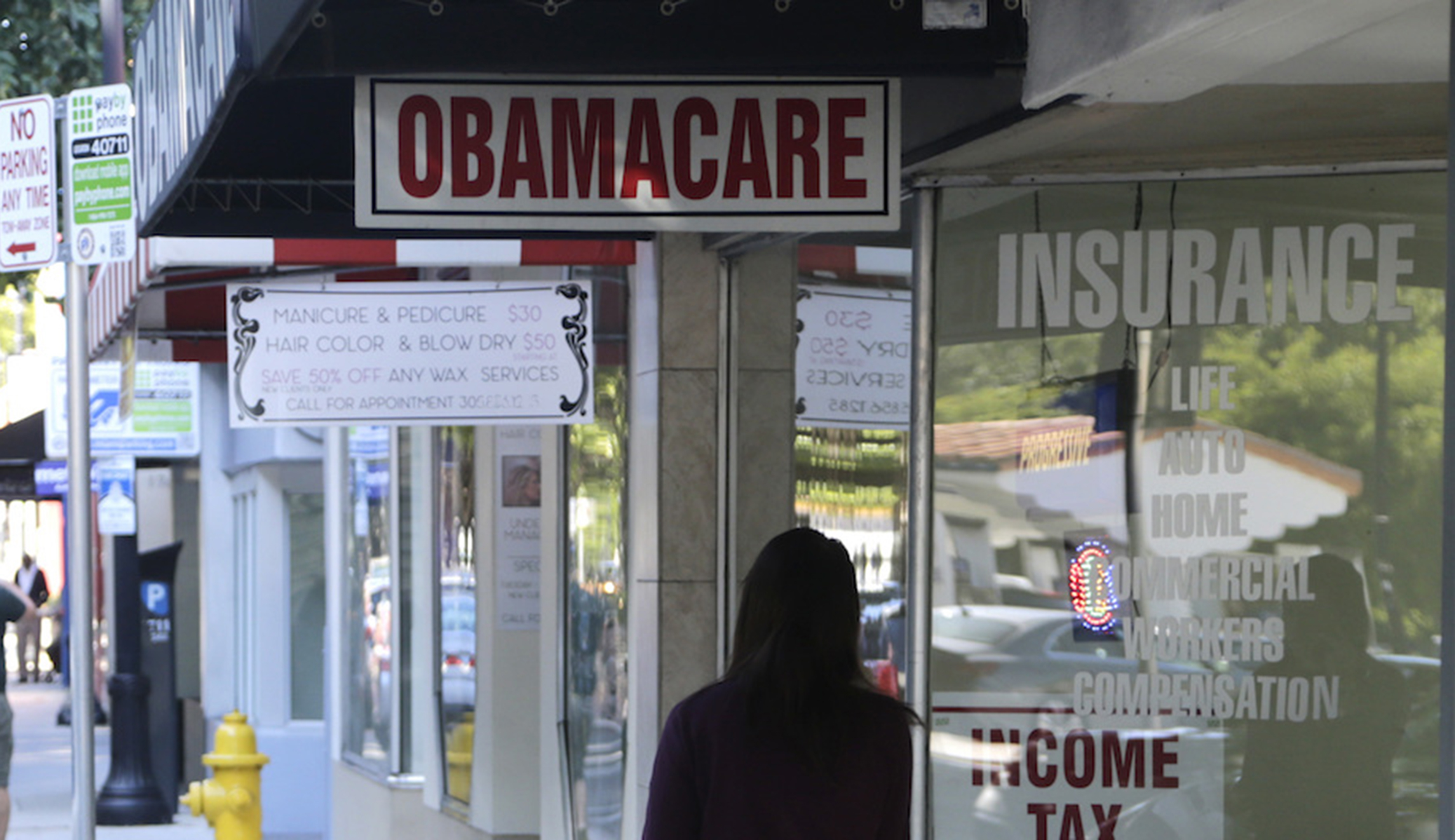
Insurers face a key deadline Wednesday to finalize contracts with states about how much they will charge customers who buy Obamacare plans.
Many of the largest insurers have decided not to sell plans on Obamacare’s exchanges at all, and many of those that are staying have filed rate increase proposals in the double digits. Those increases could go higher without payments the insurers expect to receive from the federal government, called cost-sharing reduction subsidies. Insurers say the pullouts and premium hikes are a result of uncertainty about the future of the healthcare law and financial losses.
Recommended Stories



The Trump administration has the authority to move the Sept. 27 deadline back, but it has not changed, according to a spokesman from the Department of Health and Human Services.
In some states, insurers have filed several rate requests to account for various sets of assumptions, including whether they can expect funding from the federal government and to what extent the government will enforce Obamacare’s individual mandate that requires people to buy insurance or pay a fine.
“While final rates have been filed, our assumption is everyone will work to be flexible if we can all agree on a good solution for the American people,” a health insurance industry expert said.
The window for changes is closing, however. Open enrollment, the time during which people can sign up for health plans, begins Nov. 1 and ends Dec. 15, running roughly half the amount of time it did last year. Unsubsidized customers, meaning those who make more than $48,240 for an individual and $98,400 for a family of four, will feel the effects of rising costs, and some might choose to look for short-term options or to go uninsured.
Insurers are waiting to hear from President Trump about whether the cost-sharing funds will be allocated during the long term. They were authorized under former President Barack Obama, who was sued by House GOP’s because the funds were not appropriated by Congress. A federal judge last year sided with Republicans, and the case is now in limbo. Trump has been re-authorizing the payments each month but has said he would consider ending them.
The Senate Health, Education, Labor and Pensions Committee this month was discussing whether to appropriate the funding, which helps reduce out-of-pocket medical expenses, but the bipartisan efforts stalled after the Obamacare overhaul bill, known as Graham-Cassidy, picked up momentum. On Tuesday, Republicans announced they did not have enough votes to pass the legislation, and while individual members say they hope to revisit the bipartisan stabilization measure, no commitment was made from GOP leaders.
Sen. Lamar Alexander, chairman of the HELP committee, said Tuesday he would discuss the possibility of a stabilization package with other senators.
It’s not clear what the appetite will be, as some conservative members of the Senate have referred to the stabilization package as a “bailout” or “propping up” of Obamacare. Others are concerned that compromise won’t come from both sides.
Sen. John Barrasso, chairman of the Republican Policy Committee, said that to gain his support a bill would need to give states more flexibility. Some state officials have complained that Obamacare’s process for applying for waivers is too lengthy and cumbersome, and they would like to opt out of certain regulations.
“I’m not supportive of a direct continuation of those [cost-sharing] payments unless there is some agreement that we can actually get more flexibility at home,” Barrasso said. “I want to get the power and money out of Washington and back to the states.”
Insurers, who opposed Graham-Cassidy, have pushed for a bipartisan agreement, and have a list of items they would like included, such as the cost-sharing reduction funds and injection of federal reinsurance dollars, which reduces the costs of premiums, and the removal or suspension of the health insurance tax. One study by the consulting firm Avalere Health showed that a $15 billion reinsurance package would reduce premiums 17 percent.
Insurers said during hearings in the HELP Committee that they hoped for a plan that would last longer than one year.
“Less than six months from now, health plans will begin the process of building products for the 2019 plan year,” America’s Health Insurers wrote in a submitted testimony. “As a result, we strongly believe that any legislative stability package must continuously cover at least a two-year period – 2018 and 2019. Otherwise, market uncertainty will persist, and the Congress will need to revisit these same exact issues early next year.”
