

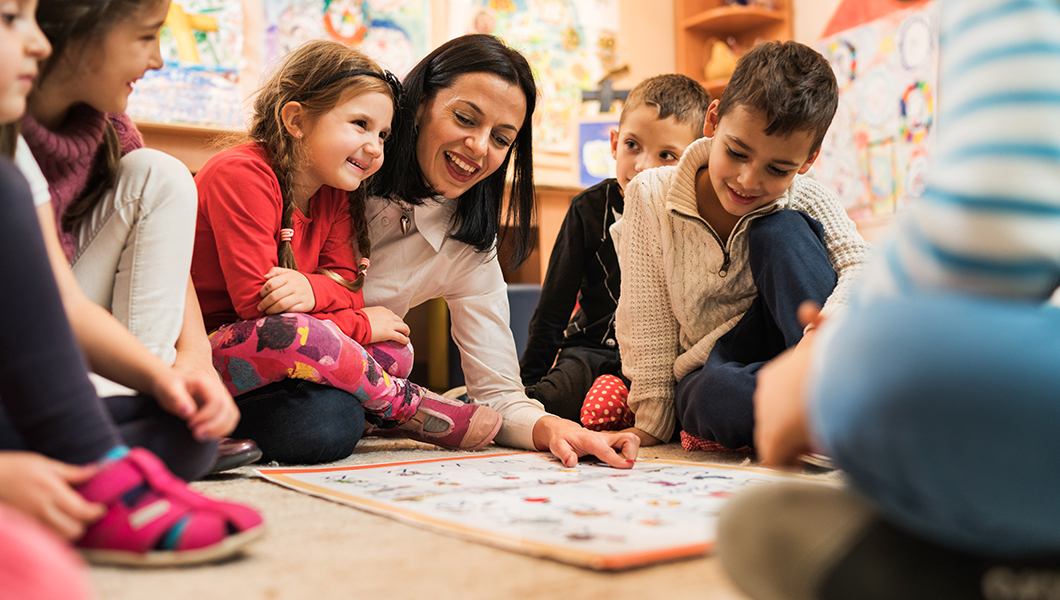
As some North Carolinians return to work this weekend and into next week, child care centers across the state are allowed to reopen to accommodate parents.
Gov. Roy Cooper’s first phase of reopening the economy amid the COVID-19 pandemic took effect at 5 p.m. Friday and allows North Carolinians to leave home to go to work or to seek employment as most businesses in the state are allowed to reopen.
Recommended Stories


Michele Rivest, policy director for the North Carolina Early Learning Coalition, said Friday most child care facilities may have a slow start while they figure out whether it will be worthwhile to resume operations.
“It’s gonna be a challenge for each and every child care program to face,” she said. “Whether they can financially be viable or even if they want to be open to serve children and families again.”
Cooper’s order allows commercial businesses – with the exception of barbershops, salons, massage and tattoo parlors, gyms, entertainment venues, playgrounds and bowling alleys – to reopen.
Rivest said child care providers will have to asses whether enough children will be in attendance before opening and at what level they should be open. The cost of reopening may outweigh the operational cost, she said.
Child care centers who chose to operate will have to abide by public health guidelines to help limit the spread of COVID-19.
Staff members will have to perform daily health screenings and increase hygiene and cleaning practices, among other requirements.
Rivest foresees a challenge in finding personal protective equipment and cleaning supplies, which have been in high demand and scarce because of the pandemic. This can create not only a financial burden for providers but also a concern for parents, she said.
“Parents have to feel confident that they’re leaving their child in a safe and healthy environment,” Rivest said. “That would be top of my mind, and it is for every parent returning to work and relying on their child care program.”
Rivest hopes the state or local emergency divisions will consider supplying child care facilities with personal protective equipment from their stockpiles.
Rivest said she also is concerned about the health and safety of child care workers. Many have underlying issues and limited access to health care coverage, she said.
Questions from The Center Square to Cooper’s office about additional assistance and equipment for child care facilities were directed to the North Carolina Department of Health and Human Services’ website.
About half of the 5,700 child care centers and homes in the state were open before restrictions were loosened to care for essential workers’ children.
Through NCHHS, the state is offering bonus payments for child care workers, ranging from $950 to $525 a month for full-time child care workers and $262 to $475 a month for part-time workers.
The NCHHS website also directs child care providers who are having issues “assessing food, cleaning supplies, or other essential resources” to the North Carolina Partnership for Children, a nonprofit organization that supports local child care programs.
The organization has launched a COVID-19 relief fund to offer help to child care facilities.
