

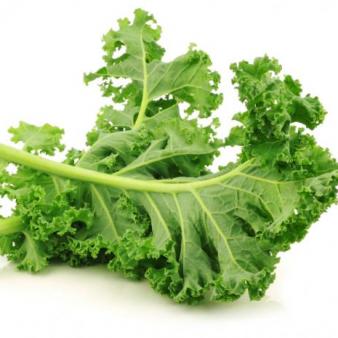
Brassica oleracea acephala: “A hardy cabbage with curled often finely incised leaves that do not form a dense head,” according to Merriam-Webster’s Collegiate Dictionary. It was, writes Alan Davidson in The Oxford Companion to Food, “the ordinary greenstuff of country people in most parts of Europe until the end of the Middle Ages, when the ‘headed’ cabbages were bred.” In other words, this is what the peasants ate before cabbage—that most chic and sophisticated of vegetables. The English called it “cole.” The Scots called it “kale.” And now it’s everywhere.
The earliest reference to kale in the New York Times is from 1853, in reference to February being known to “our old Saxon grandfathers” as “Sprout-Kale” month “because it was the time that kale or curly cabbage, if properly sheltered, put forth its first tender and delicate sprouts.” A 1976 Times essay by Mimi Sheraton is excitingly titled “For Cold Nights, Kale DIshes Like Those the Norsemen Eat.” (During a recent book fair, Sheraton, now 89, took part in a word association game. When she heard “kale,” she replied “yuck.”)
Stay informed.Stay ahead.
Join Washington Examiner for unlimited access to the news, analysis, and commentary that matter most.
Already a member? Log in
