

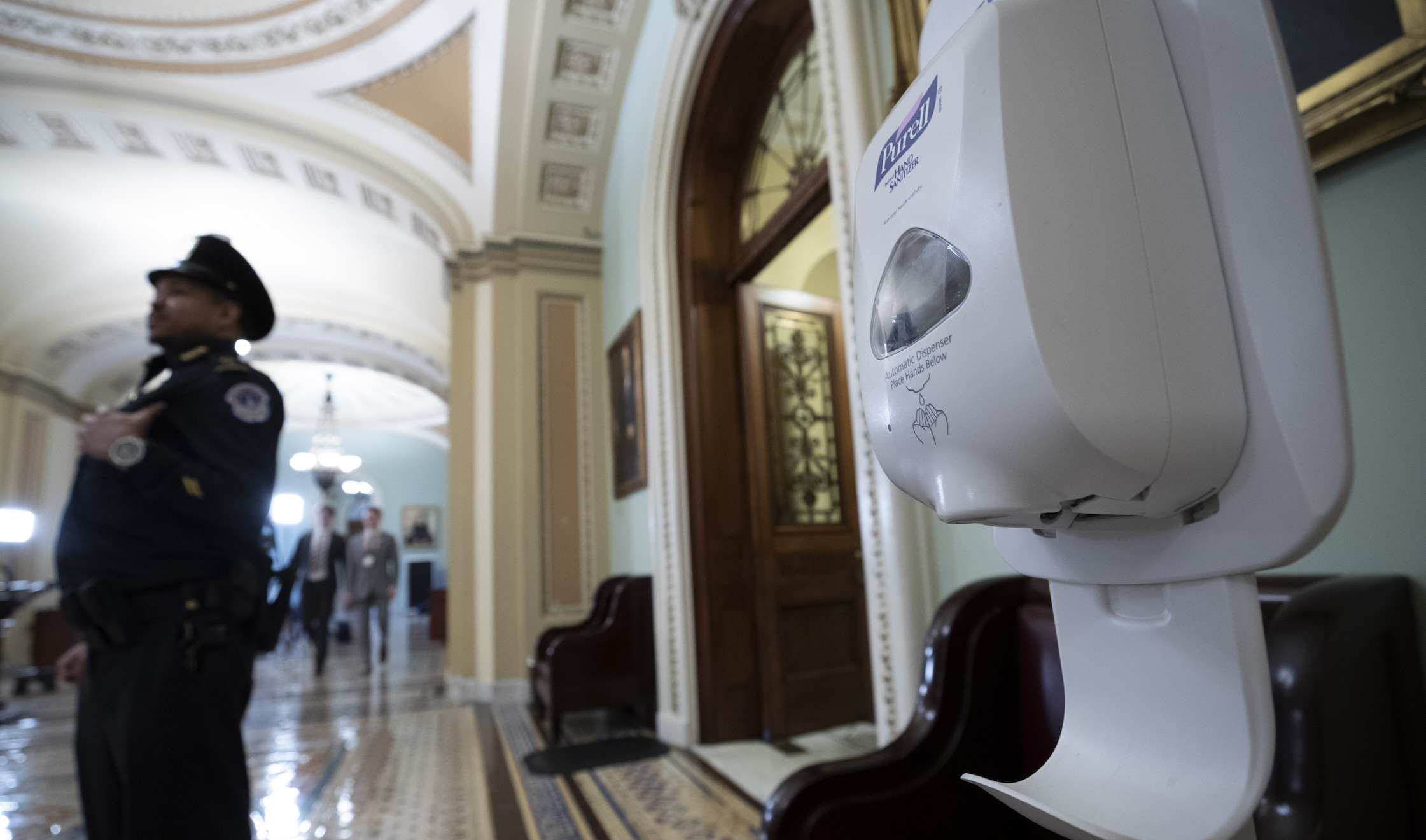
The full Senate returned to Capitol Hill for the first time since lawmakers shuttered the chamber in March due to the coronavirus.
“The Senate is back in session because we have important work to do for the nation,” Senate Majority Leader Mitch McConnell said from the Senate floor Monday.
Recommended Stories


McConnell announced the Senate would focus on nominations despite objections from Democrats who say confirming Trump administration picks for the courts and the administration is not essential business worth the health risk that may come from lawmakers returning to work in D.C.
The Senate will employ social distancing and other health guidelines, such as the use of masks and spacing out lawmakers in committee rooms and avoiding crowding on the Senate floor.
“There can be no doubt that this will be one of the strangest sessions of the United States Senate in modern history,” said Senate Minority Leader Chuck Schumer, a New York Democrat.
The House backtracked on a plan to return this week after House Democrats protested. Speaker Nancy Pelosi, a California Democrat, told reporters the move to reconvene is postponed until May 11.
The Senate will vote Monday at 5:30 p.m. to confirm Robert Feitel, Trump’s nominee as inspector general of the Nuclear Regulatory Commission.
Committees will meet this week to confirm additional executive branch and judicial nominees, including Rep. John Ratcliffe of Texas as the director of national intelligence.
Senate Democrats are demanding lawmakers abandon nominations and instead focus the legislative session on oversight of the Trump administration’s handling of the coronavirus.
Schumer argued from the Senate floor the chamber is taking a risk by returning to work while D.C. is seeing a surge in coronavirus infections. The move comes with a risk to the health of lawmakers and the Capitol workers needed to keep the building open, Schumer said.
“Let the Senate at least conduct the nation’s business and focus like a laser on COVID-19,” Schumer said.
Senate Democrats are seeking a new economic aid package that provides hazard pay for workers, rent relief, massive state and local aid, and more money for testing.
They oppose McConnell’s desire to pass legislation that would provide liability protection for healthcare workers and businesses from coronavirus-related lawsuits.
McConnell pledged the Senate “is going to be as smart and safe as we possibly can, and we are going to show up for work, like the essential workers that we are.”
