

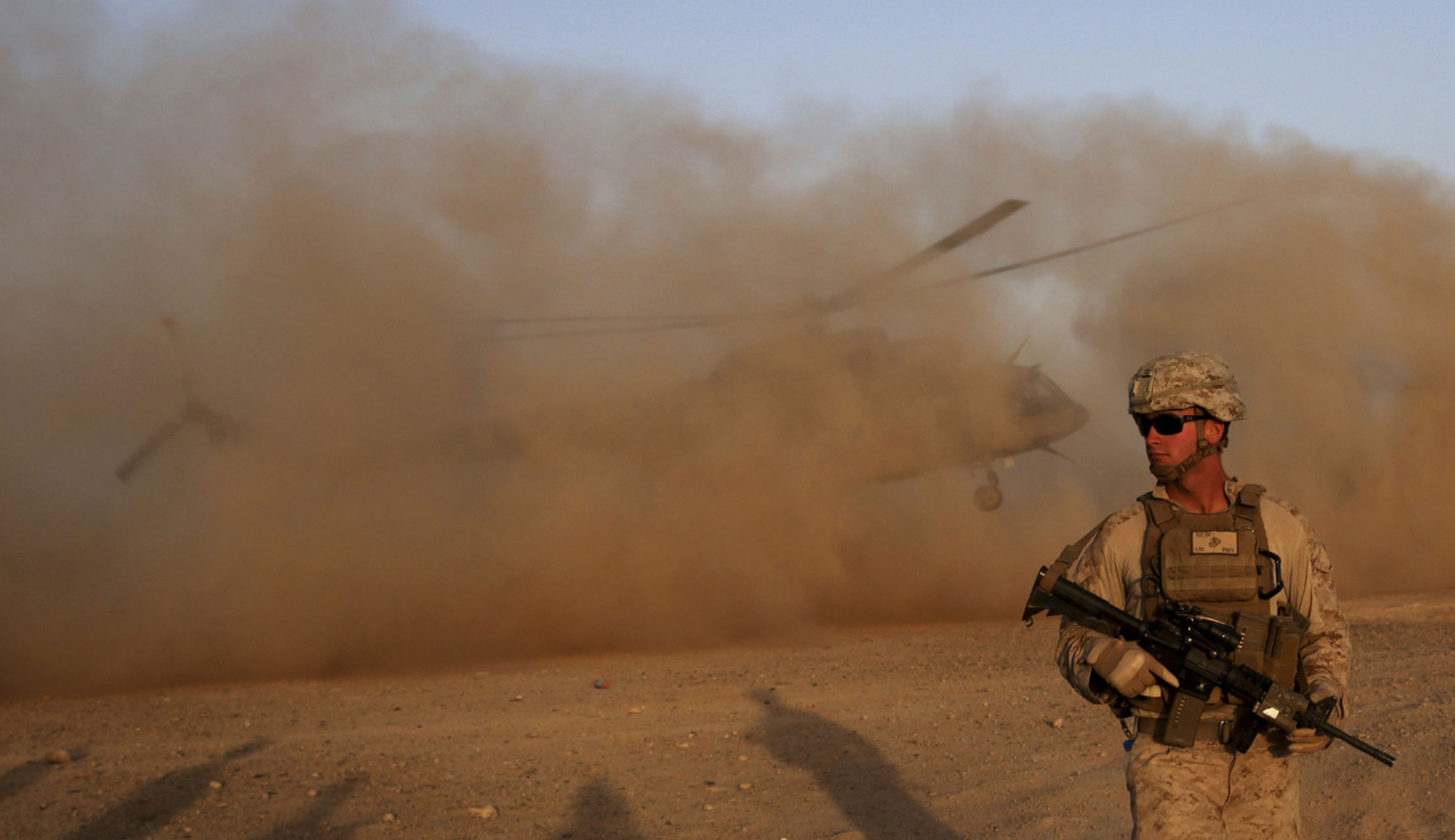
President Trump’s new Afghanistan strategy has “obvious shortcomings,” according to Russian officials who want to know more about U.S. military plans in the country.
Recommended Stories


Russia’s foreign ministry condemned Trump’s plan and expressed “justified concern” that U.S. military deployments might undermine their interests in the region. The critique is consistent with Russian President Vladimir Putin’s opposition to the U.S. in other hotspots. It may be another blow to Trump’s stated desire to improve relations with Russia, though the statement held out the possibility of “interaction” between the two sides in Afghanistan.
“The Russian side focused on the lack of transparency in the U.S. military actions, something that evoked justified concern in Russia and other regional partners,” the Russian Foreign Ministry announced following a high-level meeting with U.S. Ambassador to Russia John Tefft. “It was stressed that Moscow did not share Washington’s selective pressure policy directed at certain states in the region, and is calling for equitable interaction and coordination of approaches to the Afghan settlement with regard for the interests of all states in the region without exception.”
That criticism of “selective pressure” is an apparent defense of Pakistan, which neighbors Afghanistan and is home to major militant groups. Trump and Secretary of State Rex Tillerson emphasized the need for Pakistan to crack down on the terrorists as part of a comprehensive strategy to stabilize Afghanistan. If Pakistani leaders refuse, they could face sanctions, while the U.S. officials refused to rule out the possibility of unilateral attacks on terrorists in the country.
“We are going to be engaging with them in a very serious and thorough way as to our expectations and the conditions that go with that,” Tillerson said last week. “We are going to attack terrorists wherever they live.”
The Russian side argued that the Trump plan has “obvious shortcomings,” in addition to their complaint about the lack of military transparency. They argued that the plan wouldn’t be sufficient to counter drug trafficking or prevent “the expansion of ISIS influence” in the country. It was the second time this month that the Russians have criticized U.S. anti-drug trafficking efforts.
“[T]he US and NATO forces’ unwillingness or inability, despite their many years of presence in Afghanistan, to provide effective assistance to the Afghan Government in curbing drug production, which is known to be a key source of terrorism financing, causes bewilderment,” the foreign ministry said in an Aug. 18 bulletin.
The State Department declined to comment on the meeting.
