

Since Donald Trump took office, the growth of North Korea’s nuclear arsenal and the increasing capability and diversity of its ballistic missile force have made that country the most urgent threat to U.S. national security. Observers as diverse as Mark Bowden in the Atlantic, Michael Auslin of the Hoover Institution, and former White House chief strategist Steve Bannon agree that all military options available to the president are bad. How exactly did we get to this point? What policy decisions led to an emerging intercontinental ballistic missile capability and a nuclear arsenal that could rival that of the U.K. by the middle of the next decade? How did we end up with a North Korean leader seemingly more willing to run enormous risks than his father or grandfather? The answer demonstrates once again the venerable adage that “the road to hell is paved with good intentions.” One of the few national figures who consistently raised alarms about U.S policy towards North Korea was former vice president Dick Cheney, and he has proven prescient. The United States now faces the real prospect of a war that Secretary of Defense James Mattis says would be “catastrophic.” This story should be studied carefully before it repeats itself—say, in Iran.
Kim Il-sung manifested an interest in obtaining nuclear weapons almost as soon as he founded the North Korean ruling dynasty, in the early 1950s. His Soviet patrons were not prepared to oblige but did help to build a nuclear research reactor in Yongbyon that could provide a source of plutonium. His unrequited urge for nuclear weapons led Kim to approach Mao Zedong after the successful Chinese nuclear test in 1964, but he was again turned down. Ultimately Moscow, wanting to keep the number of nuclear-weapon states low, persuaded Pyongyang to sign the Nuclear Nonproliferation Treaty in 1985. But North Korea procrastinated about signing the mandatory safeguards agreement to give the International Atomic Energy Agency access to the Yongbyon reactor and other nuclear facilities while quickly initiating a clandestine program to reprocess fissile material for its nuclear arsenal. The loss of its superpower patron after the collapse of the Soviet Union made nuclear weapons a matter of some urgency for the Kim dynasty. Thus began a pattern of serial prevarication and the use of “arms-control” negotiations as a cover for covert activity.
Stay informed.Stay ahead.
Join Washington Examiner for unlimited access to the news, analysis, and commentary that matter most.
Already a member? Log in
One pretext the North used to avoid concluding a safeguards agreement was the presence of U.S. theater nuclear weapons in South Korea. As the Cold War wound down, President George H.W. Bush working with his Secretary of Defense Dick Cheney announced his Presidential Nuclear Initiative to withdraw all sea- and land-based tactical nuclear weapons from their locations, including those forward-deployed to the Republic of Korea. Soviet president Mikhail Gorbachev in the waning months of his tenure agreed to do likewise. This prompted South Korean president Roh Tae-woo to renounce any intention to produce, possess, store, or use nuclear weapons on ROK territory. Stripped of any remaining rationale for denying the IAEA access to its facilities, North Korea agreed in December 1991 to a Joint Declaration calling for the denuclearization of the Korean peninsula. The two sides agreed not to “test, manufacture, produce, receive, possess, store, deploy or use nuclear weapons” or “possess nuclear reprocessing and uranium enrichment facilities.” They agreed in principle to an inspections regime to verify the joint declaration. The North signed an IAEA safeguards agreement in January 1992 and provided its first statement to the agency a few months later.
The IAEA quickly realized that there were discrepancies in the documentation Pyongyang provided. The agency sought clarifications on the amount of plutonium North Korea had secretly reprocessed and, as officials became more suspicious about the country’s claims, asked for special inspections. The North refused and threatened to withdraw from the NPT. Fearful of the impact a withdrawal might have on the treaty, Bill Clinton’s administration began almost two years of intensive crisis diplomacy that culminated in the Agreed Framework.
The effort to find a negotiated solution to North Korea’s violations of its NPT obligations was undoubtedly well intentioned and predicated on a notion that has underpinned the attempts of subsequent administrations to cope with the Kim dynasty’s dishonesty and frequent provocations: that any coercive action might precipitate a renewed war on the peninsula and carried such high risks of civilian casualties that it was simply unacceptable.
The Agreed Framework called for North Korea to freeze and eventually eliminate its nuclear facilities and institute a special-inspections regime for the IAEA to verify compliance. The North agreed not to pursue a nuclear-weapons capability. In return, the United States would establish a multinational consortium (KEDO) to provide the North with two allegedly “proliferation-resistant” light-water reactors. The North would receive shipments of heavy fuel oil to provide energy while the light-water reactors were being constructed. The agreement also called for the United States to provide assurances that it would neither threaten nor use nuclear weapons against the North and for the parties to move toward full normalization of relations. As normalization proceeded, the two sides would address other matters of concern to the United States, such as North Korea’s ballistic missile development program and its tendency to treat missiles as the equivalent of a cash crop for export.
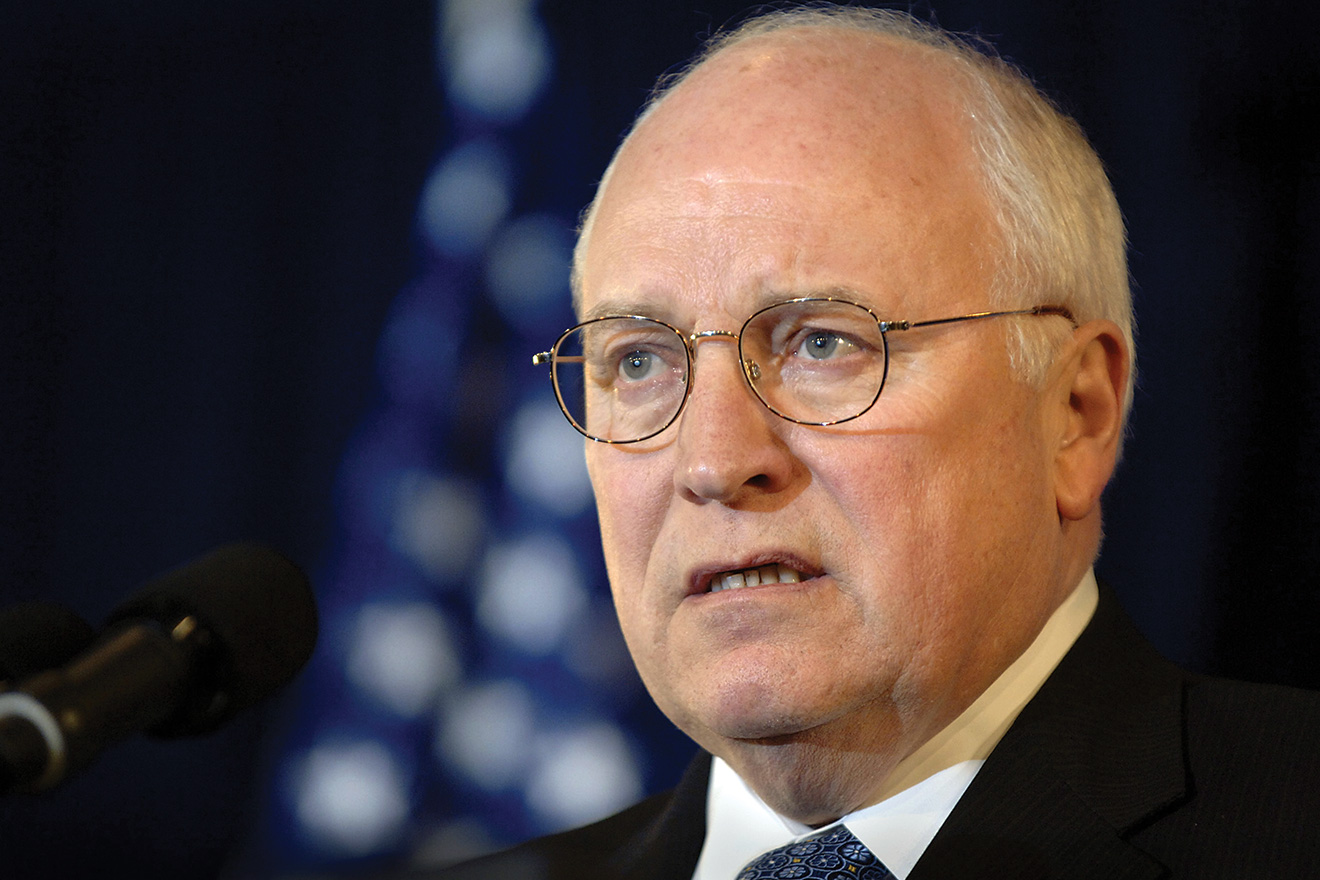
Cheney, no longer secretary of defense but considering a run for president, identified North Korea as “the most perilous immediate threat” to national security in a series of speeches he gave in 1994. He opposed the Agreed Framework because it rewarded North Korea for deception and violating its NPT obligations. Appeasement of the North seemed likely to incentivize additional bad behavior. That admonition turned out to be prophetic.
When George W. Bush was elected, the Clinton administration was feverishly concluding efforts to flesh out the “promise” of the Agreed Framework while working on an agreement on ballistic missile technology proliferation and a possible historic visit to Pyongyang by the outgoing president. Clinton wisely thought better of going to North Korea during a presidential transition, and the Bush administration turned to its review of its predecessor’s handiwork. Negotiations on ballistic missiles were discarded after Secretary of State Colin Powell pronounced that following through with the Clinton approach would have amounted to “one of the worst pickpocket deals in history.” Cheney’s longstanding skepticism about the Agreed Framework helped persuade President Bush to take a tough line from the outset, and he repeatedly referred to the agreement as a “mistake.” Nevertheless, primarily for alliance-management purposes, the administration took the initial position that it would honor the Agreed Framework as long as North Korea continued to abide by it.
Many of the career officials who had worked on the Clinton Agreed Framework were committed to engagement and resisted a tougher, more coercive approach, leading to bureaucratic infighting the first two years of the Bush administration. Cheney and the so-called “hardliners” wanted to mobilize North Korea’s neighbors (particularly Russia and China, who many believed shared an interest in preventing the nuclearization of the peninsula and its consequences), address the North’s ballistic missile proliferation and extensive conventional firepower arrayed within range of Seoul, and highlight its massive human rights violations.
The fate of the Agreed Framework was sealed when Cheney’s skepticism about North Korean compliance was vindicated by intelligence suggesting Pyongyang had been cheating all along. Even as the ink was drying on the Agreed Framework, the Kim regime had launched a large-scale, clandestine effort, aided by the notorious A. Q. Khan ring in Pakistan, to create a uranium-enrichment capability, giving it another pathway to nuclear weapons. When U.S. negotiator Assistant Secretary of State James Kelly confronted him, his North Korean interlocutor admitted the existence of such a program. Any doubts about whether Kelly had accurately understood the envoy were conclusively eliminated when Stanford University nuclear scientist Sig Hecker, a committed supporter of the Agreed Framework, traveled to North Korea in 2009 and was allowed to visit a fully functioning, industrial-scale uranium-enrichment facility.
With Cheney’s encouragement, staffers in his office and at the National Security Council developed a strategy of “tailored containment” that sought to pressure North Korea, which withdrew from the NPT in 2003, with a variety of tools including intensified economic sanctions and enhanced international interdiction capabilities under the Proliferation Security Initiative. The point was to change the regime’s calculus by demonstrating that nuclear weapons were not a guarantor of regime survival but a threat to it. If that proved impossible, these stringent measures might still, over time, provoke a change in the regime’s composition that could lead to a negotiated denuclearization.
Critics frequently suggest that the debate over North Korean policy during the Bush administration was between those who favored negotiation and those who didn’t—and that the opponents had no real alternative to engagement. This is a convenient fiction used to justify the ongoing process of serial concessions. The issue was not the question of negotiations but on what terms negotiations would take place. Cheney throughout the six-party talks tried to toughen the U.S. position to keep those charged with carrying out the diplomatic effort from succumbing to the inevitable temptation of making the process of negotiation more important than the outcome. Specifically, he was insistent that the only acceptable objective was comprehensive, verifiable, irreversible denuclearization. Where proliferation is involved, you cannot allow countries of concern to be a little bit pregnant. They cannot be permitted to possess those key elements of the nuclear fuel cycle that permit breakout. The notion that complete denuclearization was unrealizable, on the other hand, was contradicted by the experience of South Africa, Libya, and the former Soviet states of Ukraine, Belarus, and Kazakhstan, among others.
Armed with new sanctions, like those the Treasury Department imposed on Banco Delta Asia, a Macao-based bank through which illicit gains from the North’s counterfeiting, drug trafficking, and other criminal activities flowed into the Kim family coffers, U.S. negotiators in September 2005 won North Korea’s agreement to the objective of “abandoning all nuclear weapons and existing nuclear programs and returning, at an early date, to the Treaty on the Nonproliferation of Nuclear Weapons and to IAEA safeguards.” It was, as six-party talks negotiator Chris Hill acknowledged at the time, a commitment that “all elements of the DPRK’s past and present nuclear programs—plutonium and uranium—and all nuclear weapons will be comprehensively declared and completely, verifiably and irreversibly eliminated and will not be reconstituted in the future.”
Almost immediately, however, a contingent led by Hill himself began contending that to keep the negotiations moving forward, the United States would have to make more concessions to North Korean concerns, particularly about the funds frozen by the Banco Delta Asia sanctions. This was precisely what Cheney had been worried about—that the United States would make concession after concession and turn a blind eye to North Korean misdeeds, the most dramatic instances of which were an October 2006 nuclear test and the spring 2007 discovery that the country was building a Yongbyon-like reactor in the Syrian desert with no apparent connection to the Syrian electricity grid.
Although Cheney pushed, for example, for the United States to destroy the reactor, the administration ignored the transgressions to facilitate the ongoing negotiations. The BDA funds were returned to Pyongyang, and North Korea was taken off the list of state sponsors of terrorism and relieved of the burden of being subject to the Trading with the Enemy Act. These steps were part of an “action for action” program negotiated by Hill, who argued that they would lead to the full declaration of the North’s nuclear program. But that was not what the United States received. Instead it got an incomplete declaration that ignored the uranium-enrichment program (even as the records themselves revealed traces of enriched uranium) and failed to mention the transfer of a nuclear reactor to Syria. Cheney objected, “increasingly concerned that the six-party talks were now a convenient way for the North Koreans to hide what they were really doing, and we were not only complicit, but were in fact rewarding them for it by offering benefits and concessions in exchange for missed deadlines and false declaration.” He added that he “feared we were headed for a train wreck.”
When Barack Obama took office, Hill expressed his satisfaction that Cheney and his allies were no longer sitting at the table in the Deputies or Principals Committee meetings. But his glee was short-lived because Cheney’s warnings were again borne out. Even before Obama took the oath of office, the North announced it had weaponized all the plutonium it had harvested from Yongbyon. In April, Pyongyang tested a three-stage ballistic missile. Ten days later, it expelled the U.S. and IAEA monitors from the Yongbyon plant, and in May it conducted a second nuclear test. The agreement Hill negotiated had totally collapsed. Perhaps chastened by this experience, the Obama administration determined that arms-control diplomacy with North Korea should be put on the back burner. After the death of Kim Jong-il and the transfer of power to Kim Jong-un, the development of the North Korean arsenal continued apace.
What are the lessons of this depressing story?
Cheney and other opponents of “engagement” were skeptical of North Korea’s adherence to the agreements it had signed; their suspicion was merited. They also suspected that failure to apply pressure on the Kim regime would lead to a serial retreat that ultimately would result in North Korea as a nuclear power—which is, unfortunately, where we find ourselves today.
They worried that the further the North got down the nuclear road, the more aggressive Pyongyang would become and the harder it would be to address security on the Korean peninsula. The opponents of appeasement thought that a more comprehensive approach taking into account conventional weapons and human rights issues as well as nuclear and missile issues would enable greater progress, as it had with the Soviet Union in the final years of the Cold War.
Cheney and the skeptics concluded that only severe economic pressure on the North’s economy, clearly its Achilles heel, might lead to Pyongyang rethinking the utility of possessing nuclear weapons as a strategy for regime survival and unification of the peninsula by force. They also believed, correctly, that prematurely lifting economic pressures would lead to more, not less, intransigence and set back negotiations even further, since multilateral pressures once relieved are very difficult to reimpose.
As the Trump administration considers the future of the Iran nuclear agreement negotiated by its predecessors, it would do well to ponder the lessons of the North Korean experience and remember whose views were vindicated by events and whose weren’t.
Eric Edelman was undersecretary of defense for policy from 2005 to 2009; Robert Joseph was undersecretary of state for arms control and international security from 2005 to 2007.
