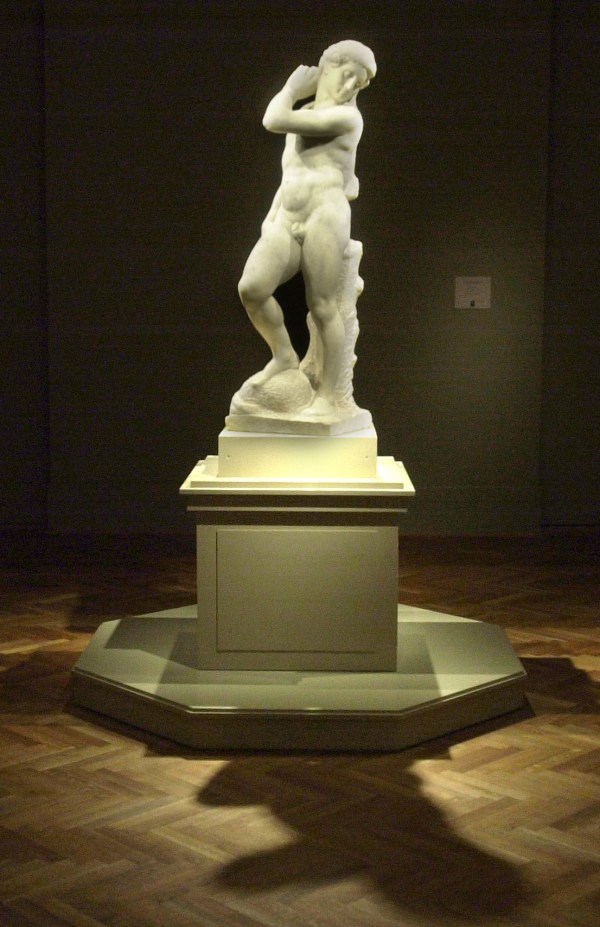
Sculptor, painter, architect, and poet, Michelangelo Buonarroti (1475-1564) is probably the most famous artist ever to live, and his most famous works all depict man as a beautiful creature made for great things and deserving to rejoice in his own majesty. The heroic male nude was Michelangelo’s lifelong preoccupation: Its most celebrated expressions are his fourteen-foot-tall marble David, which occupied the most prominent place in Florence’s Piazza della Signoria for over three hundred years before it was moved indoors to the Accademia, and his painting Creation of Adam, which is the showpiece of the Sistine Chapel ceiling frescoes in the Vatican. The sheer physical beauty of David and Adam is unsurpassed, so that one wonders if people looking at them today see anything more than ripped abdomens and peerless proportions.
For Michelangelo, however, the body’s beauty is the way into the soul. Rippling sinew bespeaks spiritual force; the breadth of chest and the contour of hip sketch a human endowment that is far richer than flesh alone. The heroic demonstrates what is possible for man and displays the full extent of his reach. Beauty of this order makes demands on the beholder. Rainer Maria Rilke ends his poem on the Belvedere Torso — a mutilated but superb remnant of a male figure in marble from the first century — with the sternest yet most joyous of imperatives: “You must change your life.” Rilke was exhorting his readers not to up the weight on their bench presses but to live nobly.