

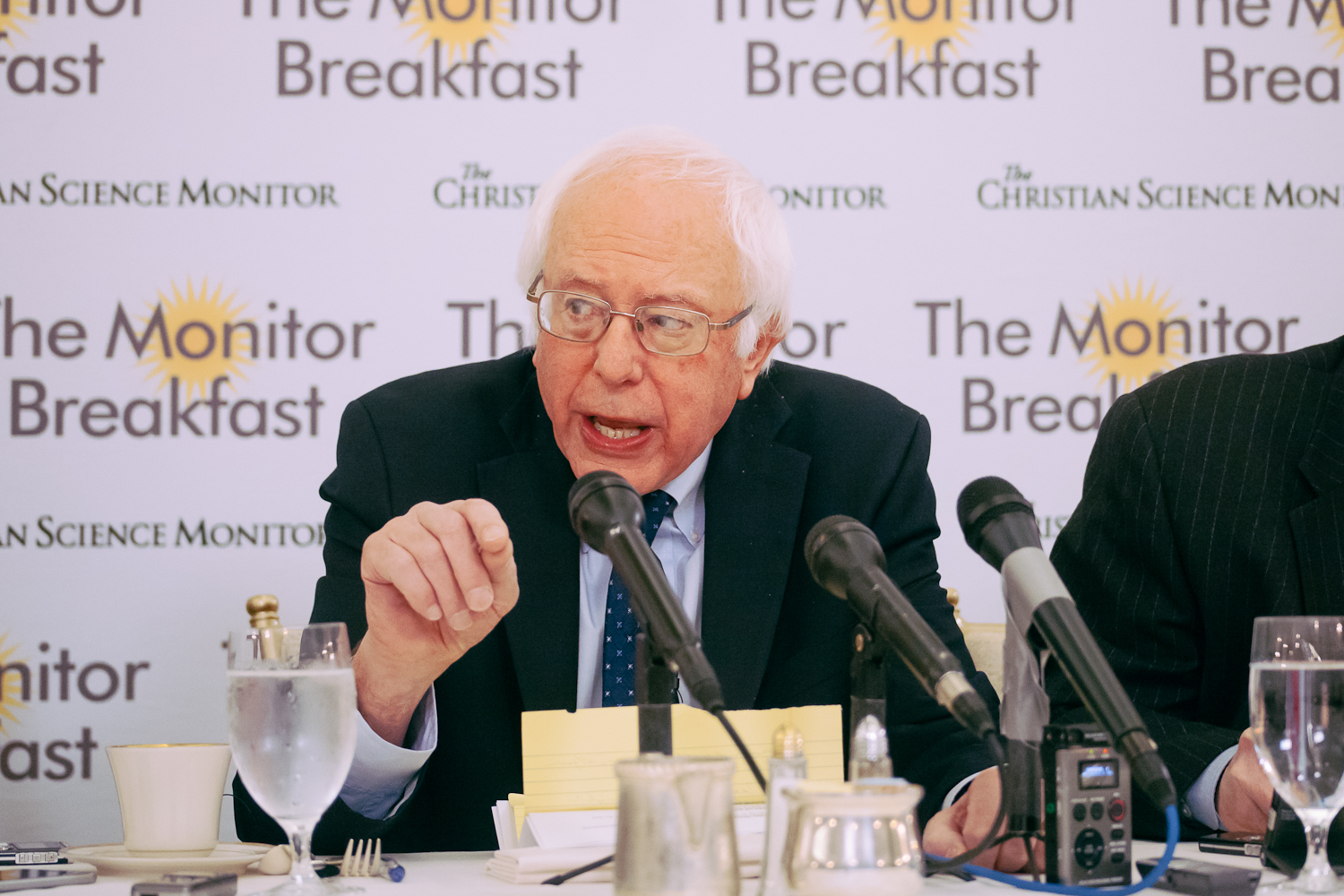
Sen. Bernie Sanders dismissed questions Thursday about whether he could have fared better against President-elect Trump than Hillary Clinton in last week’s presidential election.
Appearing at a breakfast hosted by the Christian Science Monitor, Sanders said that he wasn’t sure he would have topped Trump, a day after he told columnist E.J. Dionne in an interview that “maybe” he would be president now if he would have won the Democratic nomination.
Recommended Stories


“It doesn’t matter, I don’t know if I could have won. Who knows? It doesn’t make much sense to me to be looking backwards,” Sanders told reporters.
“It is time for soul searching within the Democratic party,” he said. “The evidence is pretty clear that when you lose the White House in a campaign against a gentleman who, I believe, will enter the White House as the least popular candidate in the history of this country. When you lose the Senate, when you lose the House, when you lose two-thirds of state governor’s chairs in this country, when you’ve lost some 900 seats in legislatures around the country in the last eight years, I think it is time for the Democratic party to reassess what it stands for and where it wants to go.”
The former presidential candidate also implicated Clinton by saying “it is not possible” for candidates to have deep ties to corporations and try to claim they are the “champion” of the middle class and workers.
“It is, in my view … not possible to be a candidate of corporate America, not possible to be a candidate of the insurance companies or Wall Street, not take huge amounts of money from powerful special interests, and then say ‘well I’m going to champion the needs of a declining middle class, I’m going to champion and fight for the needs of working class people or low-income people.’ I don’t think you can do that.”
Sanders did say Clinton still has an “important role” to play in the future of the country and the Democratic party.
On Wednesday, Sanders was named to part of the Democratic leadership team in the U.S. Senate, and became the chair of “outreach” for the team. He was named to the leadership team along with Sen. Joe Manchin, D-W.V., and Sen. Tammy Baldwin, D-Wis.
Despite the new role, Sanders will remain an independent, and told reporters he will continue to be one through the end of his current term in the Senate, which expires in 2018.
