Here’s what putting Iran ‘on notice’ could mean

Published February 12, 2017 4:52pm ET


President Trump’s push to put Iran “on notice” portends a sprawling, complicated struggle with a country whose leaders have already begun to test the tolerance of the new administration.

Trump has already signaled his willingness to consider military action against Iran, and tensions that had simmered below the surface during the previous administration could quickly escalate from a war of words to an actual conflict.

“We let them out of the box, we gave them a ton of resources … in order to preserve the Iran deal and avoid confronting the Iranians, the Obama administration looked the other way as they basically conquered Iraq, Syria and Lebanon,” a veteran Iran expert who declined to be named told the Washington Examiner.

“A country that screams ‘Death to America’ is at a 40-year high,” the expert added.

But putting Iran “on notice” doesn’t have to mean taking military action against Tehran, at least not yet. Experts say there is still a range of economic and diplomatic options at Trump’s disposal to deploy against a regime that grew immensely stronger on Barack Obama’s watch.

Here are four ways Trump could follow through on his pledge to put Iran “on notice.”

1. More non-nuclear sanctions

Trump has already begun to flex his muscles when it comes to dealing with Iran, issuing a round of fresh sanctions on Feb. 3 against 25 Iranian people and companies in retaliation for a ballistic missile test Iran had conducted in late January.

The president could hit Iranian entities with even more sanctions related to its regional provocations and ballistic missile activity, a move that would find strong support among congressional Republicans.

Sens. Marco Rubio, John Cornyn and Todd Young have already introduced legislation to impose sweeping sanctions against Iran for its support of terrorism, human rights abuses and overall aggression.

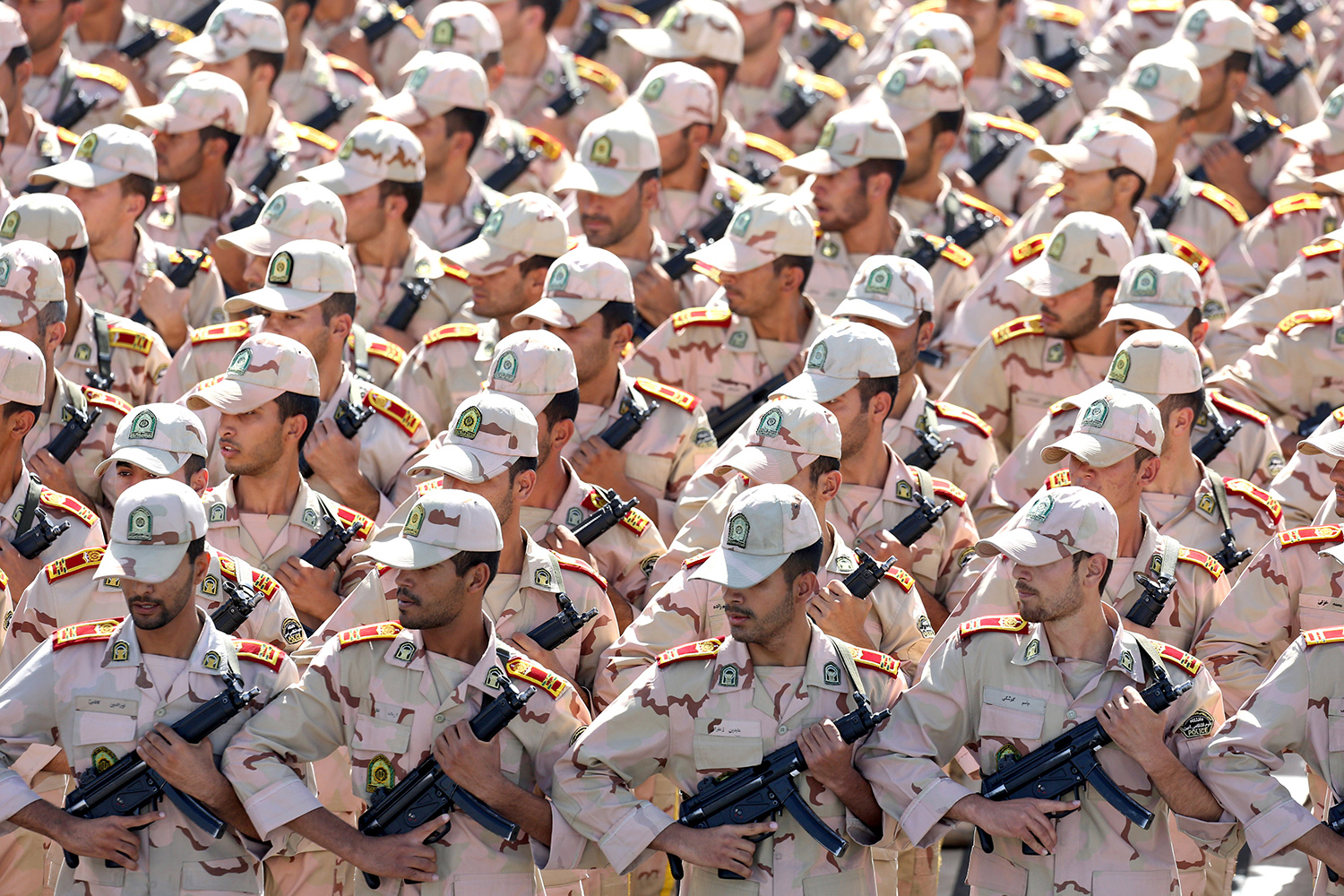
Their bill would notably slap sanctions on the Islamic Revolutionary Guard Corps, the country’s controversial security and military organization.

2. Designate the IRGC as a terrorist group

The Trump administration is reportedly weighing an executive order that would designate the IRGC as a terrorist organization. Its special operations unit, known as Quds forces, has already been officially labeled a terror group.

Classifying the IRGC as a terrorist group would serve as a powerful rebuke to Iran, but it could also create regional complications.

For example, Iraqi forces have come to rely on support from the IRGC in their fight against the Islamic State in Iraq. U.S. forces are also supporting the Iraqi military in its efforts to repel the Islamic State there.

3. Review previously-sanctioned entities

The Iranian entities sanctioned by the Trump administration last week were not covered under the far more widespread and crippling economic sanctions the U.S. imposed on Iran during negotiations over the nuclear agreement.

However, Trump could order a review of the entities that previously faced sanctions to see if they’ve lapsed into sanctionable activity, such as abusing human rights or aiding terrorists in the region.

Iran Air, the state-owned carrier that entered into a nearly $17 billion deal with Boeing after the completion of the nuclear deal, could easily be found to have violated restrictions on its activities, an expert said.

That’s because Iran Air is widely suspected of having continued its practice of transporting weapons to the regime of Syrian President Bashar Assad. Iran is a strong supporter of Assad, whom the U.S. has accused of committing war crimes.

4. Strengthening military presence in the region

Trump could also increase the U.S. military presence in the Persian Gulf to send a clear message that Iranian aggression at sea will no longer be tolerated.

“The Trump administration should do more to counter the threat posed by Iran and use the naval arena, where it enjoys clear superiority, to check Iran,” wrote Yoel Guzansky, a research fellow at the Hoover Institute, in a recent op-ed for The Hill.

Obama exercised enormous restraint when dealing with Iranian naval provocations, to the dismay of his Republican critics.

He did virtually nothing in response to the IRGC’s temporary capture of 10 U.S. sailors in January 2016, and U.S. naval ships under his command did little to answer dozens of confrontational incidents, such as Iranian vessels rushing dangerously close to American ships.

Trump’s rhetoric and early positioning have marked a departure from the Obama administration’s approach to Iran, which critics characterized as deferential after Iran signed the nuclear deal in 2015.

But former Obama allies have labored to frame Trump’s strategy as the natural progression of his predecessor’s policies.

“This is consistent with a response we might have seen from the Obama administration — or what a Clinton administration might have done,” Suzanne Maloney, a former State Department adviser on Iran, told Vox.

Richard Nephew, a former sanctions expert in Obama’s State Department, said Trump’s round of sanctions was not a “meaningless action.”

“This is also not a dramatic escalation,” Nephew told the Huffington Post. “It’s not really different from what the Obama administration was doing.”
