

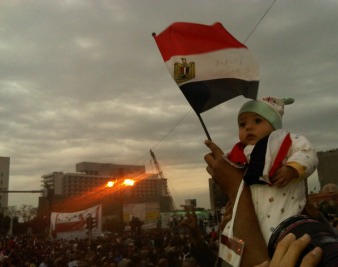
Two years ago, Islamist political posters plastered Giza’s impoverished Omraniya neighborhood. But two weeks ago, as Egyptians went to the polls for the seventh time since the 2011 uprising, a military man’s banners monopolized the wall space. “Abdel Fatah al-Sisi knows how to fix the country,” shopkeeper Shaaban Hamdy, a Sisi supporter, told me in Cairo last week. Hamdy voted for Mohamed Morsi during the 2012 presidential elections, seeing the Muslim Brotherhood leader as “something new, not the same old [regime].” Yet despite regretting that decision, Hamdy acknowledged that Sisi might not be Egypt’s final answer either. “If he fails,” Hamdy said, “the people will come again and change him.”
For Egypt’s military-backed regime, Sisi’s overwhelming victory, with 97 percent of the vote, represents the return of stability after three years of tumult, and the generals laugh at the suggestion that Egyptians would ever rebel against a serviceman. But they should not feel so comfortable. For the second time in two years, Egyptians have put their faith in a president whom they barely knew a year before, meaning that the speed with which many Egyptians came to view Sisi as their savior can be followed by an equally quick reversal if he fails to deliver.
Stay informed.Stay ahead.
Join Washington Examiner for unlimited access to the news, analysis, and commentary that matter most.
Already a member? Log in
