

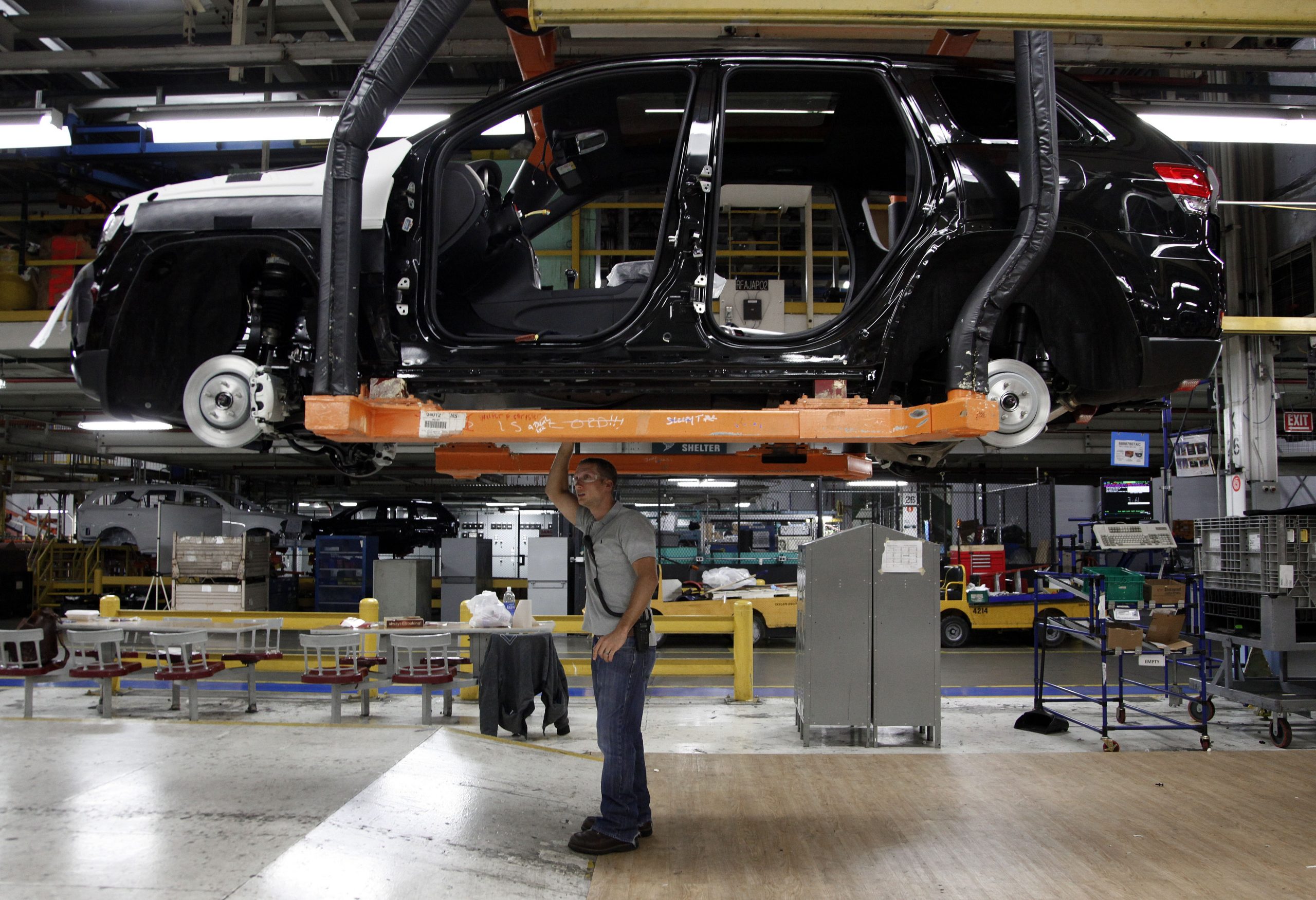
Canada is warning the Trump administration that adding duties to automotive imports will cost U.S. jobs and jeopardize duty-free access to the largest export market for American-made cars.
The notice, filed with the U.S. Commerce Department, is the latest salvo in trade disputes the White House has initiated with countries around the world, including longtime U.S. allies, to address President Trump’s concerns about trade imbalances.
Recommended Stories


[China: US is ‘firing at the whole world’ with tariffs]
Automakers including General Motors and industry trade groups have already cautioned the administration that its proposed 25 percent auto tariffs would disrupt their supply chains, while economists have warned broadly that Trump’s protectionist policies risk a trade war that might undo the economic benefits of last year’s tax cuts and ultimately spark a global recession.
“Canada is the United States’ biggest automobile and automotive parts customer by a significant margin, and automobiles imported from Canada contain a significant portion of U.S. automotive parts,” Prime Minister Justin Trudeau’s government wrote in comments submitted for the required investigation of the tariffs. Trump wants to impose them under national security grounds allowed by Section 232 of the Trade Expansion Act of 1962.
U.S. auto exports to Canada totaled $24.2 billion last year, about 38 percent of total American shipments, and included 59,066 Chevrolet Silverado vehicles made in Michigan and 150,111 F-Series trucks from Ford, made in Kentucky, Michigan, and Missouri, Canada pointed out. All three states supported Trump in the 2016 presidential election.
Growth in automotive industry jobs has outpaced total employment gains in North America, Canada noted, with average auto-manufacturing jobs paying about $29 an hour, and disrupting the sector with tariffs threatens growth and employment.
“Maintaining open trade of automobiles and automotive parts between our countries is crucial to the economic well-being of both of our industries, workers and communities, which in turn supports our collective security,” Canada argued.
Both Trudeau’s government and the European Union are already retaliating against the U.S. for previously imposed tariffs of 25 percent on steel and aluminum imports, which Trump also imposed on national security grounds to prop up the U.S. metals industry.
Separately, the White House has threatened tariffs on as much as $500 billion of Chinese imports, including 25 percent duties on $34 billion worth of goods set to take effect tomorrow. Beijing has promised countermeasures on the duties, imposed under Section 301 of a 1974 trade law allowing the administration to address unfair trade.
The White House, so far, has stuck by its claims that the tariffs will ultimately benefit the U.S. economy, despite criticism from some lawmakers in Trump’s own party. GOP members of both the House and Senate have cited complaints from businesses in their states about higher operating costs from the duties, which they say may lead to layoffs.
[Also read: Trump warns Harley-Davidson: Moving offshore is the ‘beginning of the end’]
The economy is doing perhaps better than ever before, and that’s prior to fixing some of the worst and most unfair Trade Deals ever made by any country. In any event, they are coming along very well. Most countries agree that they must be changed, but nobody ever asked!
— Donald J. Trump (@realDonaldTrump) July 3, 2018
“This is literally the last thing House and Senate Republicans want to be spending their time with,” said Chris Krueger, an analyst with Cowen Washington Research group, which has analyzed federal policy for the past four decades.
“Every day in 2018 not spent ‘selling’ the tax bill and or taking a victory lap is a lost day,” he said. “Between the tweets and the tariffs, Trump is putting increasing pressure on the GOP majorities. And it is entirely self-inflicted, in rural America farming counties and with business leaders in the suburbs — the yin and yang of the majority.”
