

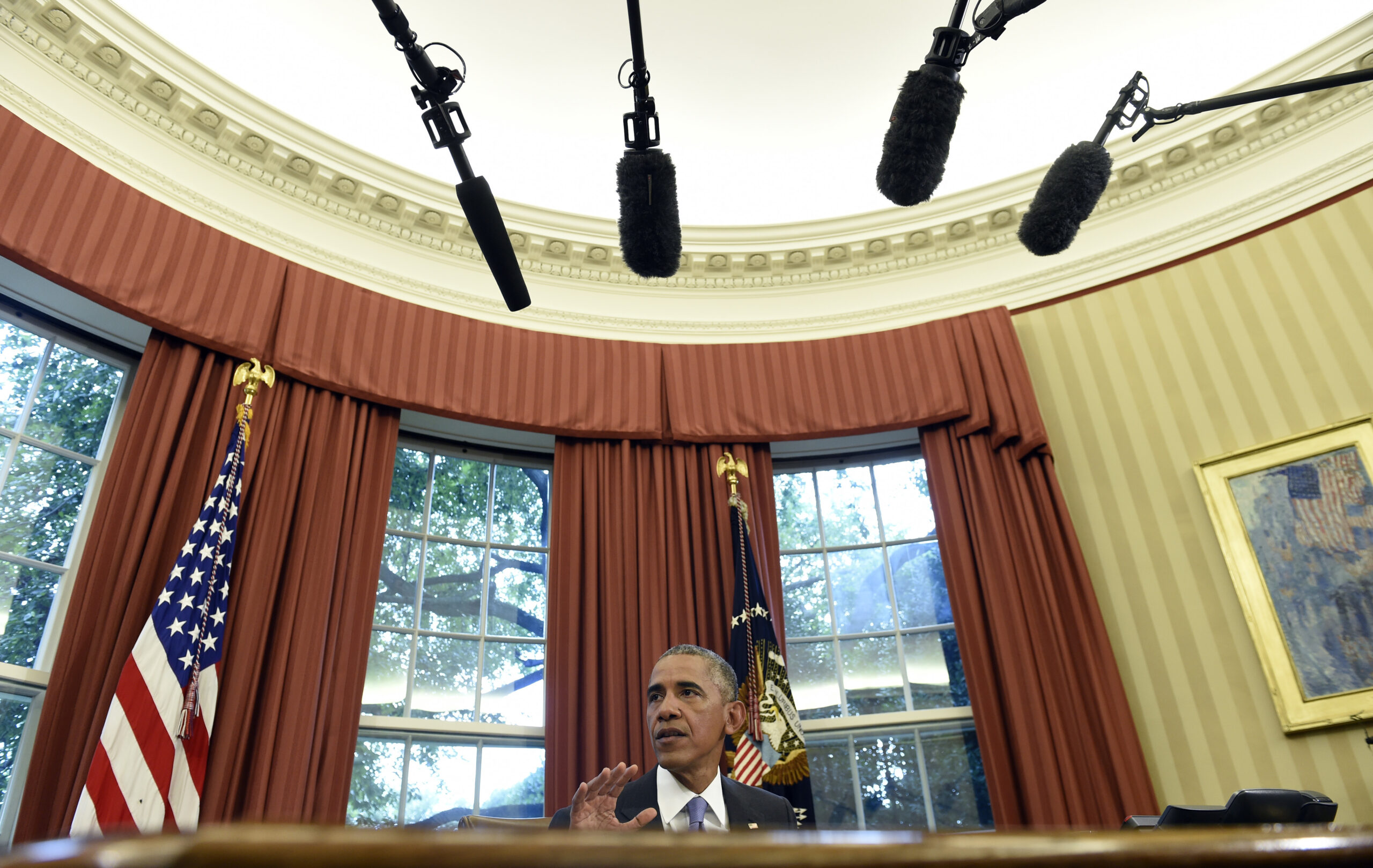
The last major speech Barack Obama will give as president is three weeks away. While the White House has been mum on what he is expected to say, Obama himself has been previewing his remarks for a year.
Beginning in LaCrosse, Wis., last summer where he compared the GOP presidential field to crazy “Uncle Harry,” to Washington last fall when he famously compared them to the Internet star “Grumpy Cat,” to last week’s rant in Ottawa where he sought to reclaim the populist mantle, Americans should pretty much know what to expect from one of the nation’s best political orators when he addresses the Democratic National Convention in Philadelphia.
Recommended Stories


“I care about poor people who are working really hard and don’t have a chance to advance,” Obama said in Canada. “And I care about workers being able to have a collective voice in the workplace and get their fair share of the pie.
“And I want to make sure that kids are getting a decent education … and I think we should have a tax system that’s fair … and I think there should be curbs on the excesses of our financial sector so that we don’t repeat the debacles of 2007 and 2008,” Obama said.
“Now, somebody else who has never shown any regard for workers, has never fought on behalf of social justice issues … They don’t suddenly become a populist because they say something controversial in order to win votes,” Obama said without naming Donald Trump, a tactic he’s unlikely to deviate from in Philadelphia. “That’s not the measure of populism. That’s nativism or xenophobia or worse. Or it’s just cynicism.”
In addition to calling Trump on the carpet, Obama will seek to cement his legacy while bringing his fractured party together behind his one-time adversary and Cabinet member, former Secretary of State Hillary Clinton.
“He can make the case as the highest-profile convert to be her supporter,” White House Communications Director Jen Psaki recently told Politico.
Obama needs to bring supporters of Bernie Sanders around to Clinton’s side as well as convince independents and some Republicans to vote for her in November.
He will tell the country that he has been a good steward of it and that Clinton is the only way to seal that progress.
Throughout the Democratic primary, Obama surrogates repeated that the president’s only interest was in making sure his successor continues his legacy.
The “president’s interest in this is primarily rooted in his desire to see a successor who is committed to building on the progress that we’ve made over the last eight years,” spokesman Josh Earnest said shortly before Clinton sealed the nomination, and the president’s endorsement.
Now he has to convince voters that not just any Democrat will do, and that Clinton is the right Democrat.
“I’m with her. I’m fired up and I cannot wait to get out there and campaign for Hillary,” Obama said in his video endorsement of her last month.
“I know how hard this job can be. That’s why I know Hillary will be so good at it,” he continued. “In fact, I don’t think there’s ever been someone so qualified to hold this office,” he added, previewing a key selling point he will likely try to drive home in Philadelphia.
And after all that, Obama has the burden of clinching his reputation as orator in chief. The man who skyrocketed from state senator to president in four years launched that meteoric trajectory on the same type of stage that he’ll take in Philadelphia.
At the 2004 convention in Boston, Obama sketched his biography, struck his trademark theme of hope and progress and made many Democrats wish he was their nominee instead of John Kerry.
“It’s that fundamental belief — I am my brother’s keeper; I am my sister’s keeper — that makes this country work,” Obama said then in a speech he wrote. “It’s what allows us to pursue our individual dreams, yet still come together as a single American family.”
“In the end, that’s what this election is about. Do we participate in a politics of cynicism or a politics of hope?
