

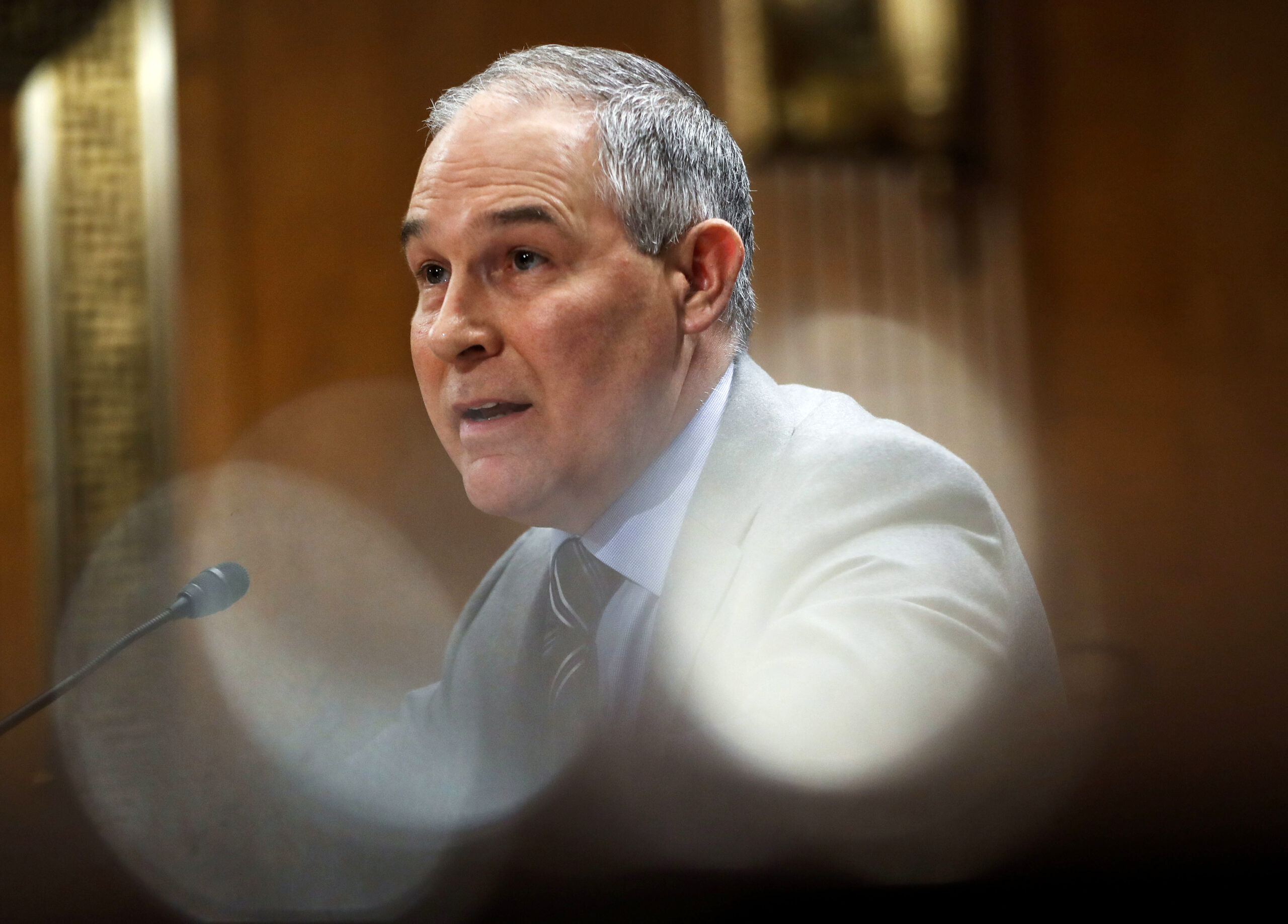
The Environmental Protection Agency said Monday that it will hold a two-day summit in May to address a chemical that has been seen as a drinking water contaminant.
“EPA’s leadership summit will bring together stakeholders from across the country to build on the steps we are already taking and to identify immediate actions to protect public health,” EPA Administrator Scott Pruitt said in a statement. The summit will be held to address perfluoroalkyl and polyfluoroalkyl, which have been turning up in the water supplies of many states.
Recommended Stories


The chemicals provide the nonstick properties found in everything from kitchenware to food packaging. Studies are being conducted on the effects of the chemicals on humans, including by the Centers for Disease Control and Prevention.
The administration formed a task force to address safety concerns in November 2017.
The two-day summit, which will be held May 23 to 24 in Washington, will be used to provide “critical national leadership,” while ensuring state, tribal, and local governments that they will be able “to help shape our path forward,” Pruitt said. He announced the summit in a letter sent Monday to governors of all 50 states, tribal leaders and the leaders of U.S. territories.
Michigan Gov. Rick Snyder, a Republican, released a joint statement with Pruitt in announcing the summit. Snyder was at the center of the years-long lead water crisis in Flint, Mich.
“We need a national effort to review the expanding scientific research on these contaminants, as well as possible responses and remediation,” Snyder said. “Having a national dialogue on this growing concern could be instrumental in establishing standards, protocols and best practices that will allow all state and federal partners to comprehensively address these contaminants across the country.”
The Environmental Council of the States, the main trade group representing state environmental regulators, also provided a statement. “Many states cannot take action on PFAS [perfluoroalkyl and polyfluoroalkyl substances] issues until EPA makes a regulatory determination, and all states would like to see continued federal research and leadership in this area,” said the council’s executive director, Sambhav Sankar.
President Trump has said that his environmental policy calls for “crystal clear” drinking water. The EPA and other agency announcements this month may be the first steps in what that water policy looks like.
A day after meeting with Trump last week, Energy Secretary Rick Perry announced a new competition with the private sector to address a range of water issues, including drinking water concerns.
“That includes increasing alternative water supplies, reducing costs to treat drinking water and wastewater, using water more efficiently, and advancing market-based solutions that incentivize innovation and cooperation,” Perry said. “It is my hope that today is the beginning of a process that will result in bringing water to those in need.”
