Pompeo warns Britain: China using cyber threats to weaken ‘special relationship’

Published May 9, 2019 1:13am ET


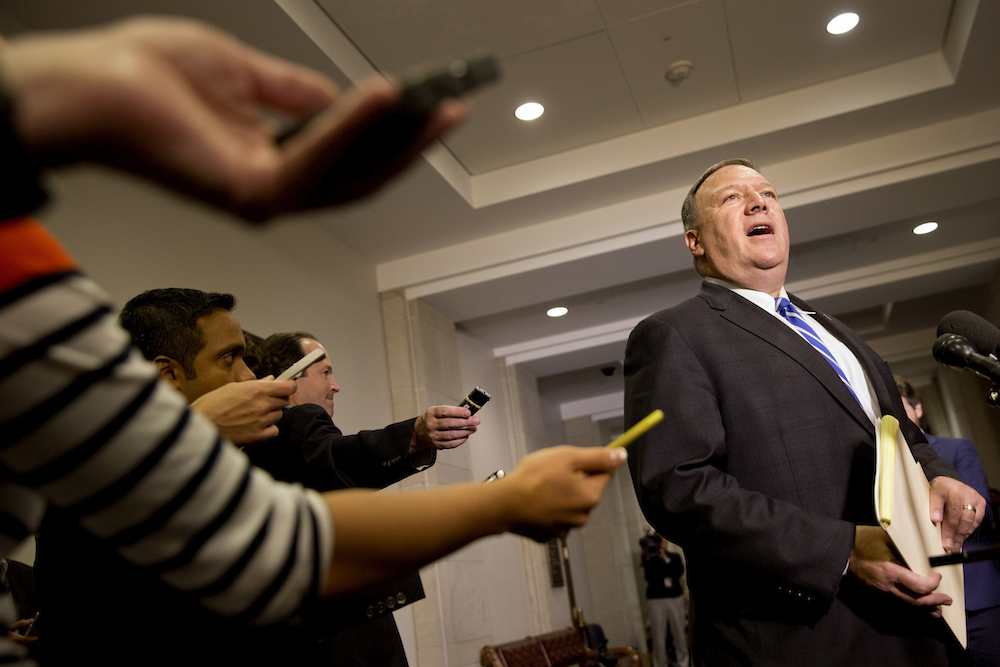
U.S. officials may have to curtail intelligence-sharing with Britain if it depends on Chinese telecommunications companies such as Huawei, Secretary of State Mike Pompeo said during a visit to London.

“We will only share America’s information with those networks that we are confident aren’t under the control of China or China’s government,” Pompeo told Sky News. “And so there’s real risk, if countries choose that path, that we won’t be able to participate in those networks.”

Prime Minister Theresa May’s government is poised to rebuff U.S. calls to exclude Huawei’s pioneering next-generation wireless technology from U.K. networks, even though U.S. officials believe the companies are under the thumb of Chinese intelligence agencies and thus pose an “existential security threat” to American allies.

The stakes of the disagreement are especially high given the close historical partnership between the U.S. and British governments and the importance of 5G technology to an array of sensitive industries.

“As a matter of Chinese law, the Chinese government can rightfully demand access to data flowing through Huawei and ZTE systems,” Pompeo said during a Wednesday Margaret Thatcher lecture in London on “the special relationship” between the U.S. and U.K. “Why would anyone grant such power to a regime that has already grossly violated cyberspace? What can her majesty’s government do to make sure sensitive technologies don’t become open doors for Beijing’s spymasters?”

Pompeo asked those rhetorical questions alongside British Foreign Secretary Jeremy Hunt, at an event hosted by the Center for Policy Studies, a think tank founded by Thatcher. The answer has been shaping up in recent weeks as a disappointment for U.S. officials, according to leaked reports that May’s team plans to implement only a partial ban of Huawei’s 5G wireless technology from the United Kingdom’s networks.

May reacted to the Huawei leak by firing Defense Secretary Gavin Williamson, despite his denial of involvement in the revelation. That apparent tolerance of Huawei is in tension with a recent report from the British entity that monitors Huawei’s U.K. operations, which informed May that the company “bring[s] significantly increased risk to U.K. operators” that are difficult to resolve.

One of May’s allies downplayed those worries in an interview published Thursday. “[Huawei] has responded very positively and confirmed that it is willing and able to address those concerns and ensure that those security defects are corrected for the future,” Philip Hammond, the U.K.’s chancellor of the Exchequer, told a Chinese media outlet. “So we’re very pleased about that.”

The United Kingdom is a member of the Five Eyes alliance, an intelligence bloc that includes the United States, Canada, Australia, and New Zealand.

“This is exactly what China wants; they want to divide Western alliances through bits and bytes, not bullets and bombs,” Pompeo said in his speech. “We know that 5G is a sovereign decision — we respect every nation’s right to make its own choices — but it must be made in the broader context, the broader strategic context of China’s efforts throughout the world.”
