

Elected officials are clamoring for more people to be able to vote by mail as the novel coronavirus outbreak looms over the fall fight between President Trump and presumptive 2020 Democratic presidential nominee Joe Biden.
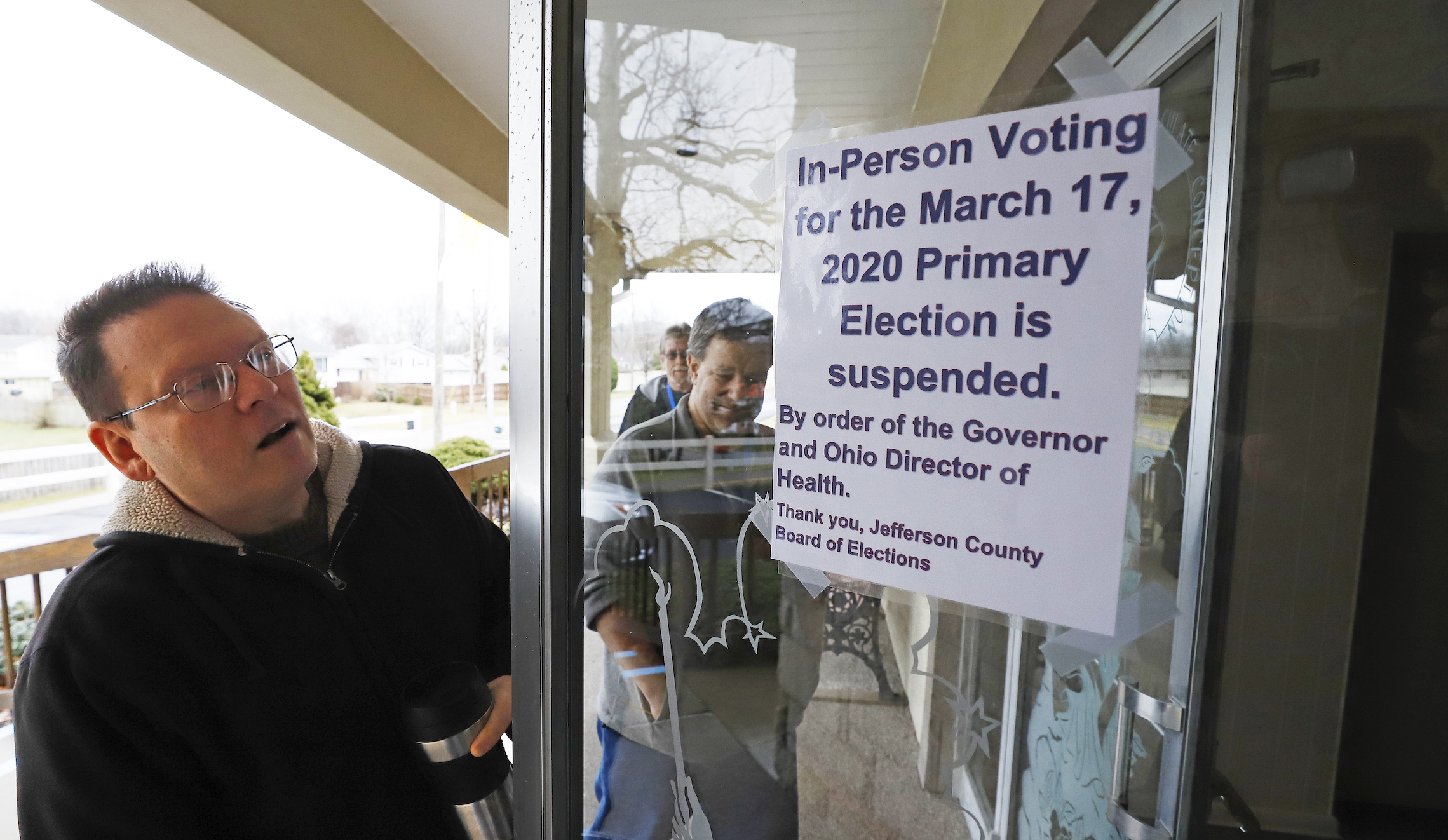
This week’s last-minute move by Ohio officials to shut down the state’s primary election in order to stop the spread of COVID-19 caused temporary confusion. But it also prompted calls for the widespread adoption of mail-in voting measures for the rest of the primary calendar — and the general election.
Recommended Stories


Ohio joined Georgia, Kentucky, and Louisiana in pushing back their contests because of the coronavirus, followed later by Connecticut and Maryland announcing their own respective delays. Their independent decisions were based on a range of factors, including White House and Centers for Disease Control and Prevention suggestions to avoid large crowds and the fact that many poll workers are older, falling within the largest at-risk group for contracting the respiratory disease.
The public health crisis put Biden and Bernie Sanders in an awkward position, campaigning without urging their supporters to vote, sidestepping questions regarding whether the elections should even proceed. The pair are now in a holding pattern as the nation focuses on the pandemic.
Democratic National Committee Chairman Tom Perez, however, is imploring local and state officials with upcoming contests to balance well-being with the right to vote via mechanisms like mail-in ballots so that there’s no risk of postponing November’s election or having state legislatures appoint presidential electors without input from their constituents.
“States using vote by mail should proactively mail ballots to registered voters, where feasible, and should count all ballots as long as they are postmarked by the date of the primary. Additional tools include no-excuse absentee voting, whereby a voter can either drop a ballot off at convenient locations or drop it in the mail. And where in-person voting can still take place under public health guidelines, states should expand days and hours of early voting to reduce lines,” he said.
Yet for swift action to occur, a federal effort is required.
Sens. Amy Klobuchar of Minnesota and Ron Wyden of Oregon, both Democrats, introduced a bill this week called the Natural Disaster and Emergency Ballot Act. If passed, their package would mandate that voters have access to 20 days of early in-person voting and no-excuse absentee voting by mail this cycle, reimbursing the states and counties for the cost of rolling out the changes. The estimated price tag is $1 billion.
A spokesman for Wyden told the Washington Examiner he wasn’t aware of any opposition to the measures. But with Democrats in the Senate minority, neither he nor Klobuchar has any power to force a vote on their vote-by-mail proposal.
U.S. Vote Foundation president and CEO Susan Dzieduszycka-Suinat endorsed the proposals, saying 33 states currently allow voters to request a ballot by mail without a reason. Seventeen states and five territories do not, such as New York and Texas, which are home to some of the country’s most populous cities.
“All of these are processes and procedures are well-tested and broadly used in a number of states already. Nothing is being invented for this legislation. It’s just a question of expanding it,” Dzieduszycka-Suinat said. “My gut feeling is that all these obstacles a month ago will melt away. It’s impossible to deny safe voting to the voters.”
The bill has been praised by prominent Democratic lawyer Marc Elias because it contains provisions addressing his “four pillars,” including free or prepaid postage and ensuring that ballots postmarked on or before Election Day are counted, as well as reforming “signature matching laws” in favor of voters and permitting community organizations to help collect and deliver sealed ballots.
Though supportive, some, such as University of California Irvine School of Law’s Rick Hasen and Center for Election Innovation & Research’s David Becker, warned of potential pitfalls such as the massive logistical and administrative undertaking of procuring equipment, training workers, and reporting results in a short amount of time. They predicted a shift in the electorate given the preferences of different demographics. Older people, for example, like casting ballots by mail while minority voters tend to take part in elections in person, they said. To counter the disenfranchisement threat, they both argue traditional polling stations would still need to be an option.
Pepperdine University’s Pete Peterson told the Washington Examiner his primary concern was accurate voter rolls.
“Mailing out VBM ballots to ‘bad lists’ opens the door to both high costs (print/mailing costs sending ballots to bad addresses), and possibly fraud, as ballots can be ‘harvested’ (still illegal in most states) and submitted,” he wrote in an email. “Of course, all of our states should have ‘clean’ voter rolls, but in our federalist system, we do have a variation of voter roll maintenance.”
He added that there may be a constitutional dilemma.
“This would be a significant federalization of our rules around elections, and I’m not altogether sure there wouldn’t be a constitutional challenge to it — if not this year, after this crisis has subsided,” he said.
