

Russia and China raised eyebrows across the world earlier this month with the announcement of a combined vision for international relations anchored in the idea of helping each other in disputes, particularly with the United States and its allies.
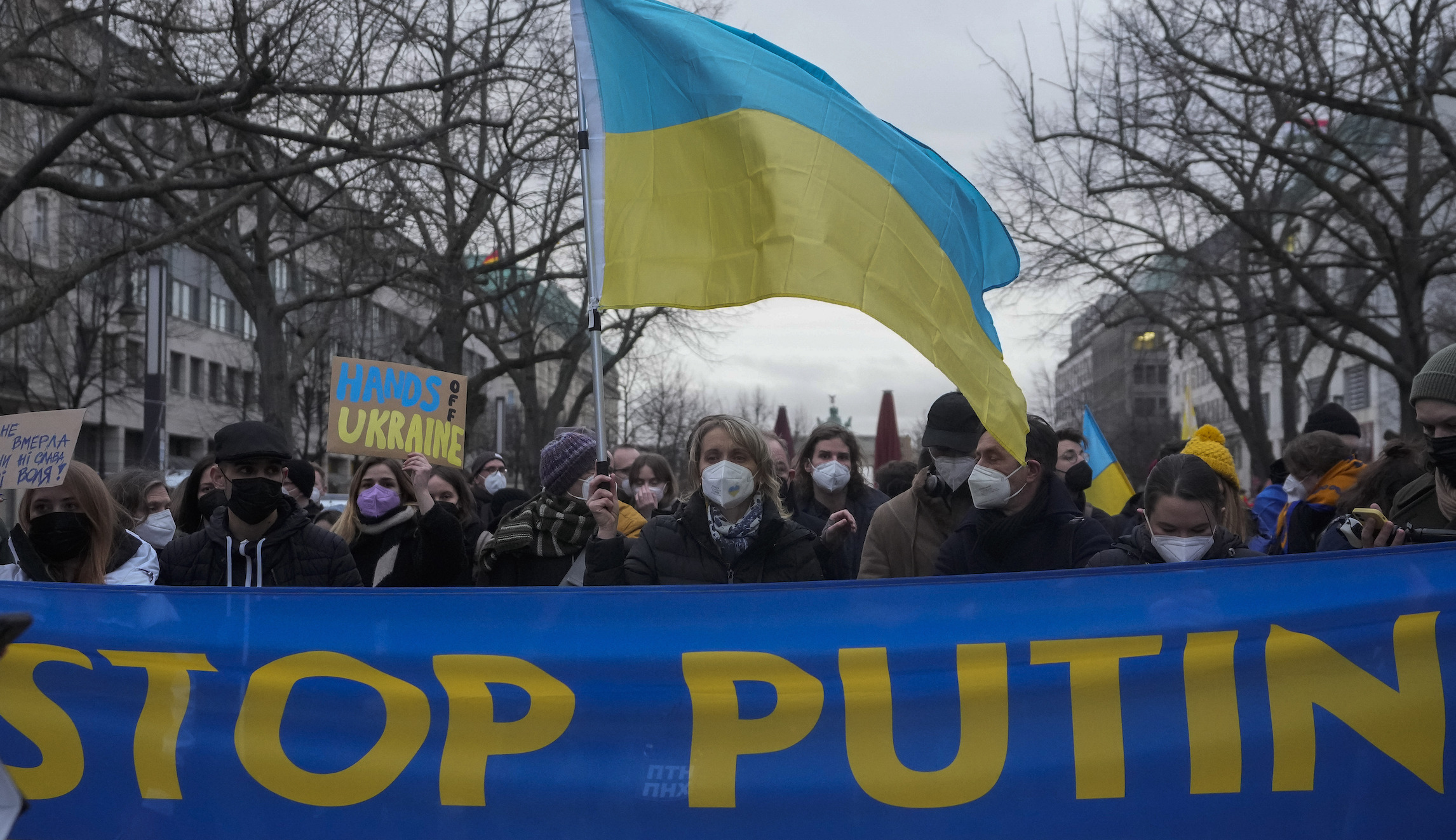
On Feb. 4, the first day of the controversial Beijing Winter Olympics, Chinese General Secretary Xi Jinping and Russian President Vladimir Putin issued the joint statement forecasting a “transformation of the global governance architecture and world order.” Just weeks later, the strength of that resolve was tested when Putin launched what appears to be an invasion of Ukraine.
Recommended Stories



BIDEN ADDRESSES THE COUNTRY ON ESCALATING RUSSIAN AGGRESSION AGAINST UKRAINE
Speaking about the situation at last week’s Munich Security Conference, Chinese Foreign Minister Wang Yi said the “sovereignty, independence and territorial integrity of any country should be respected and safeguarded — and Ukraine is no exception.”
While the Ukraine situation is unlikely to derail the partnership between the two nations, it could underscore the power imbalance. The two partners are not equal, with China vastly larger by both population, 1.4 billion people compared to 143 million, and economic output. As Russia faces Western sanctions, this could further drive the country’s subservient position in the partnership.
“An escalated invasion [of Ukraine] leaves Russia even more dependent on China,” said Chris Miller, a visiting fellow at the American Enterprise Institute. “Regardless of what China thinks about a potential new Russian attack on Ukraine, Russia will have no choice but to increase its reliance on Beijing.”
The Feb. 4 joint statement included support from Beijing for the Kremlin’s opposition to NATO expansion, representing a rapid strengthening of ties between the two neighbors.
China may now need to thread a needle between its relationship with Putin and the West lest its association with Russia harm already strained relations with the U.S. At an emergency U.N. Security Council meeting, the U.S. and its allies attacked Putin for violating the sovereignty of Ukraine. China did not endorse or condemn the measure, instead calling for restraint by “all sides.”
At the same time, Miller argues that Beijing is probably happy to have most of the world’s other powers focused on a crisis far from China’s borders in which China plays little part.
The joint statement says the two nations will “strongly uphold the outcomes of the Second World War and the existing post-war world order defend the authority of the United Nations and justice in international relations, resist attempts to deny, distort, and falsify the history of the Second World War.”
It continues, “In order to prevent the recurrence of the tragedy of the world war, the sides will strongly condemn actions aimed at denying the responsibility for atrocities of Nazi aggressors, militarist invaders, and their accomplices, besmirch and tarnish the honor of the victorious countries.”
That paragraph is filled with pointed statements, wrote Washington Examiner foreign affairs reporter Joel Gehrke upon its release. Russian officials refer to World War II as a triumph that rescued Eastern Europe from Nazi German rule. Chinese diplomats routinely recall that the Chinese people “defeated the Japanese militarist aggressors and fascism” and accuse Tokyo of trying “to revive the specter of militarism” in the context of contemporary disputes.
While Xi endorsed Putin’s push for “binding security guarantees in Europe” in the joint statement, Putin endorsed China’s claim to sovereignty over Taiwan, a strategically significant island democracy that the Chinese Communist Party has never ruled.
“Russia and China stand against attempts by external forces to undermine security and stability in their common adjacent regions, intend to counter interference by outside forces in the internal affairs of sovereign countries under any pretext, oppose color revolutions, and will increase cooperation in the aforementioned areas,” it reads.
But amid this increased cooperation with China, Putin may find that he has very few friends remaining on the world stage, driving his regime further toward Xi.
CLICK HERE TO READ MORE FROM THE WASHINGTON EXAMINER
“Putin has bet his entire foreign policy on friendship with China,” said Miller. “Among the Russian elite, there’s some debate about the wisdom of this. But amid a severe crisis with the West, Putin believes he has no other option.”
