

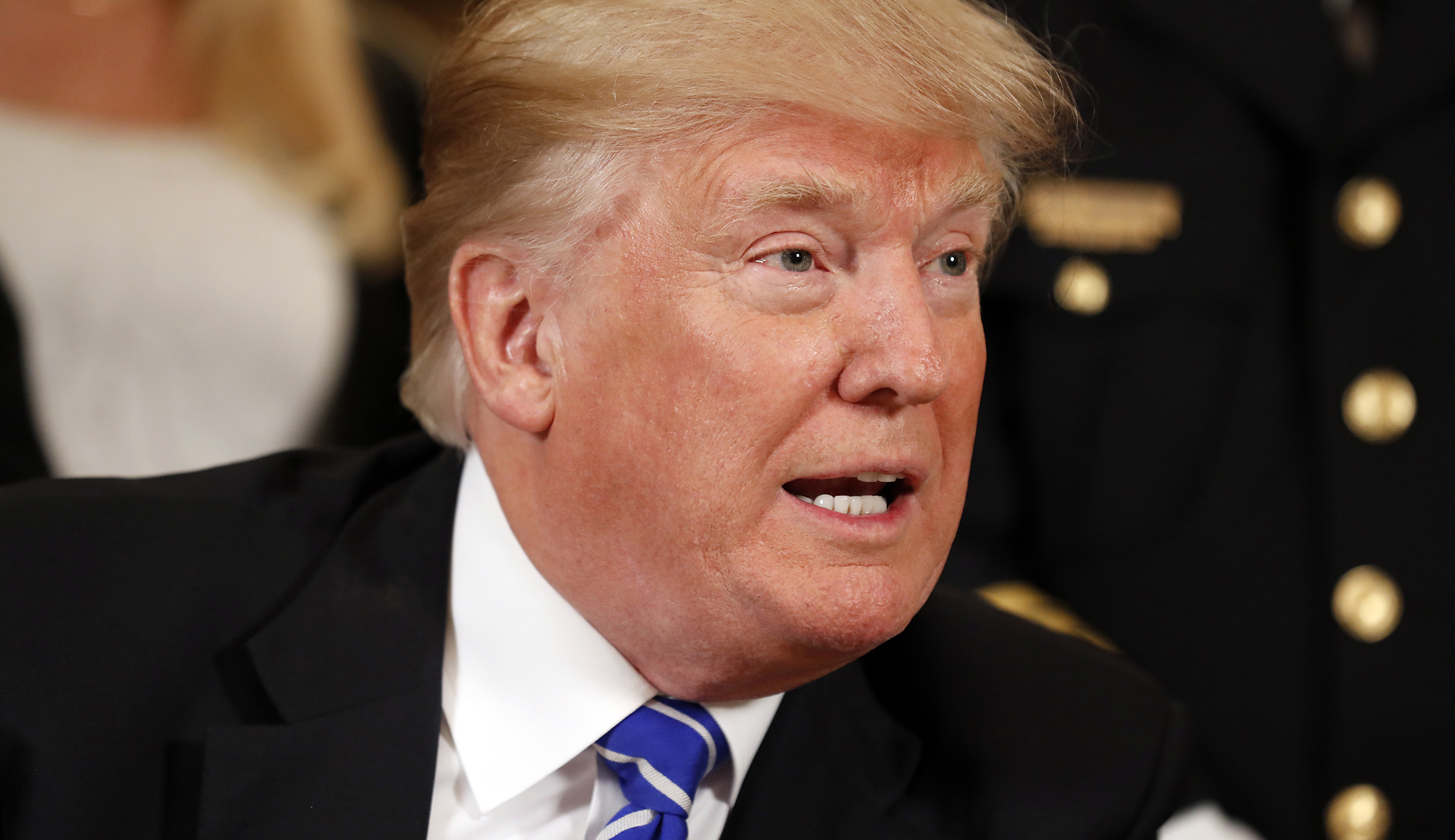
President Trump’s relentless focus on immigration in the midterm elections cost the Republican Party control of the House of Representatives, according to a blistering after-action review produced a by leading GOP pollster.
The findings from David Winston raise questions about Trump’s political position heading into 2020. That’s because the issue he most often discusses on the stump, border security and the migrant caravan, were big losers with critical voting blocs, and largely responsible for the late-breaking Democratic wave that swept Republicans from power in the House, according to Winston.
Recommended Stories



Winston’s data is influential because he is a longtime polling and policy analyst for Republican leaders in Congress. In the House, at least, Republicans could rely significantly on his report as they attempt to chart a path back to the majority. Winston, a veteran strategist who advised Newt Gingrich during his tenure as speaker of the House in the 1990s, produces a postmortem after every major election.
“The closing focus in the final days of the campaign was on the immigration/caravan message, popular with the base and those at President Trump’s rallies but also controversial and divisive, particularly with independents,” Winston wrote in his report, a combination of exit polling and a national, post-election poll conducted on Election Day before the outcome was known. “The people who made their decision over the last few days voted Democratic by a 12-point margin.”
The problem, Winston said in a brief telephone interview, is not that voters don’t care about immigration or that it is a minor issue. Rather, he said, the problem was that voters in the midterm election were more interested in hearing about jobs and the economy. Many GOP strategists agree with Winston.
His report found that voters broadly were 59 percent less likely to back Republicans after hearing from them on immigration and 63 percent less likely to support them based on the issues of border security and the migrant caravan. Yet, voters were 76 percent more likely to vote for Republicans after hearing about jobs and the economy.
“It’s not that immigration wasn’t an important issue. Voters were saying: ‘Don’t tell us about something 3,000 miles away, I’m dealing with the cost of living, talk about that,” Winston explained.
However, Republicans preserved their Senate majority, picking up two seats. And according to exit polling conducted for a consortium of major national news organizations, voters said immigration was the second most important issue, coming in 1 percentage point ahead of the economy. For self-identified Republicans, it was the most important issue. And 50 percent of all voters said Trump’s immigration policies were either “about right” or “not tough enough,” compared to 46 percent who said they were “too tough.”
A group that advocates stronger border security and reducing illegal and legal immigration asserted that Republicans should have done more to push the issue. “If anything, I think a lot of Republicans didn’t hit immigration hard enough,” said Matt Sussis, a spokesman for the Center for Immigration Studies. “There was a frustration that a lot of the president’s goals haven’t been accomplished.”
Meanwhile, the Winston report found that Trump wasn’t the only Republican who erred in messaging. House Republican leaders also fumbled the ball in choosing to make House Minority Leader Nancy Pelosi, D-Calif., a primary issue in the midterm elections, according to Winston.
Armed with polling showing weak support for Pelosi across the country, House Republicans campaigned on a platform of denying her the gavel. In suburban districts and rural districts, whether Tea Partier or suburban pragmatist, virtually every House Republican warned voters that Armageddon would ensue with Pelosi back in charge (she served as speaker from 2007-2011).
The strategy appeared sound enough. Several Democratic challengers promised in their campaigns to oppose Pelosi for speaker. But Winston said this approach was a mistake. By focusing on Pelosi, Republicans spent less time pitching a positive economic message that might have tied the booming economy to their accomplishments in Congress, especially the $1.3 trillion tax overhaul.
“Republicans too often put the tax cut debate in the context of Nancy Pelosi, rather than telling voters what was actually in the tax bill and how the legislation would help voters and their families,” Winston said in his report.
The Democrats flipped 40 seats in any event, and Pelosi is set to become speaker when the new Congress convenes next month. Many Democrats who vowed to oppose her for speaker have backed away from that commitment.
Winston said a major problem with the Pelosi strategy was that a majority of voters didn’t believe that people like them were going to receive a tax cut from the Tax Cuts and Jobs Act, passed nearly 12 months ago along party lines. So, when Republicans on the trail raised the specter of Pelosi taking away voters’ tax relief, the message fell flat.
“They didn’t establish the predicate by which you could follow up. But also, people believe Democrats are going to raise taxes anyway,” Winston said.
