

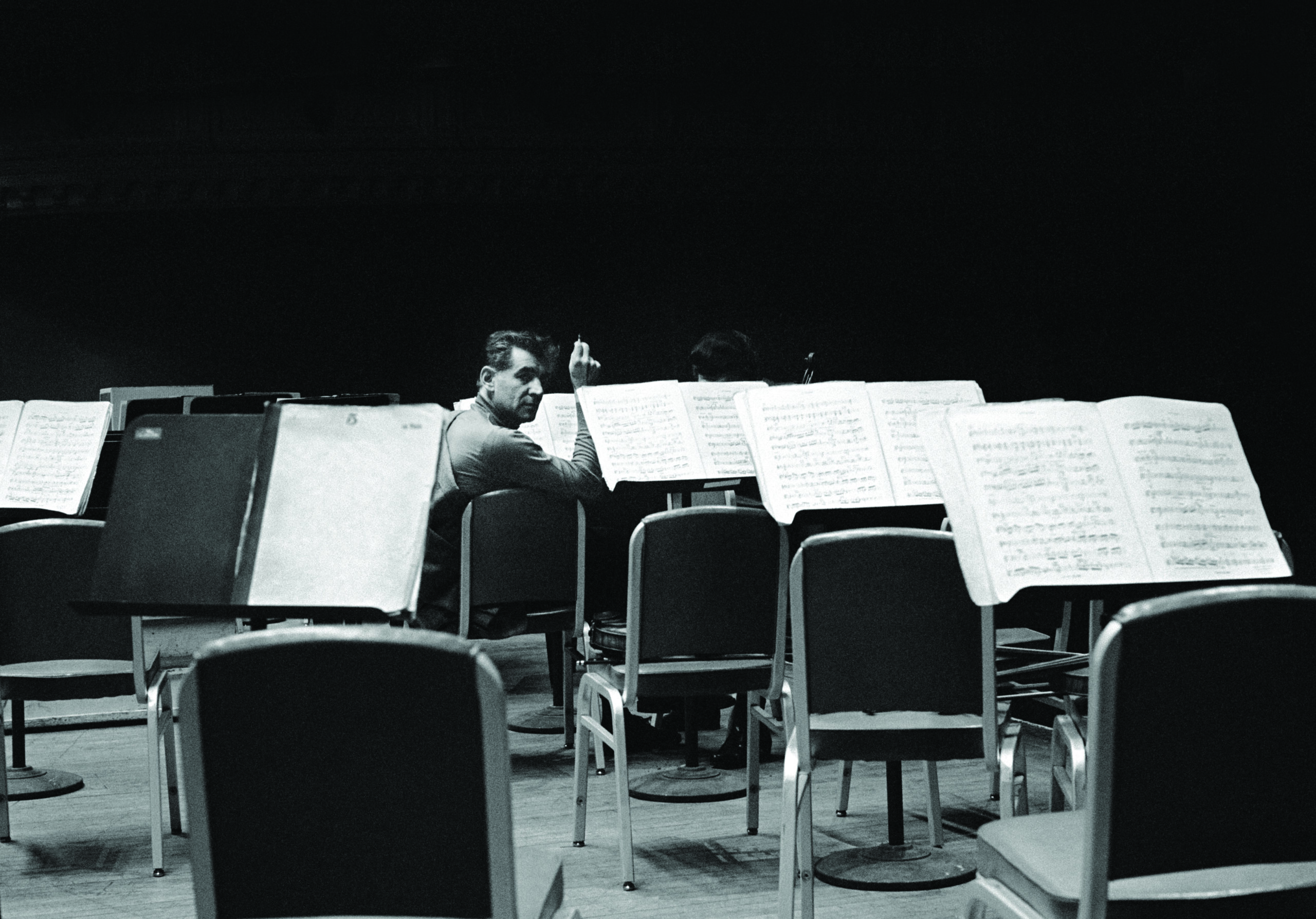
In 1980, at the age of 62, Leonard Bernstein undertook the composition of a formidable full-scale opera, commissioned jointly by La Scala, the Kennedy Center, and Houston Grand Opera. He called it A Quiet Place. It’s the story of an unquiet family, the same one that Bernstein had depicted in Trouble in Tahiti in 1952, when he was just 34. Trouble in Tahiti is a romp, deftly dispatched. But Bernstein had not composed an opera since, and A Quiet Place did not come easily—so much so that he decided to incorporate Trouble in Tahiti as a flashback. As he worked on the score, he confided to an associate that Trouble in Tahiti was “a better piece.” And so it is. The Bernstein trajectory of promises fulfilled and not is anything but simple.
This August will mark Leonard Bernstein’s 100th birthday. The centenary celebrations started last August and are worldwide. The Bernstein estate counts more than 2,000 events on six continents. And there is plenty to celebrate. But if Bernstein remains a figure of limitless fascination, it is also because his story is archetypal. He embodied a tangled nexus of American challenges, aspirations, and contradictions. And if he in some ways unraveled, so did the America he once courted and extolled.
Stay informed.Stay ahead.
Join Washington Examiner for unlimited access to the news, analysis, and commentary that matter most.
Already a member? Log in
