
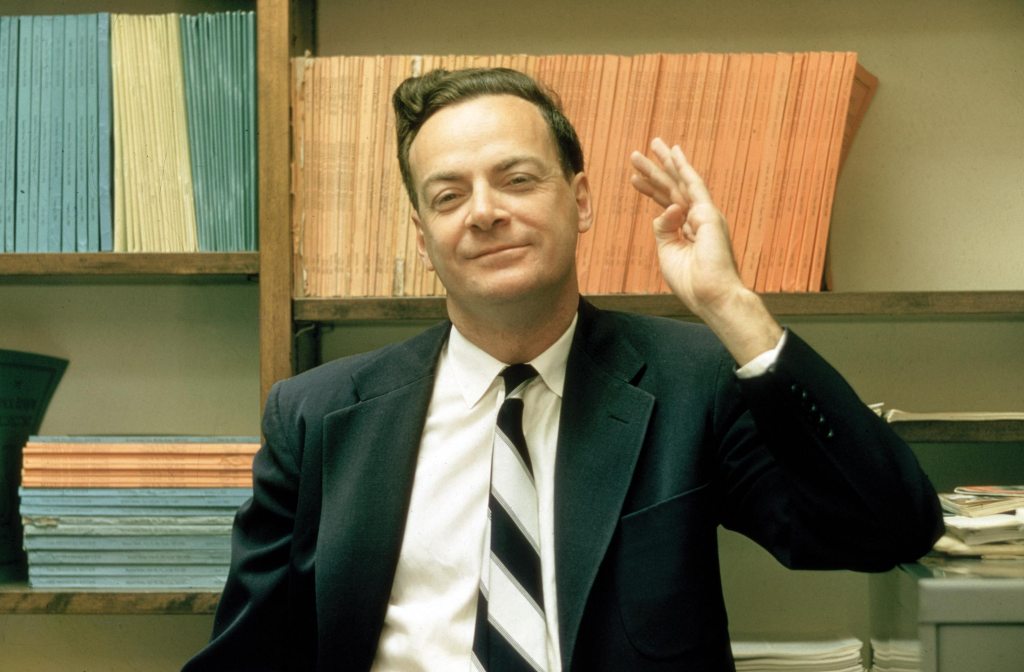
Richard P. Feynman, born in Queens on May 11, 1918, was the most extraordinary physicist since Einstein. He was also, briefly and late in life, the most famous scientist in America, the one everybody saw on the news performing a public demonstration of crystalline logic that helped explain a national tragedy.
“Performing” is a loaded word here, for Feynman was a showman, a master teacher who was chosen at the age of 26 to lecture his assembled Manhattan Project colleagues about the theoretical and practical fundamentals of putting together an atomic bomb; who clarified the preposterous impossibilities of quantum electrodynamics (QED) so that laymen might have a chance of appreciating, if not necessarily understanding, the basic laws of physics, chemistry, and biology; and who showed how a piece of rubber plunged into a glass of ice water could reveal the reason the space shuttle Challenger exploded in midair.
In-depth coverageas the midterms
take shape.
Follow the latest midterm news, analysis, and expert perspectives with unlimited access.
Already a member? Log in