

Russia’s military said Tuesday it would cut back operations near the Ukrainian capital of Kyiv and another northern city in a move meant “to increase trust” as delegations from both countries met in Istanbul for their first face-to-face talks in two weeks.
Gen. Tod Wolters, the commander for U.S. European Command, said the reports that Russians were pulling away from Kyiv is “exactly what we see” during a Tuesday hearing in front of the Senate Armed Services Committee.
Recommended Stories


During the meeting, which was hosted by Turkish President Recep Tayyip Erdogan and attended by Russian oligarch Roman Abramovich, notable for claims he may have been poisoned earlier this month, negotiators also discussed a possible ceasefire.
The conflict exploded after Russian President Vladimir Putin ordered troops on Feb. 24 to invade Ukraine, claiming it was rife with Nazis. He had boasted on national television that the conflict would be quick and contained — but nearly five weeks later, all there is to show are thousands of dead civilians and a haunting humanitarian crisis.
UKRAINE NEEDS WEAPONS FOR THE DEEP BATTLESPACE
Tuesday’s talks in Istanbul, however, raised hopes there could be progress toward ending the war.
Negotiators met at the 19th-century Dolmabahce Palace and discussed international security guarantees for Ukraine as well as securing a ceasefire, an aide to Ukrainian President Volodymyr Zelensky said. Kremlin spokesman Dmitri Peskov said that the talks, which will stretch into Wednesday, could be of “great consequence,” though he did not provide details.
“Today and tomorrow, we will find out whether there is anything promising,” he said.
Vladimir Medinsky, the head of the Russian delegation, said Moscow was prepared to accelerate the timeline of a possible meeting between Putin and Zelensky as soon as a draft peace agreement was ready.
Ahead of Tuesday’s meeting, Zelensky said his country was prepared to declare its neutrality, as Russia demanded, and was open to compromise over the fate of the contested Donbas region in the eastern part of Ukraine.
Erdogan told the delegations they had a “historic responsibility” to end the war and that “having a ceasefire and peace as soon as possible will be to the benefit of everyone.”
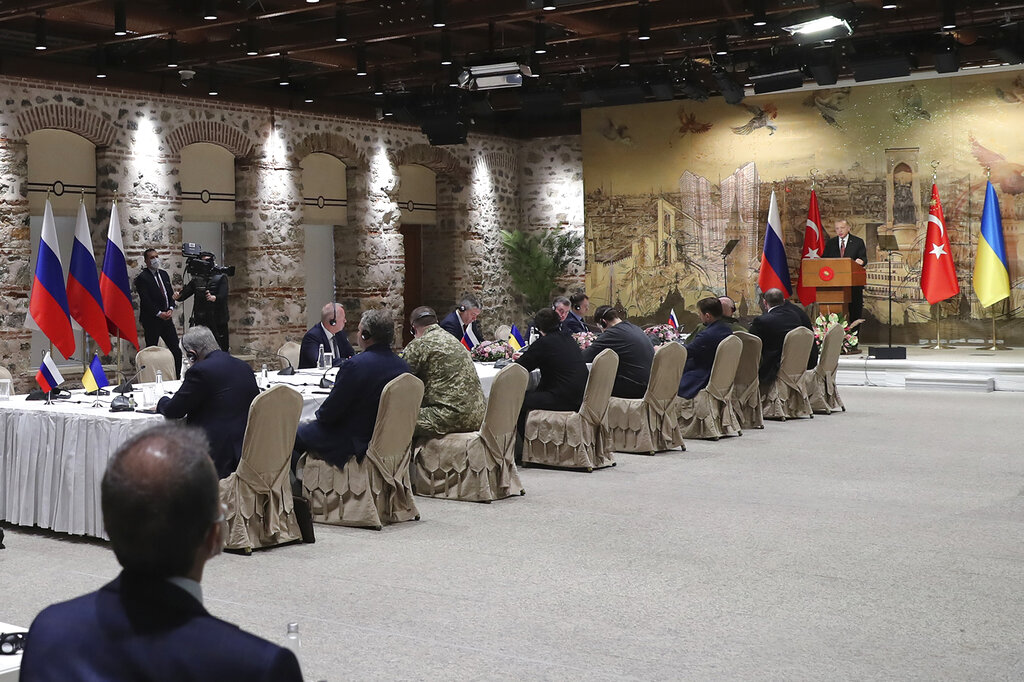
“We believe we are in a phase now to have concrete results from the talks,” he told negotiators sitting on opposite sides of a long table in front of him.
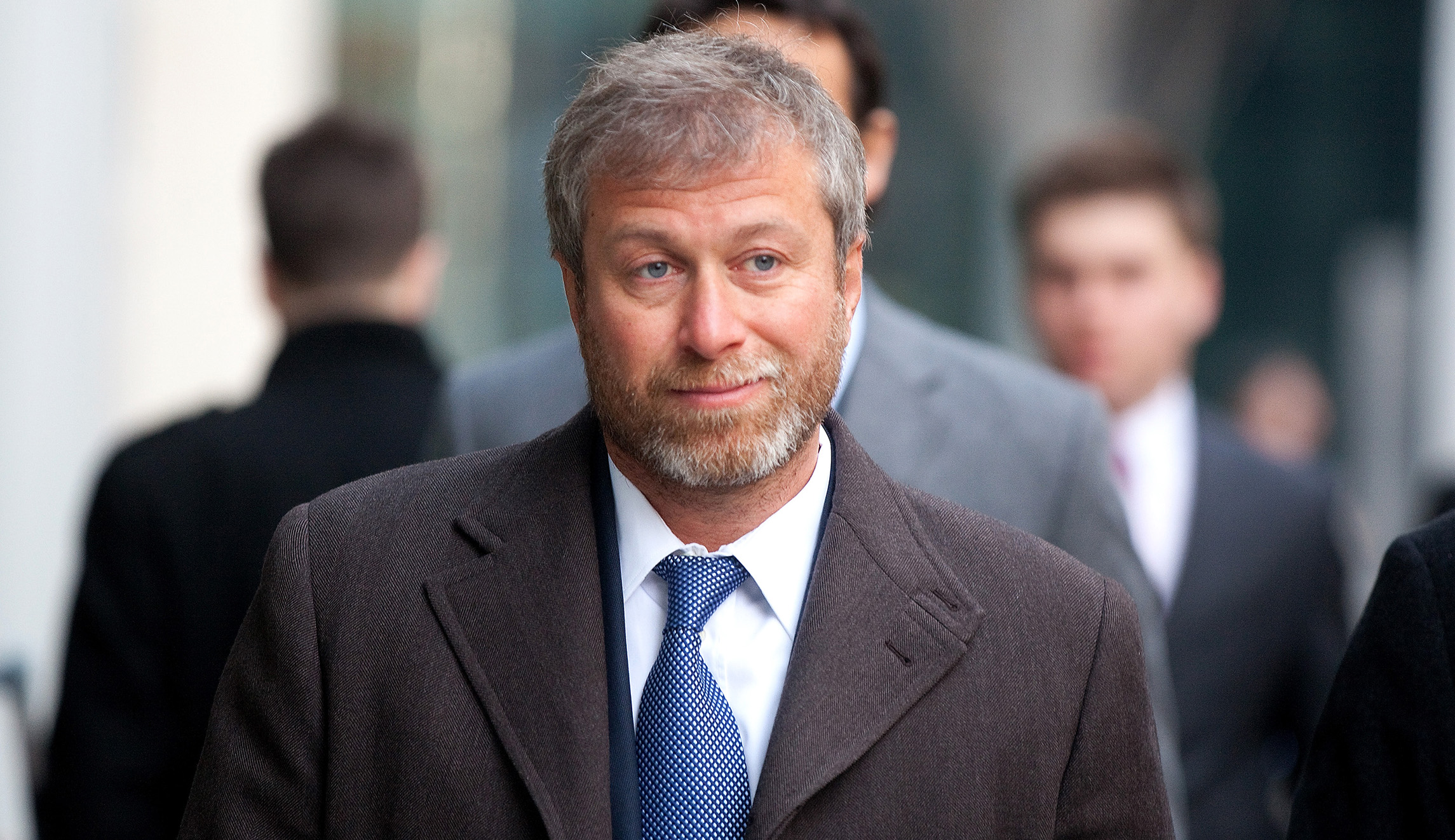
At the meeting, Abramovich was photographed speaking with Erdogan, as well as Turkish Foreign Minister Mevlut Cavusoglu, before the talks began.
CHECHEN LEADER RAMZAN KADYROV VISITS MARIUPOL, PROMPTED BY PUTIN: REPORTS
Reposting with better picture: Abramovich pictured in Turkey during the peace talks. Associates say he has lost weight… pic.twitter.com/XbQZrQt0we
— Max Colchester (@MaximColch) March 29, 2022
Abramovich has shuttled between Kyiv and Moscow for weeks trying to broker a peace deal. On Monday, reports surfaced that he, along with at least two other Ukrainian negotiators, had been the victim of potential poisoning, though the details remain cloudy.
Peskov said Abramovich was not an official member of the Russian delegation but was in Turkey “from our side” and had been “involved in ensuring certain contacts between the Russian and Ukrainian sides.”
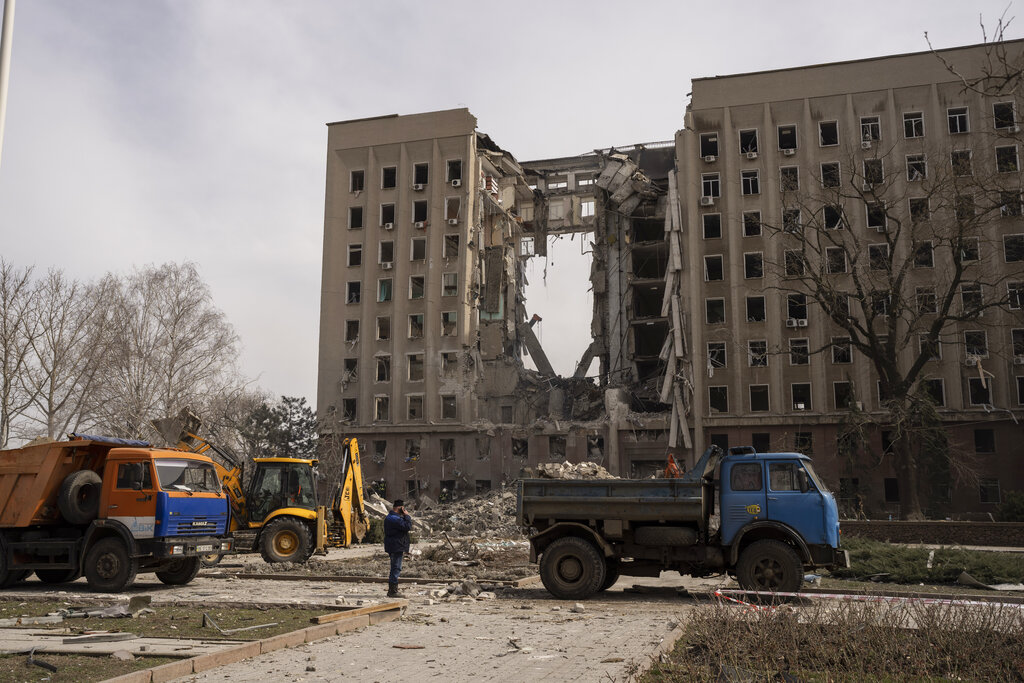
Even as negotiators met to discuss peace, the fighting in Ukraine continued, with Russian forces hitting an oil depot in western Ukraine and a government building in the south.
During his nightly address to the nation, Zelensky told his country that Ukraine’s people “still have to fight, we have to endure.”
“This is a ruthless war against our nation, against our people, against our children,” he said.
Zelensky, once again, took aim at Western countries for not doing enough to help Ukraine and said, as a result, Ukrainians were paying with their lives.
“If someone is afraid of Russia, if he or she is afraid to make the necessary decisions that are important to us, in particular for us to get planes, tanks, necessary artillery, shells, it makes these people responsible for the catastrophe created by Russian troops in our cities, too,” he said. “Fear always makes you an accomplice.”
Western nations have fast-tracked billions of dollars in humanitarian aid for Ukraine and sent an arsenal of weapons and ammunition to help in its fight against Russia. Zelensky, though, has asked for more, including NATO to enforce a no-fly zone, which has been denied.
A Russian strike on a government building in the port city of Mykolaiv destroyed a large portion of the building and left around a dozen people trapped inside, the region’s governor said.
Separately, the head of the International Atomic Energy Agency arrived in Ukraine Tuesday following safety concerns at the country’s nuclear facilities, which have been targeted by Russian forces.
CLICK HERE FOR MORE FROM THE WASHINGTON EXAMINER
“The military conflict is putting Ukraine’s nuclear power plants and other facilities with radioactive material in unprecedented danger,” IAEA’s Director General Rafael Grossi said. “We must take urgent action to make sure that they can continue to operate safely and securely and refuse the risk of a nuclear accident that could have a severe health and environmental impact both in Ukraine and beyond.”
Within the first few days of the conflict, Russian forces captured the Chernobyl nuclear facility, the site of the world’s worst nuclear disaster and an area where nuclear waste is stored. Ukrainian officials have claimed that damage done to the site by Russian forces has exposed people to radiation.
The Washington Examiner’s Mike Brest contributed to this article.
