

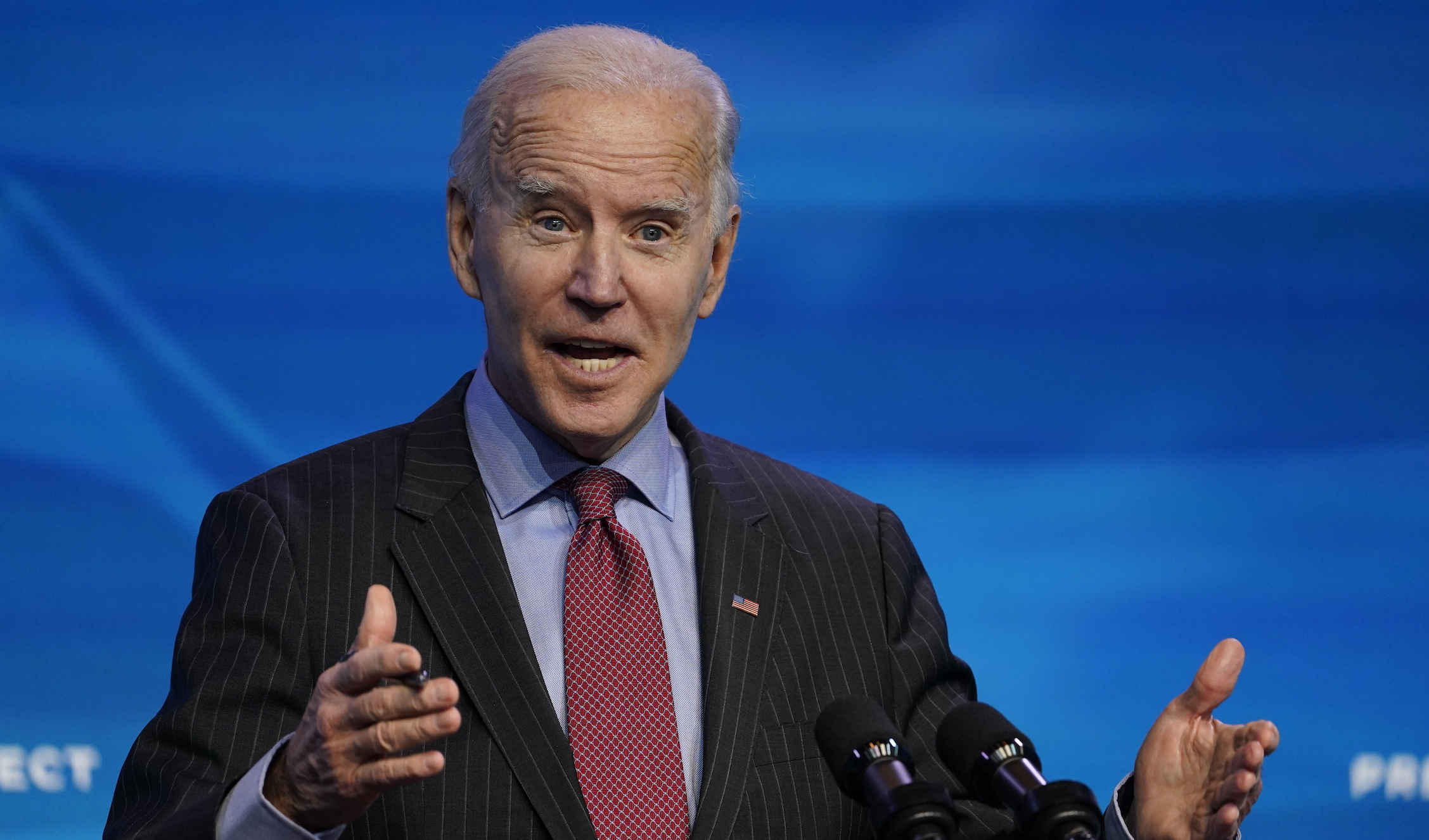
President-elect Joe Biden’s pitch for unity is sounding off-key as the Senate prepares to conduct its second impeachment trial of President Trump in a year, according to Republicans.
Biden voiced hopes the Republican Party would have a post-Trump “epiphany” shortly after he announced his candidacy in 2019. But almost two years later, he’s having his words used against him as Republicans grapple with Trump’s imminent departure from office.
Recommended Stories


Vice President Mike Pence set the tone when he urged House Speaker Nancy Pelosi not to “further divide and inflame the passions of the moment.” Pence wrote that in response to Pelosi’s 24-hour ultimatum that he invoke the Constitution’s 25th Amendment against Trump, or she would call House Democrats’ impeachment article against the president up for a vote.
In his letter, Pence went on to implore Pelosi to team up with Republicans “to lower the temperature and unite our country.” A week earlier, pro-Trump supporters stormed the U.S. Capitol after a rally headlined by the president. Five people died in the attack, started to stop the congressional counting of Biden’s Electoral College votes.
House Republicans then seized on the message in press releases and floor speeches to convey their distaste for another Trump impeachment. Now, senators are leaning into the rhetoric as they brace for a likely trial, despite questions surrounding the process given Trump’s term will have expired.
Senate Majority Leader Mitch McConnell, who will lose that title to Minority Leader Chuck Schumer next week, hasn’t decided whether to exonerate or convict Trump for inciting an insurrection. McConnell told colleagues in an email Wednesday he intends “to listen to the legal arguments when they are presented to the Senate.”
Republican Ohio Sen. Rob Portman, one of 17 GOP senators who would have to join 50 Democrats to convict Trump, wrote Thursday that he believed the president bore “some responsibility for what occurred.” But Portman added that “all of us should be concerned about the polarization in our country and work toward bringing people together.”
“If the Senate conducts an impeachment trial, among my considerations will be what is best to help heal our country rather than deepen our divisions,” he said in a statement.
Biden’s call for unity has caused him plenty of problems. It earned him criticism for being naive. And it drew anger when he touted his record of bipartisanship, whether by collaborating with known segregationists when he was a senator or referring to Pence as a “decent guy.”
Even after the Capitol attack, Biden has reached out to Republicans. His conversations, such as those with Utah Sen. Mitt Romney, seemed to be a sign of respect for disagreeing with Trump’s election challenges. Other discussions with the likes of McConnell signal he’s worried about his legislative agenda with a 50-50 seat split Senate. Democrats will only control the chamber thanks to Kamala Harris’s tiebreaking vote once she is sworn in as vice president.
The theme of Biden’s inauguration next Wednesday is “America United.” But pollsters found this week respondents were skeptical Biden would usher in a different kind of politics.
More than a majority of people told Quinnipiac University they expected partisan lines to remain drawn after Biden’s swearing-in. Almost a third were optimistic he would bridge a few of the fissures, while another 14% weren’t sure what to think.
Biden will want to change some of those minds during his inaugural address, which will be delivered on the Capitol’s west front around noon on Wednesday. He’s already begun the process of moving the news cycle on from impeachment by giving a prime-time speech on his coronavirus pandemic response Thursday night.
Mitchell McKinney, director of the University of Missouri’s Political Communication Institute, said Republican posturing regarding unity appeared “a bit ‘too little, too late’ for some, and a rather disingenuous attack on Joe Biden.”
In contrast to Trump’s famous “American carnage” line, McKinney considered inaugural addresses to “transcend” politics traditionally. The professor compared Biden’s coming moment to Abraham Lincoln’s first inauguration in 1861.
“Upon taking the oath, the partisan campaign is over, or should be over; and this individual who has been elected must now lead all the people, not just those who supported them in their bid for the presidency,” he told the Washington Examiner in an email. “We’ve heard Joe Biden on numerous occasions articulate a desire to be a president for those who did not support him, as well as those who did.”
University of Michigan debate director Aaron Kall said Biden’s inaugural address had to traverse “a fine line” as Trump’s trial could start at the same time as his administration. Kall predicted Biden’s approach toward impeachment would echo a statement released Wednesday, in which he equivocated on the politics while denouncing the riot.
“I think, personally, he probably wouldn’t mind if this goes away or certainly wasn’t the thing that was hanging over his own inauguration,” Kall said. “I do think he can distance himself a little bit from the situation just because he wasn’t part of the Congress that impeached him. He hasn’t taken a real clear position about what he thinks should be done.”
For Kall, Biden’s address will be complemented by his appearance alongside former Presidents Barack Obama, George W. Bush, and Bill Clinton for his swearing-in and a wreath-laying ceremony at Arlington National Cemetery. He also anticipated that Biden would mention Pence “for both attending and how he handled the difficult Electoral College situation.”
