

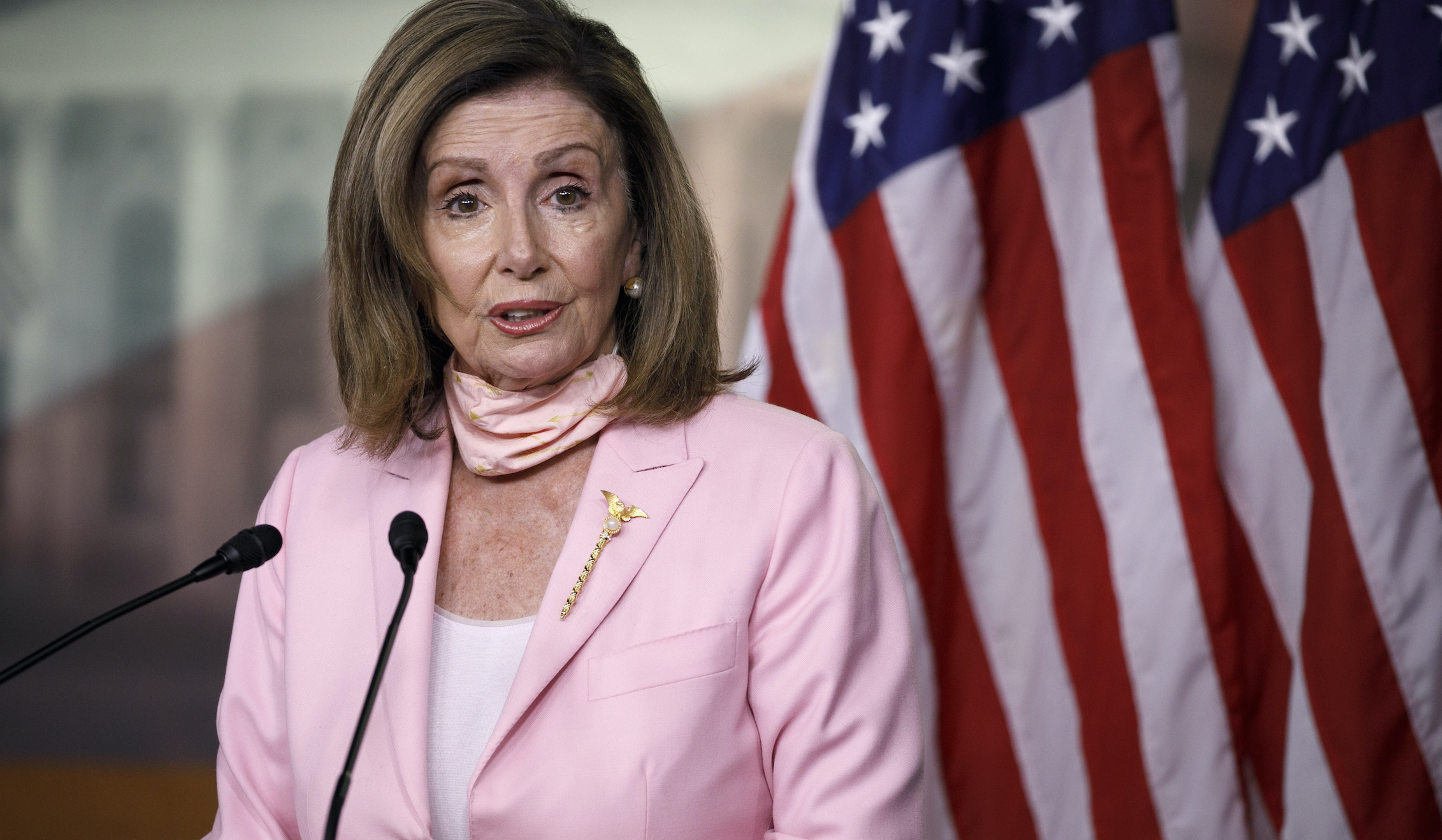
House Speaker Nancy Pelosi told reporters Wednesday she is not backing down from a threat she made last week that the House would block a Biden-approved, bipartisan infrastructure package if it is not accompanied by a much larger bill that would pay for free college and other costly social programs.
“Yes, that is a statement I stand by,” the California Democrat said when a reporter asked her about the threat.
Recommended Stories



But Pelosi notably appeared to veer away from conditioning the passage of the bipartisan bill on the Senate specifically approving the second, larger package of social spending programs that could cost up to $5 trillion and would include tax hikes on corporations and the wealthy.
Instead, Pelosi said the House would take up the bipartisan infrastructure package after the Senate passes a budget resolution outlining spending “parameters” for the second bill.
HOUSE VOTES TO SWEEP OUT CAPITOL STATUES DEEMED OFFENSIVE
Pelosi’s statement follows efforts by President Joe Biden to protect the fragile infrastructure deal and promote it as a solid, bipartisan bill that will fix the nation’s crumbling roads and bridges while boosting the economy with millions of new jobs.
Top Democrats, however, are dealing with backlash from members of their liberal base who say it is far too narrow.
The $1 trillion measure unveiled last week by Biden and a group of 10 Republican and Democratic senators addresses traditional infrastructure projects. It excludes an additional $5 trillion in spending that Democrats are seeking for social programs and climate change initiatives and leaves out the tax hikes that would pay for the programs.
Democrats have been threatening to block the narrow bill unless they can pass a second measure alongside it that would include the costly liberal wish list items. The spending list includes free preschool, free community college, Medicare expansion, and climate change initiatives such as electric vehicle tax credits.
Last week, Pelosi told reporters that without the second measure, “there ain’t going to be no bipartisan bill” in the House.
The opposition angered Republicans, and they threatened to derail the fragile bipartisan accord.
Biden on Sunday issued a statement backing off his own threat to veto the narrow deal unless the second spending package is also passed by Congress.
Democrats are now struggling to navigate their own skepticism of the plan without bucking the president.
“Our caucus is very, very pleased with the bipartisan agreement that the president was able to achieve working with Democrats and Republicans in the Senate,” Pelosi said Wednesday. “There are many good features to it.”
Pelosi said the bipartisan measure “is something that we’d take up” once the Senate outlines the spending it would like to include in the second bill, which will happen this summer when the Senate is expected to vote on a budget resolution.
The budget resolution does not appropriate spending. It only outlines the funding lawmakers believe should be appropriated. The resolution, if passed, will enable the Senate to pass the second spending bill using a budgetary tactic called reconciliation, which allows certain legislation to pass with only 51 votes instead of 60 votes.
“What I said last week, and I reiterate now, is that in the House of Representatives, that particular version … is something that we would take up once we see what the budget parameters are of the budget bill that the Senate will pass,” Pelosi said Wednesday.
Pelosi did not take a reporter’s follow-up question that may have clarified the difference between Pelosi’s comments Wednesday and her statement last week in which she said the spending bill would have to pass the Senate, not just the budget measure, in order for the House to consider the narrow bipartisan infrastructure bill.
Other top Democrats this week have refrained from threatening to block the bipartisan bill, including Democratic Caucus Chairman Hakeem Jeffries of New York and House Majority Leader Steny Hoyer of Maryland.
Biden is eager to pass the bipartisan infrastructure plan, which if signed into law would be a top achievement in his term.
He traveled to La Crosse, Wisconsin, on Tuesday to promote the proposal, which he said would create millions of well-paying jobs while fixing the state’s crumbling roads and bridges and improving public transportation.
As Democrats struggle to rally behind Biden’s bipartisan deal, the House this week is poised to approve a highway funding authorization measure that Democrats said will serve as a negotiating point with the Senate on infrastructure.
The $547 billion measure has very little GOP support and is loaded with provisions aimed at reducing car traffic and directing people to mass transit and other modes of transportation.
CLICK HERE TO READ MORE FROM THE WASHINGTON EXAMINER
“With climate change as its forefront, it seeks to take the transportation and infrastructure mark well beyond what our bills every few years have done in the past,” said Del. Eleanor Holmes Norton, a Washington, D.C., Democrat and a senior member of the House Transportation and Infrastructure Committee.
