

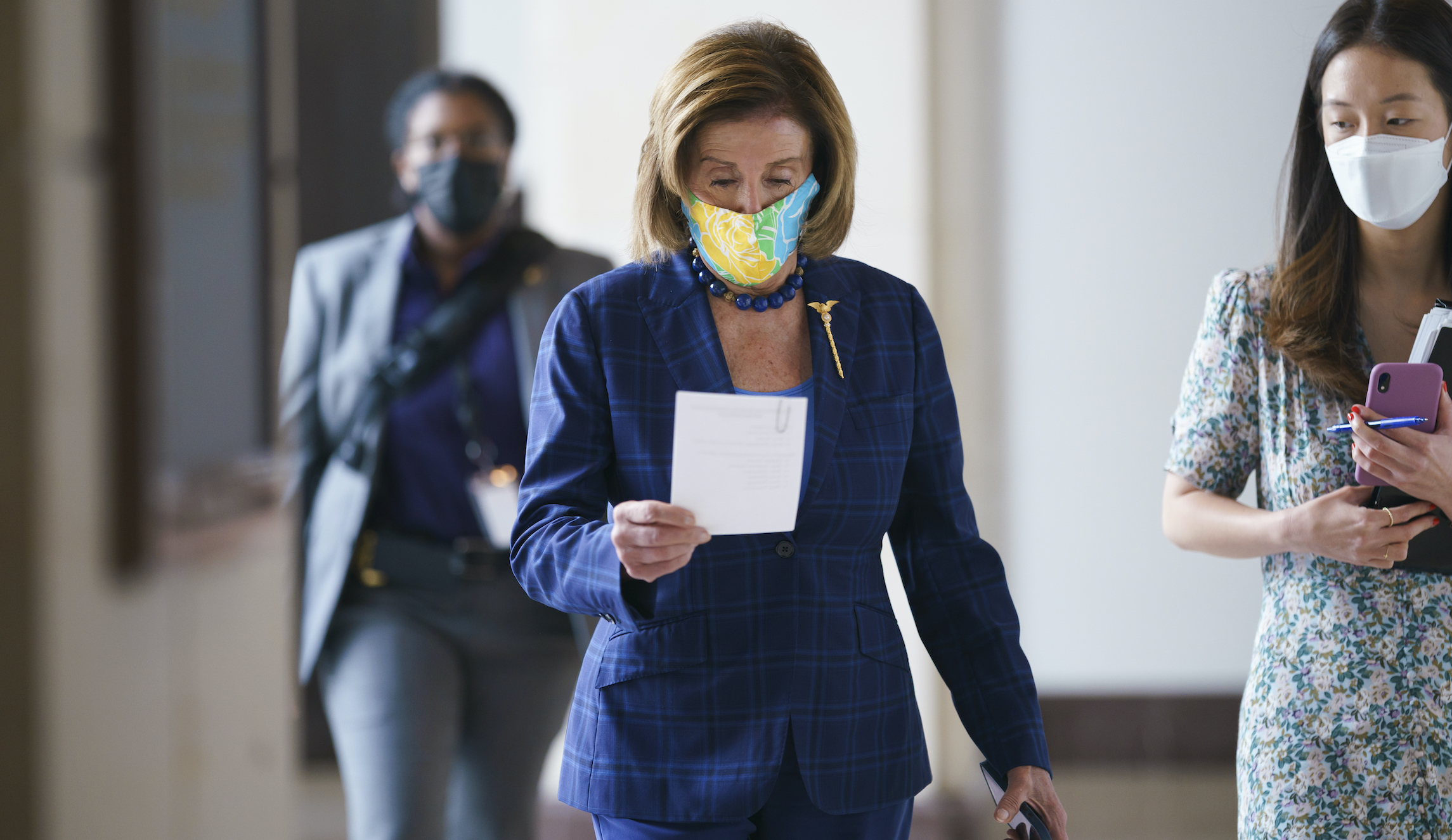
Democrats are struggling to get on the same page to justify two expensive spending bills, the roughly $1 trillion bipartisan infrastructure plan plus a go-it-alone $3.5 trillion proposal, as inflation hits a 13-year high.
Some Democrats were slow to recognize inflation at all, while others in vulnerable seats raise some concern about rising prices.
Recommended Stories


WHITE HOUSE DEFENDS LEGALITY OF NEW ‘TARGETED’ EVICTION MORATORIUM
“If this was an overall inflationary issue, we would see prices going up in relatively equal amounts across the board no matter what the good is,” New York Rep. Alexandria Ocasio-Cortez said last month.
She argued price increases, such as those in lumber or cars, are “sector-specific, which means that these are due to supply chain issues.”
Meanwhile, Florida Democratic Rep. Stephanie Murphy took a more centrist approach.
“As we move forward on much-needed investments, we should be looking at the fiscal state of this country, we should be mindful of inflation. We should allow the resources to work their way through the economy. And we should be thoughtful as good stewards of taxpayer dollars as we move forward,” Murphy said in a June virtual event with the firm BakerHostetler. “I do think some of the proposals coming out of the corners of our caucus will be a bridge too far for us to sustain and not put our economy at risk.”
Federal Reserve Chairman Jerome Powell told Congress last month inflation “has increased notably and will likely remain elevated in coming months before moderating.”
Multiple Democratic pollsters have publicly sounded the alarm about voters being worried about large Democratic spending packages in the face of inflation.
Joel Benenson, who conducted polling for former President Barack Obama, said the issue could endanger Democrats’ slim House majority in 2022. Celinda Lake, a pollster for President Joe Biden’s presidential campaign, said women who are not college-educated, a key demographic for 2022, are undecided about the election and are focused on kitchen-table issues.
A late June poll of battleground House districts from the conservative American Action Network found 88% of voters were worried about the rising cost of living, 86% were worried about inflation, 79% were worried about rising gas prices, and 73% were worried about tax increases.
And in a late July poll, 59% of voters blame Biden’s economic policies for the 13-year high inflation.
After the July consumer price index report came out, Democrats faced a tougher challenge in denying a problem. A common response was to blame the pandemic.
“I know it’s in vogue to criticize one party — Democrats — for inflation right now. I want to remind everybody that after an economy is shut down because of a pandemic, we should expect inflation,” said Minnesota Rep. Dean Phillips in a congressional markup last week. “We should be celebrating the fact that our GDP in the United States of America now exceeds pre-pandemic levels.”
Republicans warn a surge in government spending could exacerbate the problem. Ohio Republican Sen. Rob Portman took a swipe at the $3.5 trillion reconciliation proposal in a floor speech on Sunday, saying the bipartisan bill is “not going to increase inflation like some of the other spending bills being talked about.”
CLICK HERE TO READ MORE FROM THE WASHINGTON EXAMINER
But Democrats, including Biden, argue the two bills will be the antidote to inflation or help to overcome it.
“If we pass the other two things that I want to get done we will, in fact, reduce inflation,” Biden said in a recent CNN town hall.
“I know some people like to say that the inflation is in part because of the deficit spending,” said California Rep. Sara Jacobs in a recent press conference alongside House Speaker Nancy Pelosi. “But you know, I think if you ask any business person if they’ll take on some debt to make the investments they know will grow their business, 99% of the time, they’ll say yes.”
