
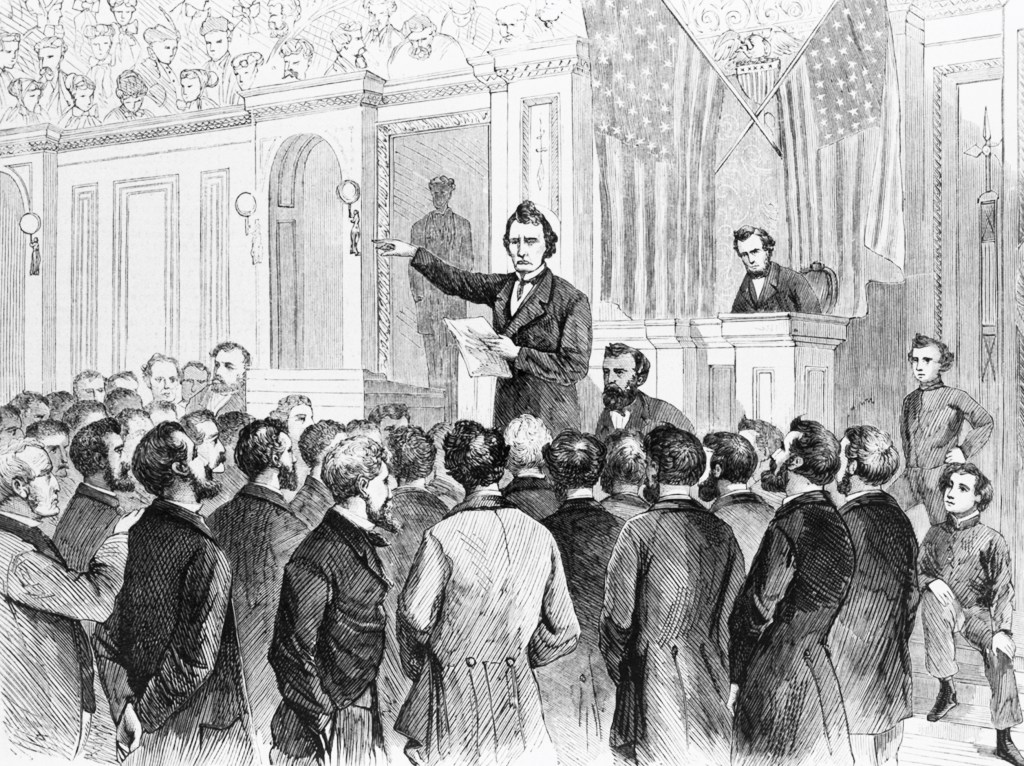
Impeachment is what democracies resort to when they can’t hold an election but don’t want to trigger a revolution.
Impeachment appears in the Constitution (Article II, Section 4) as a restraint on “all civil Officers of the United States,” paving the way for their removal if convicted of “Treason, Bribery, or other high Crimes and Misdemeanors.” But impeachment is not a particularly clear-edged weapon. Treason and bribery seem fairly obvious as offenses, but what are “high crimes and misdemeanors”? Congress resorted uncertainly to impeachment over its first 81 years, and only to impeach four judges, two of whom it failed to convict. It would not be until 1868 that a Congress could nerve itself to impeach a president, and the reason why that hesitation ended had a great deal to do with the man who then occupied the White House, Andrew Johnson.
Real journalism.Trusted by millions.
Unlimited access to in-depth reporting, expert analysis, and the stories that shape our country.
Already a member? Log in