US and Russia chart ‘narrow’ path for cooperation after release of Mueller report

Published May 7, 2019 4:17am ET


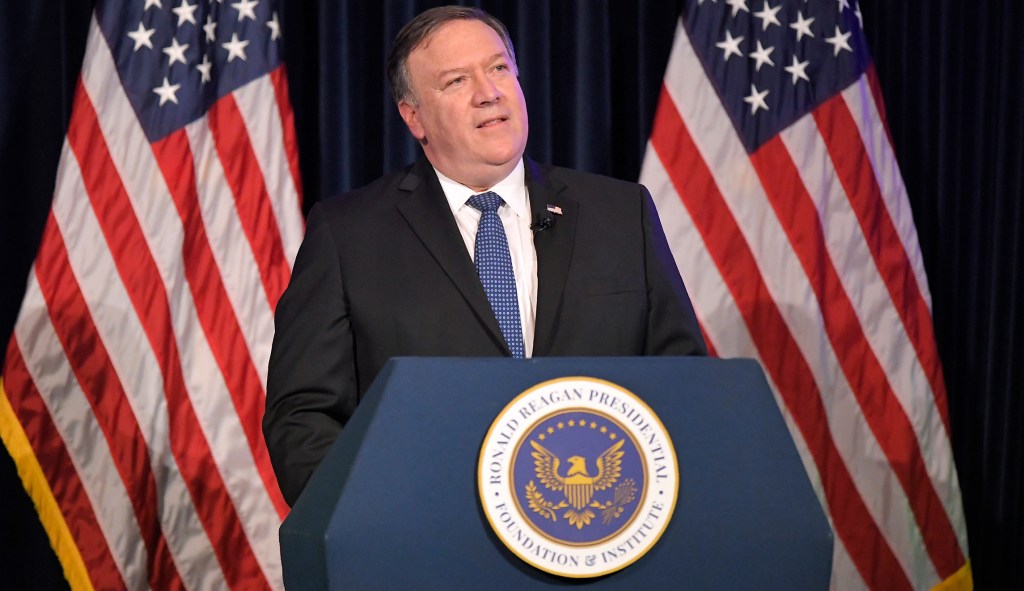
Secretary of State Mike Pompeo said on Monday he is trying to “begin to have positive conversations” with Russian officials.

“We have interests that are definitely different, and there will be places where we run into hard stops pretty quickly, but there is no doubt there was a desire to begin to try and find paths where we can make real progress on places where we have overlapping interests, as narrow as they may be,” Pompeo told reporters in Finland.

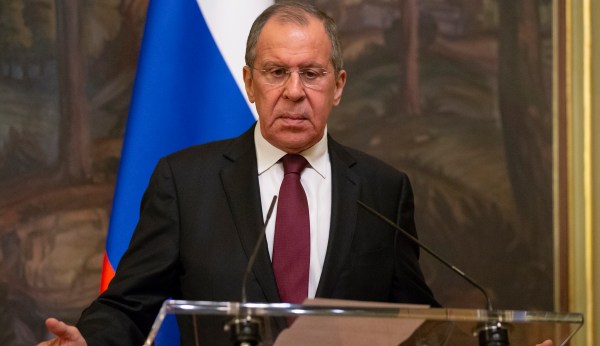
He outlined that hope after a conversation with Russian Foreign Minister Sergey Lavrov in the city of Rovaniemi, on the sidelines of the Arctic Council ministerial. The forum provided the pair with an opportunity for their second face-to-face meeting since Pompeo took over the State Department, amid a series of major geopolitical controversies in which Russia and the United States are at loggerheads.

Lavrov avoided an antagonistic posture in his summary of the meeting as well. “We tried not to focus on the pronouncements made in public, bearing in mind the fact that these pronouncements impact too many things that, as a rule, have nothing to do with real politics,” he told reporters, per state-run media. “We tried to focus on real politics. And we did it.”

They had plenty of politics to discuss, however, most immediately the crisis in Venezuela. Russia is backing strongman Nicolás Maduro to retain power in the face of Western support for top opposition lawmaker Juan Guaidó, whom President Trump recognized as interim president in January.

“We want the Venezuelan people to have an opportunity for democracy, free and fair elections. That can’t be done with Maduro in power,” Pompeo told Finnish media prior to his meeting with Lavrov. “The Venezuelan people know that. Fifty-four nations have signed up for that as well. They understand too that Juan Guaidó is the duly elected leader there in Venezuela.”

Lavrov exited the meeting confident that Trump would not authorize a violent U.S. overthrow of Maduro, who withstood Guaidó’s call for a Venezuelan military uprising last week by the United States.

“I don’t see anyone who would call for a reckless military solution,” he said. “I hope everyone understands that as far as practical politics is concerned, there can be no military solution because it would mean catastrophe.”

The Finland meeting was their first since special counsel Robert Mueller ended his investigation into Russian interference into the 2016 elections and wrote a report that said his team “did not establish that the Trump campaign coordinated with the Russian government in its election interference activities.”

Still, the trip wasn’t a kumbaya moment for the two sides. Pompeo cited the Russian invasion of eastern Ukraine while warning that “Russian territorial ambitions can turn violent,” even in the Arctic.

[Also read: Trump has hourlong talk with Putin about Mueller report, Venezuela, nukes]

“Russia is already leaving snow prints in the form of army boots,” he said. “Russia formally announced its intent to increase its military presence in the region in 2014, when it re-opened a Cold War Arctic military base.”

And he reiterated his rebuke of Russian cyberattacks against the Democratic Party drew yet another rebuke from Pompeo. “We’re going to do everything we can to deter it,” he told reporters after affirming that he discussed the issue with Lavrov.

“It’s not appropriate,” he replied when asked what he said to Lavrov about the election interference. “We’re going to do everything we can to deter it.”

Lavrov’s team also took a shot at Pompeo, claiming that he lied about discussing the election interference.

“Michael Pompeo did not discuss the topic of Russia’s meddling in the U.S. elections with Sergey Lavrov,” an unnamed diplomatic source told TASS, a state-run outlet. “The Russian side is surprised to hear [Pompeo] saying this.”

That public contradiction of Pompeo’s account suggests that Russian officials don’t feel an incentive to make the “positive conversations” easy for Pompeo.

“The conversations are always very direct, they’re very professional, each of us doing our level best to represent what our leaders are asking us to do,” the U.S. diplomat said earlier Monday, when asked to describe his personal relationship with Lavrov. “Our relationship is just fine.”