

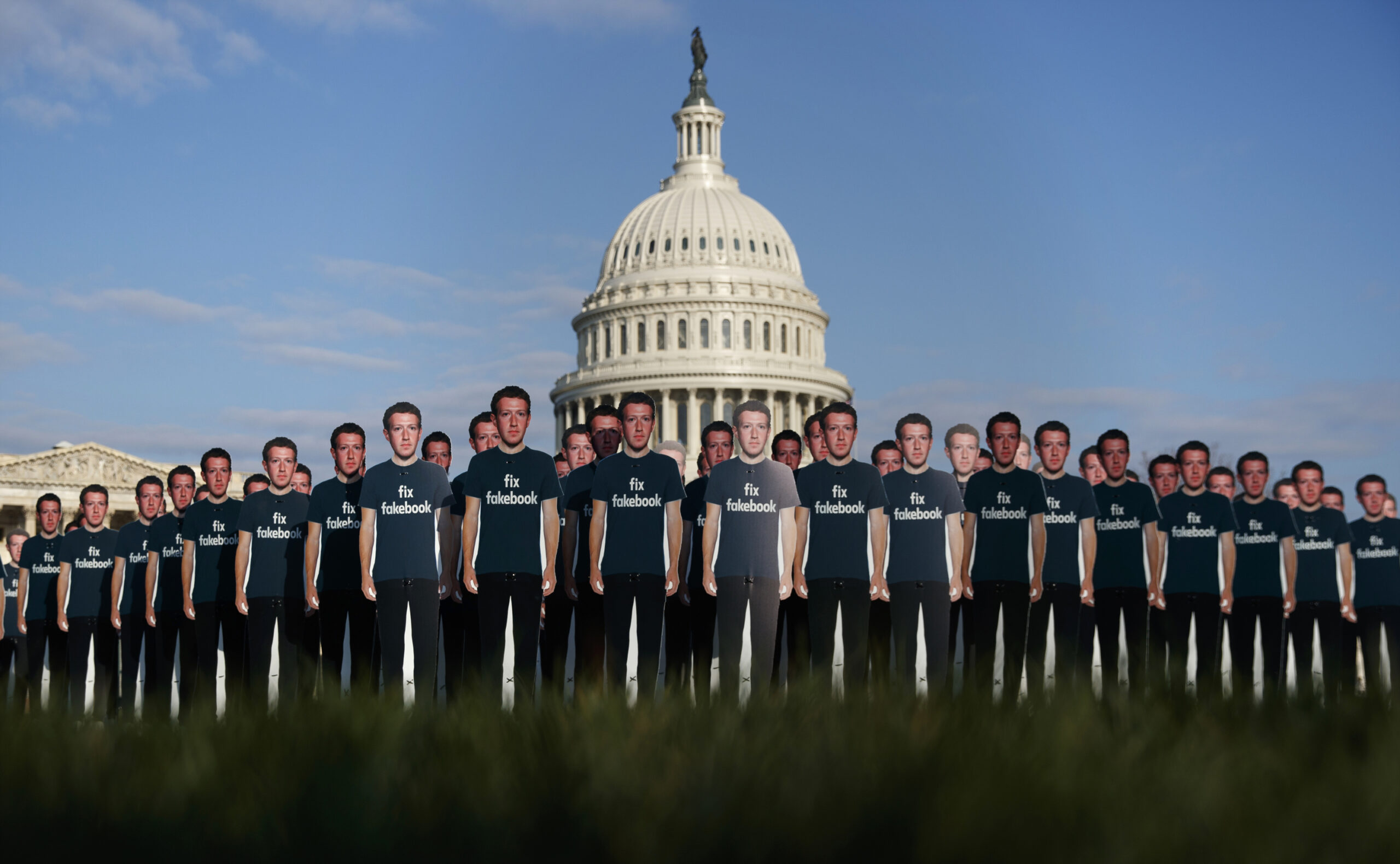
The Federal Trade Commission is expected to feature more aggressive antitrust enforcement in the Biden era, especially with regard to Big Tech.
Former agency officials and anti-monopoly activists say that the agency was already trending toward greater scrutiny of corporate concentration in the Trump years, and it is now set to receive bipartisan support for funding and resources.
Recommended Stories


“We’re traveling on an unmistakable path towards more activism and more aggressive antitrust enforcement at the FTC,” said Bill Kovacic, who was the chairman of the agency under President George W. Bush and a commissioner for five years from 2006 to 2011.
Antitrust laws are enforced by protecting consumers from anticompetitive mergers and business practices. The trade commission and the Justice Department are responsible for antitrust enforcement primarily through investigations, lawsuits, penalties, and fines.
Kovacic said that under former President Donald Trump, the agency moved significantly toward more antitrust enforcement, most prominently through its decision to sue Facebook for anticompetitive conduct. He added that public demand rose for the federal government to take more antitrust actions.
A majority of people, regardless of political affiliation, say that tech giants such as Facebook, Google, and Amazon are too big and should be regulated, according to a recent poll. Almost half of them say the government should break up the companies.
FACEBOOK INFLATED ADVERTISING REACH AND HIT IT FROM CLIENTS FOR YEARS, LAWSUIT CLAIMS
Republicans say that Trump’s trade commission chairman, Joseph Simons, was already an aggressive antitrust enforcer, who often voted with Democrats, like he did on the Facebook case.
“Joe Simons got pushed around by the Democrats. They were already running the place under Trump, so they will, of course, bring a handful more antitrust cases now,” a former senior Republican official at the FTC said.
The FTC is an independent agency with five commissioners, with no more than three of them coming from the same political party.
Currently, the agency is gridlocked, with two commissioners from each party. But one of the Democratic commissioners, Rohit Chopra, is expected to leave the agency in the coming months to direct the Consumer Financial Protection Bureau.
His departure would leave two vacant Democratic seats on the commission for Biden to fill.
After Chopra leaves, the one remaining Democrat at the agency would be acting Chairwoman Rebecca Slaughter.
Antitrust insiders say that Slaughter is likely to be influenced by the two Democratic commissioners that Biden nominates.
“Becca doesn’t like to be further right of other Democrats,” a former senior FTC official said, and therefore, “if someone extremely liberal like Rohit Chopra is nominated, then Becca will be liberal in her actions.” However, the former official said that if both of the incoming commissioners are centrists Democrats, Slaughter would be less aggressive.
Antitrust experts told the Washington Examiner that they expect Biden to nominate one commissioner who is liberal to appease the left-wing of the party and one commissioner who is centrist to ensure corporate interests are heard.
Liberal anti-monopoly advocates say that regardless of who Biden nominates, the trade commission will go after Big Tech companies and others behaving unfairly.
“You don’t need a particularly muscular sailor when the antitrust wind is this strong,” said Matt Stoller, an antitrust expert and author of Goliath: The Hundred Year War Between Monopoly Power and Democracy.
“There is a big shift occurring across the government thanks to a radical change in how the public thinks about competition and monopolies,” said Stoller, who works for the American Economic Liberties Project, a liberal think tank.
Congress is seeing bipartisan consensus for providing more funding for the trade commission and the Justice Department so they can hire more top antitrust lawyers and go after Big Tech companies with deep pockets.
Democrats and Republicans on the House Judiciary Committee’s antitrust panel agreed in November that more resources and funding were needed.
Merrick Garland, Biden’s nominee for the Justice Department’s attorney general, said Monday that he would support additional funding for antitrust enforcement.
CLICK HERE TO READ MORE FROM THE WASHINGTON EXAMINER
“There is bipartisan support for more resources for the agencies to bring more antitrust enforcement, which is very different than the status quo,” said Gigi Sohn, a former adviser of the Federal Communications Commission and a fellow at the Georgetown Law Institute for Technology Law and Policy.
“With more funding, I think there will be significant speed in antitrust cases pursued and the U.S. government will win more cases than the past,” said Sohn, a liberal advocate for more antitrust enforcement.
