

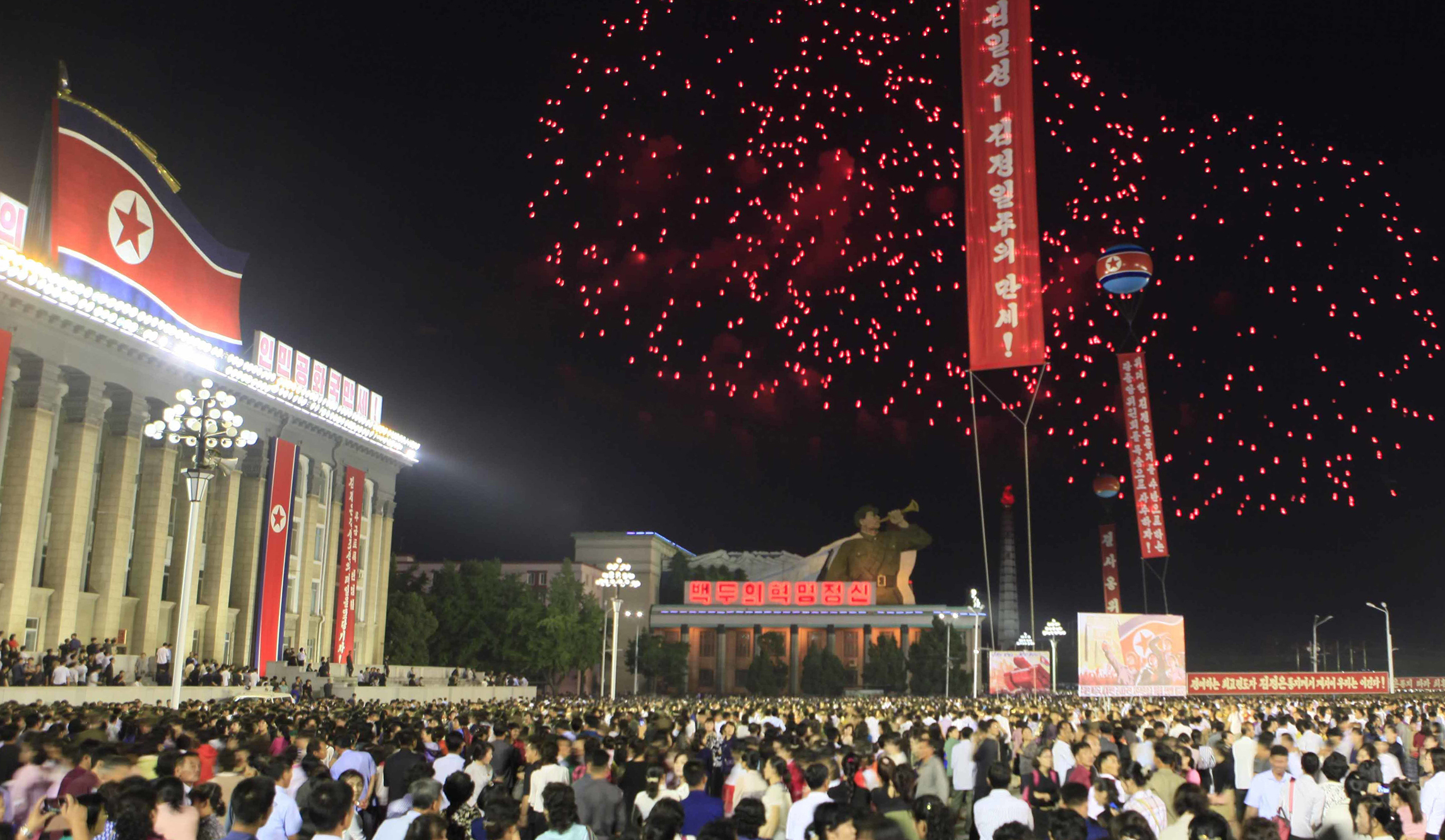
New sanctions unveiled by the Trump administration that are intended to put a greater financial squeeze on North Korea may actually end up ensnaring American investors and companies who have developed joint ventures in China or frequently work with overseas suppliers and factories.
President Trump announced the expanded sanctions during a trilateral lunch Thursday with his counterparts in Japan and South Korea, declaring it “unacceptable” that various foreign entities continued to lend financial support to the “criminal [and] rogue” North Korean regime.
Recommended Stories


“Foreign banks will face a clear choice: do business with the United States or facilitate trade with the lawless regime in North Korea,” Trump later added.
The executive order governing the sanctions grants Treasury Department officials the authority to enforce asset freezes on individuals, companies, and foreign banks who provide “goods, services or technology” to the isolated communist land, Trump said. The order also paves the way for the U.S. to identify new industries that could be targeted, including fishing, manufacturing, and textiles, among others.
Initial details on which individuals and entities will placed on the Specially Designated Nationals list maintained by the Office of Foreign Assets Control were scarce. Treasury Secretary Steven Mnuchin told reporters on Thursday his department would “do designations on a rolling basis.” So-called SDNs usually have their assets blocked or frozen and are generally off limits for U.S. companies to work with.
Mnuchin stressed that the latest sanctions are not specifically aimed at China, where several conglomerates have historically done extensive trading with North Korea and textile firms have reportedly been taking advantage of cheaper labor in the neighboring country. But a senior administration official later told reporters that China may need to do much more to strangle Pyongyang because “of the outsized role that China plays in [North Korea’s] economy.”
Doreen Edelman, co-leader of the global business team at the law firm Baker Donelson, said it will be crucial for U.S. companies of all sizes to determine “who their partners are doing business with since Americans cannot be working with anyone who owns, controls, or contributes to business in North Korea” under the latest executive order.
“It could mean that U.S. companies will face another administrative burden if they have to have trainings with their Chinese subsidiaries and make sure no one in their supply chain is covering up business transactions with North Korea,” Edelman told the Washington Examiner.
“For instance, if you’ve got a small business that manufactures with China, I’m sure the owners never ask their Chinese partners if they are getting labor from North Korea,” she said.
Edelman predicted that OFAC will likely issue further guidance based on the volume of calls and questions officials are likely to receive in the coming weeks, as Trump’s executive order takes effect.
Former White House national security aide Sebastian Gorka said U.S. persons or entities that currently do business with foreign companies with ties to North Korea “are probably negligible by the numbers.”
“But doing business with dictatorial regimes is really something every American company should think carefully about, and maybe this will open their eyes,” Gorka, who now serves as chief strategist for the pro-Trump MAGA Coalition, told the Washington Examiner.
“That’s a good thing,” he added.
One former Treasury and State Department official ,who spent nearly two decades working on targeted financial measures and U.S. foreign policy toward Iran and North Korea, said several American companies “will have to be concerned about whether their joint ventures with China are working with North Korea in any capacity.”
“The burden is going to be on the commercial sector and the financial sector to identify North Korea’s deceptive practices,” said Anthony Ruggiero, who is currently a senior fellow at the Foundation for Defense of Democracies. “But if small non-governmental organizations here in Washington, D.C., can find these activities, large banks and companies can sure do so as well.”
Should the new sanctions impact American businesses, it would not be the first time U.S.-based institutions became entangled in the federal government’s effort to rein in North Korea.
Federal prosecutors were granted seizure warrants earlier this summer as part of an ongoing investigation into five U.S. banks – Bank of America, Bank of New York Mellon, Citigroup, JPMorgan Chase, and Wells Fargo – that allegedly processed millions of transactions with entities tied to North Korea, constituting a breach of existing sanctions.
“People familiar with the banks … said that there was no suggestion they could or should have known about potential ties to the blacklisted country, nor that they knowingly violated U.S. sanctions,” the Financial Times reported in July.
United Nations Ambassador Nikki Haley told reporters late Thursday that the Trump administration is confident its newly imposed sanctions will prevent North Korea from funding further nuclear weapon or ballistic missile productions.
“What the goal of the sanctions was always intended to be is to cut the revenue so they could do less of their reckless behavior,” Haley said. “It doesn’t mean that it’s necessarily going to change Kim [Jong-un]’s attitude or his belief on what he wants to do, but it will slow down the production of the nuclear process going forward.”
Gorka described the sanctions as incapable of making “a significant strategic difference” beyond proving that the U.S. is “prepared not to just maintain things as they are but to increase the pressure” on Pyongyang. The former White House aide suggested that sanctions targeting high-ranking officials in Kim’s regime may have been a more effective route to take.
“These sanctions mostly affect the nation as a whole,” he said. “And we don’t want to hurt the shipment of regular goods to North Korea because who does that affect most? China.”
Kim issued a statement within hours of Trump’s executive order on Thursday, vowing to make the president “pay dearly” for threatening to “totally destroy” the communist country earlier this week and for leveling a new sanctions package against the North Korean regime.
“I will surely and definitely tame the mentally deranged U.S. dotard with fire,” Kim said.
