

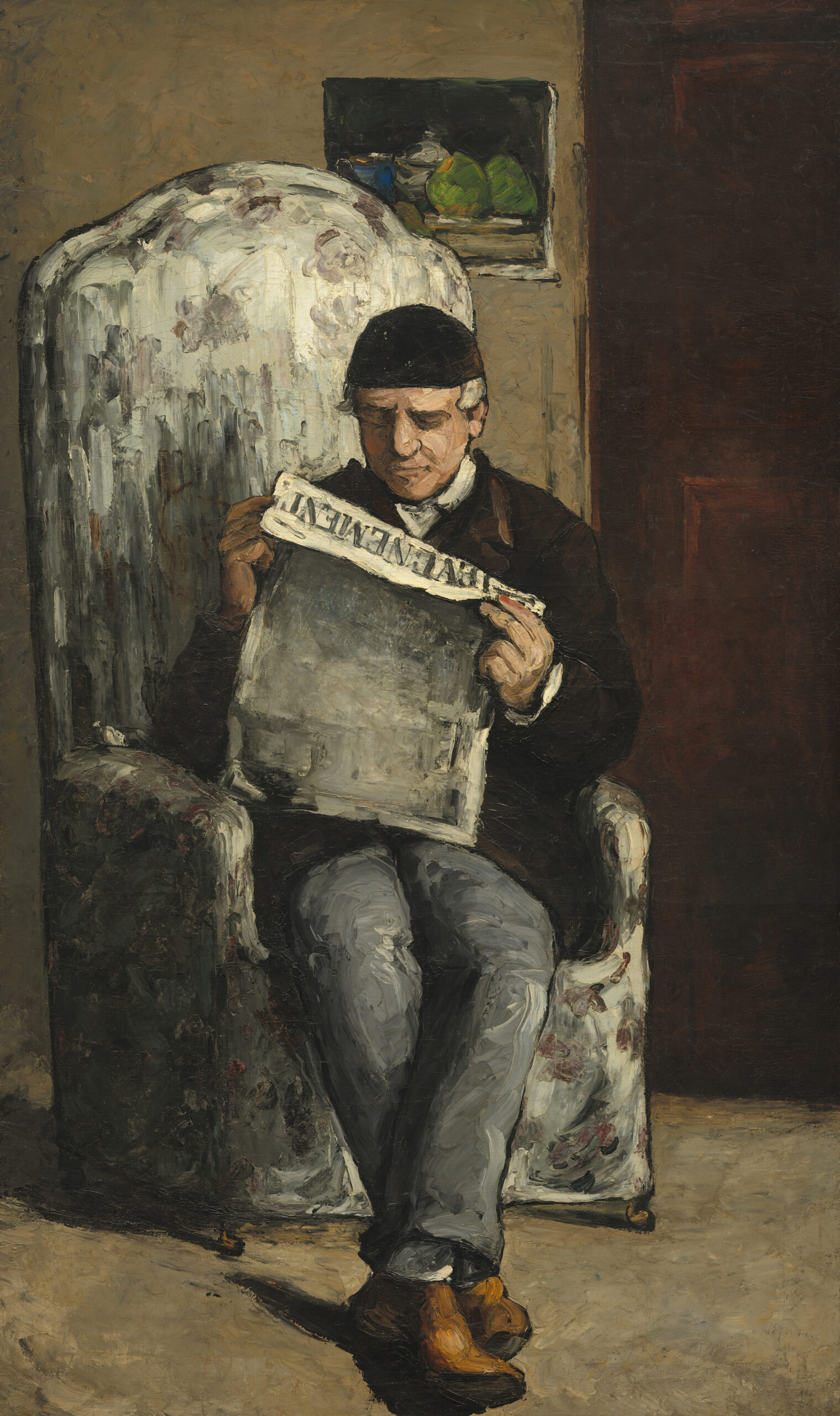
Paul Cézanne (1839-1906) is best known for his luminous landscapes of the valleys and majestic mountains of his native Provence and for his elaborate still lifes of apples, pears, and pottery balanced on sumptuous tablecloths. He imbued these paintings with a monumental permanence and coherence that paved the way for the modern art of Matisse and Picasso. Less well known: Cézanne also painted portraits, 160 of them. Though radically unconventional by the standards of the day, these are among his finest works. The first full-scale exhibition of these portraits, after stops in Paris and London, is on view at the National Gallery of Art in Washington. In the catalogue accompanying the exhibition, the curators argue that portraiture is the most personal, and therefore most human, aspect of Cézanne’s work.
The extent and depth of Cézanne’s achievement in portraiture is revealed through nearly 60 examples. Walking through the galleries we meet the people of his life over five decades, seeing them through his eyes: his father and relatives, his wife, their son, a few notable supporters, and the working-class men and women of his homeland.
Stay informed.Stay ahead.
Join Washington Examiner for unlimited access to the news, analysis, and commentary that matter most.
Already a member? Log in
