

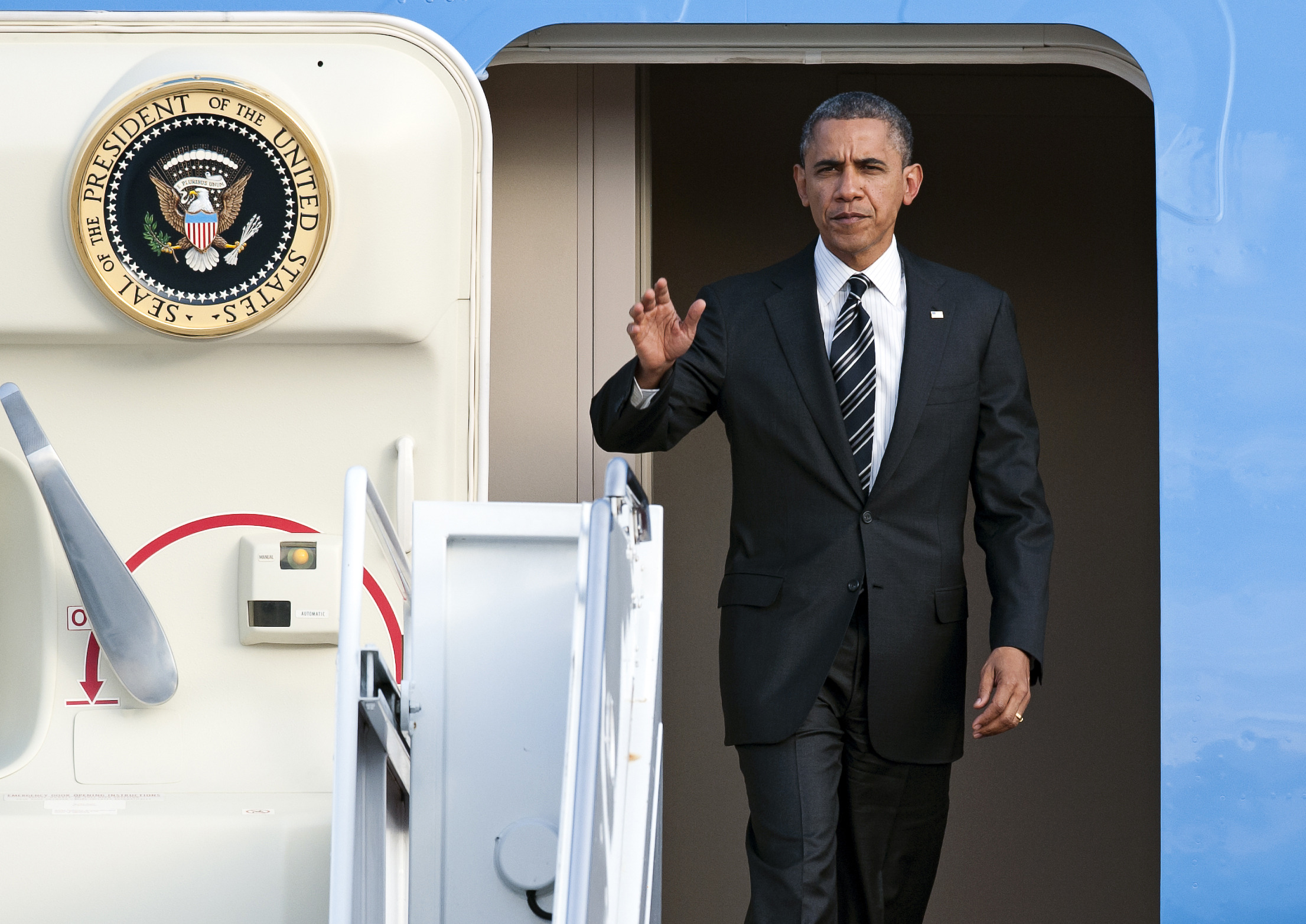
Sen. Bernie Sanders’s campaign for the Democratic presidential nomination ended up hitting a brick wall before he dropped out this week: the party’s last president, Barack Obama.
Obama stayed neutral and did not endorse his former vice president, Joe Biden, despite reports last year that the former president would speak out in favor of a “stop Bernie” movement inside the Democratic Party if it became necessary. But Sanders was seen as running against Obama as much as Biden, vowing to replace Obamacare with his own government-run Medicare for All plan, and many Democrats didn’t like it.
Recommended Stories



“The entire thrust of the Sanders campaign is an implied attack on Barack Obama’s presidency, which doomed the Vermont senator’s candidacy since Obama is very popular with Democratic primary voters generally and African American Democrats in particular,” said Democratic strategist Brad Bannon. “The best example is the Sanders assault on Obamacare, which is the signature achievement of Obama’s presidency. Contrast the Sanders criticism of Obama with the symbolism of an older white man serving a younger black man loyally for eight years, and it’s easy to understand Biden’s overwhelming support from black Democrats in the primaries.”
Fifty-six percent of South Carolina Democratic voters were black, and Biden won them 61% to 17% for the socialist senator from Vermont. Strikingly, 53% wanted to “return to Obama’s policies,” and Biden won 62% of this group to Sanders’s 12%. Only 27% wanted the next president to be more liberal than Obama, and another 17% wanted someone more conservative. Biden won the latter group by nearly 30 points, while Sanders carried the former. Biden’s South Carolina win put him on the road to the nomination, and he never looked back.
On Super Tuesday, Democrats were more split on this question. Exit polls from 12 of the 14 states that voted showed 44% wanted a return to Obama’s policies, while 38% preferred a more liberal president. But Biden once again dominated among Obama loyalists. In Massachusetts, he took 54% of these voters, while Sanders and Elizabeth Warren split the “more liberal” vote, 47%-30%. In Alabama, 58% wanted a return to the Obama era, and 76% of them voted for Biden. In Texas, the 50% of voters who wanted to stick with Obama’s policies helped Biden beat back Sanders’s strong showing with Latinos to pull off a crucial win. The ex-vice president prevailed over Sanders with this group by 36 points.
It wasn’t all about Obama. After Sanders did well in the first three states, Democrats who feared he couldn’t beat President Trump gravitated toward Biden in large numbers.
“Sanders has made it quite clear that he is not a Democrat, even though he was running in the Democratic primary, which certainly rubbed some primary voters the wrong way,” said Democratic strategist Stefan Hankin, referring to the fact that Sanders is technically an independent who caucuses with Senate Democrats. “Attacks on Obama and his accomplishments were clearly not something that endeared him to many Democrats in general and African American voters specifically. He also had no clear plans for how he would implement his plans and goals and created a situation where you either agreed with him or you were wrong.”
“This last part was especially galling for a lot of voters in the primary who were being told that their view on how to achieve universal healthcare coverage was not good enough or made you a corporate shill,” Hankin added. “Winning a primary and the general requires a coalition. Sanders has never been about coalition-building, and ultimately, that is what made his campaign unsuccessful.”
Sanders had criticized Obama for having “not been as strong as he should standing up to Wall Street” and blurbed liberal commentator Bill Press’s book Buyer’s Remorse: How Obama Let Progressives Down. In 2011, Sanders suggested an anti-Obama primary challenge would “enliven the debate” and was “not a bad idea,” fueling rumors he might jump into the breach himself. His 2016 campaign against Hillary Clinton was dominated by his opposition to Bill Clinton’s 1990s policies.
In March, Sanders ran an ad highlighting praise for the senator from Obama. “I’m not going to tell you he’s my best friend,” Sanders told MSNBC’s Rachel Maddow. “But I talk to him every now and then, but I have a lot of respect for him. Do we have disagreements? Of course we have.” Warren also had a complicated relationship with Obama — one story describing their troubled history from the perspective of the Obama team was headlined “Why Are You Pissing In Our Face?” — but never found herself in a two-way race against his vice president and defender of Obamacare.
Obama reportedly talked to Sanders before he dropped out on Wednesday. The former president is expected to endorse Biden now that he is the presumptive nominee and get more involved in the campaign.
