

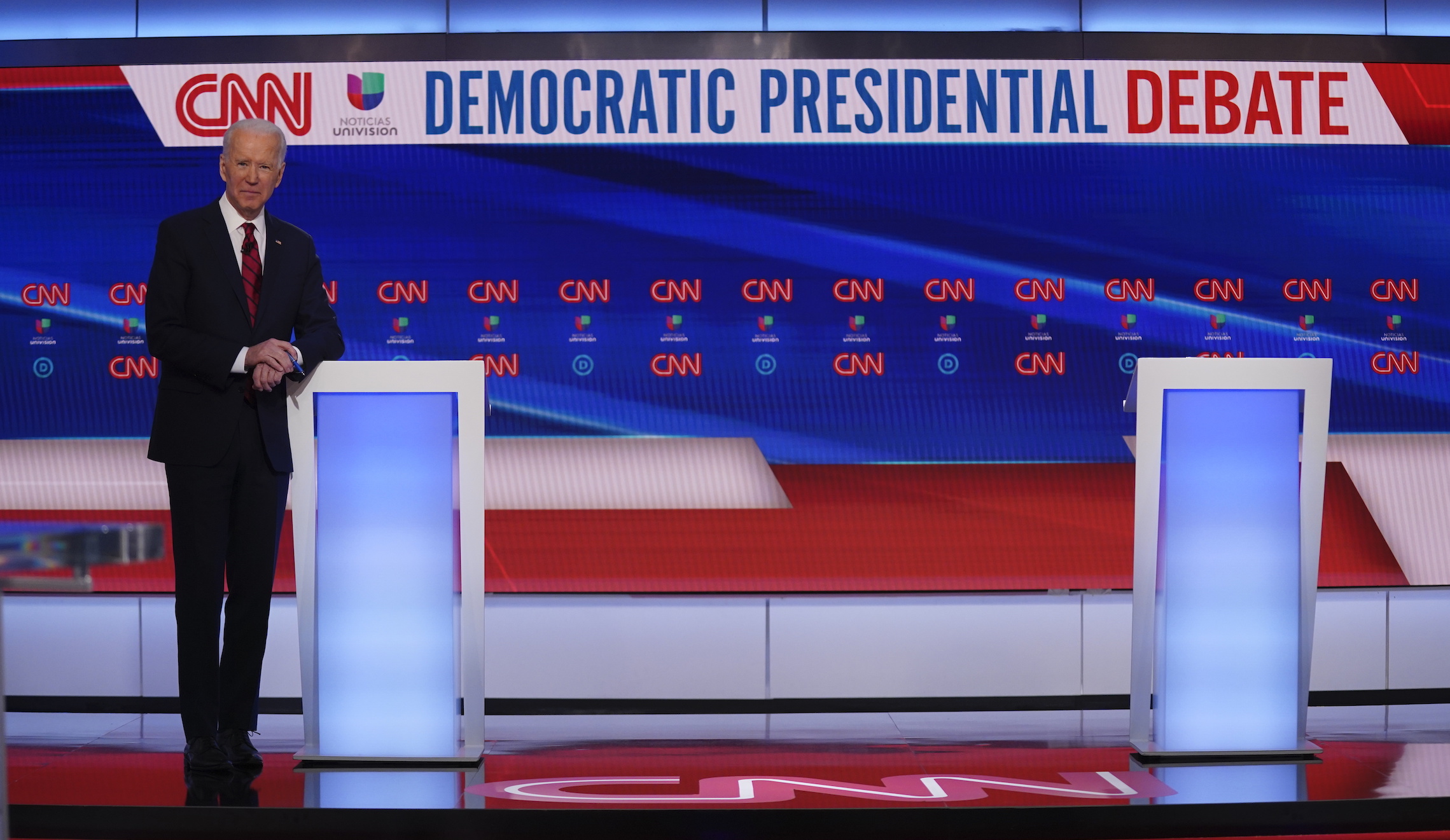
It’s another aspect of modern political campaigning that’s been reshaped by the novel coronavirus pandemic.
March 31 marks the end of the latest fundraising period for 2020 campaigns, but the deadline falls during a time on the election calendar when candidates up and down the ballot are grappling with how to adapt to a political landscape altered by the COVID-19 outbreak.
Recommended Stories



Presumptive 2020 Democratic presidential nominee Joe Biden has transitioned to hosting virtual fundraisers with donors as fears that the respiratory illness will spread even more across the country have forced millions to hunker down in their homes and avoid crowds larger than 10.
On the other hand, Bernie Sanders, Biden’s last rival for the nomination and a small-dollar fundraising powerhouse, has stopped asking for money for himself altogether as many people furloughed or sacked during the crisis struggle to pay for basic needs, including rent.
Here are four things to watch for as campaigns disclose their fundraising figures from March.
Drop-off in donations
Biden and Sanders started March’s fundraising efforts on solid ground, particularly the two-term vice president, who was propelled by his strong performance in South Carolina and on Super Tuesday. But then coronavirus incidents increased at an alarming rate.
Subscribers to Sanders’s supporter emails will know he hasn’t requested money since the March 17 primaries. Instead, the Vermont senator has been encouraging his base to donate to charities helping those affected by COVID-19 or to fill in surveys, among other list-building measures.
Meanwhile, Biden has continued to tap contributors for donations.
In one email from new campaign manager Jen O’Malley Dillon outlining her team’s strategy as it prepares for the general election, there were three fundraising button links. The Biden camp has also been expanding its email list, soliciting feedback on policy and online engagement from fans of Delaware’s 36-year former senator, as well as telling backers he’ll call a handful who donate.
Reasons for the divergent approaches? Sanders is fighting a losing battle in the delegate count for the nomination, while Biden is bracing for the fall fight against a cashed-up President Trump. Sanders additionally raised $47.6 million in the month of February. Biden, in comparison, brought in $18.1 million during the same time period. Sanders started March with almost $18.6 million cash on hand. Biden began the month with $12 million in his coffers.
Down-ballot candidates are predicted to report softer numbers than usual.
Monster Trump and Republican numbers
Trump and Republicans have been steadily stockpiling funds throughout the Democratic primary.
The White House incumbent may have only raised $14.2 million in February, but he ended the month with $94.4 million cash on hand ahead of November’s election. When combined with the Republican National Committee and outside groups, the GOP amassed $86 million last month for a $225 million-padded war chest.
Contrast that with the Democratic National Committee, which, along with its affiliated partners, brought in $12.8 million during the same period for $14 million cash on hand. The DNC this month, however, was boosted with a once-off $18 million cash injection from former New York City Mayor Michael Bloomberg, who squandered more than $500 million on a long shot bid at the presidency.
No early financial disclosures
March’s fundraising deadline is the first with only Biden and Sanders still in the Democratic race for the White House.
Believe it or not, it’s been less than a month since the once historically wide presidential field dramatically winnowed before Super Tuesday on March 3. Former South Bend, Indiana, Mayor Pete Buttigieg, always eager to tout an impressive donation haul, won’t kick off the disclosure news cycle with an early morning press release.
Elizabeth Warren and Tulsi Gabbard wash-up data
March’s disclosures will provide a clear picture of the financial situation of Biden and Sanders’s vanquished opponents who were also vying to become the Democratic Party’s next standard-bearer.
Although Buttigieg and fellow center-left Midwesterner Minnesota Sen. Amy Klobuchar bowed out of contention during the first two days of the month, Massachusetts Sen. Elizabeth Warren waited until after Super Tuesday to drop out. Hawaii Rep. Tulsi Gabbard remained in the race until March 19.
