

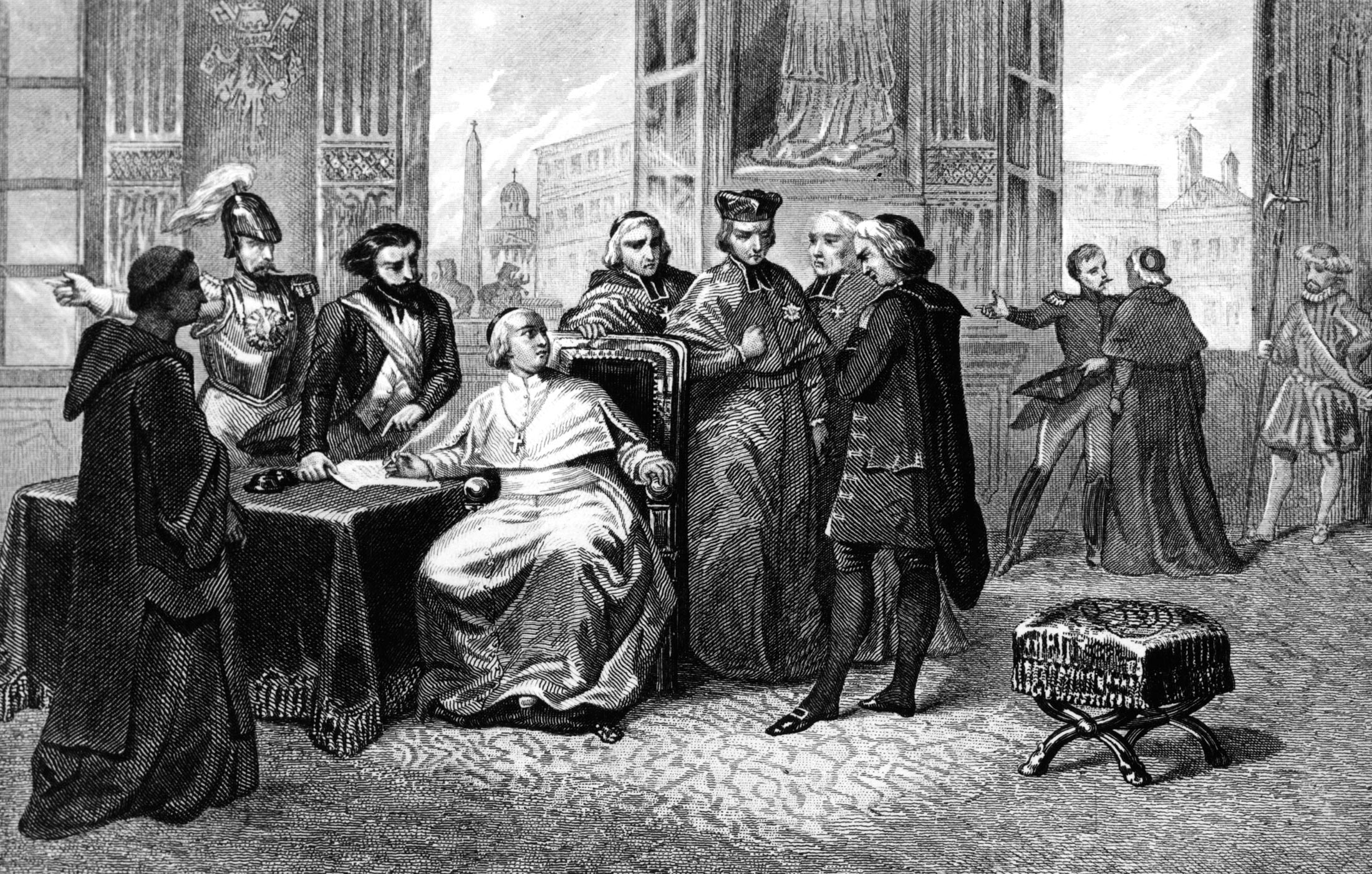
In the waning light of a late November afternoon in Rome, in the year 1848, a man in the simple black garb of a parish priest could be seen leaving a back door of the Quirinal Palace, the papal residence. In front of the palace was an angry mob of 10,000 Romans, many of them armed. Meanwhile, in the pope’s private quarters, the French ambassador was engaged in a long conversation . . . with nobody. Alone in the room, he kept talking to convince any eavesdroppers that the pope was still there. For the exiting priest was Pope Pius IX in disguise.
He stepped into a waiting carriage, accompanied by a Bavarian count armed with a pistol. Pius was on his way to exile, though only his companion, the Bavarian ambassador, knew where—not Marseille, as the French ambassador thought, not Majorca, as the Spanish ambassador hoped, but a small town down the coast called Gaeta, under the rule of the reactionary King Ferdinand II of Naples. He must have felt he was running for his life. A few days earlier a sniper in the crowd outside the Quirinal had shot dead a papal official looking out a window; a few days before that an assassin had slit the throat of the pope’s new civilian prime minister.
Stay informed.Stay ahead.
Join Washington Examiner for unlimited access to the news, analysis, and commentary that matter most.
Already a member? Log in
