

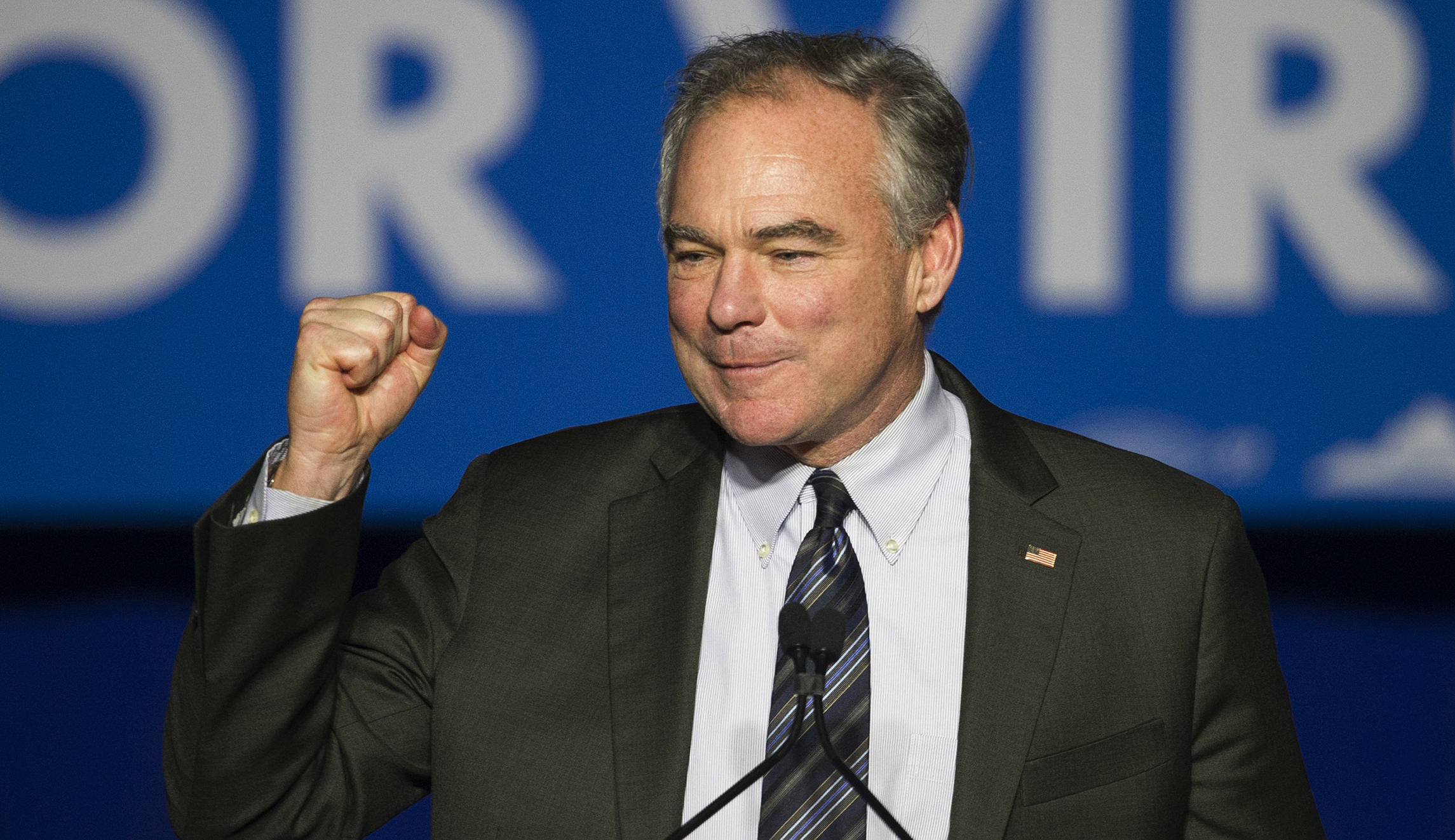
Sen. Tim Kaine, D-Va., is advocating for the Democratic National Committee to eliminate superdelegates, prominent party officials who can pick candidates regardless of how their state or district votes in the primary process and who largely voted in favor of Hillary Clinton’s 2016 presidential campaign.
“I have long believed there should be no superdelegates. These positions are given undue influence in the popular nominating contest and make the process less democratic,” Kaine, who was Hillary Clinton’s running mate in the 2016 presidential election, wrote in a letter Wednesday to DNC chairman Tom Perez.
Recommended Stories


Kaine’s request comes as the Unity Reform Commission, composed of members appointed by Clinton, Sen. Bernie Sanders, I-Vt., and Perez, has been working to review and revise the DNC’s nominating process.
Superdelegates are elected officials and prominent party members whose votes for presidential candidates carries extra weight, no matter how their state or district votes in the primary process.
“I strongly urge the Unity Commission to do away with superdelegates. Under current party rules, I am a superdelegate by virtue of my elected position as a United States Senator and my role as a former DNC Chair,” Kaine wrote. “In the event that the party rules do not change, I commit to vote the will of my state in any future nominating process. I encourage any other superdelegate who feels the same way to take the same pledge.”
Tim Kaine (former DNC chair) calls for eliminating superdelegates in letter to Tom Perez.
If rules don’t change, he pledges to vote with his state in future contests, urges other superdelegates to do same. pic.twitter.com/Kp1z0xJm1z
— Alex Seitz-Wald (@aseitzwald) November 15, 2017
Sanders had been an outspoken advocate for removing superdelegates during the 2016 election primary against Clinton after she had already garnered support before the primaries began.
The commission has been working for months and is expected to release its recommendations in December. Some alternatives that have been floated include automatically binding superdelegates’ votes to their states’ choice.
