

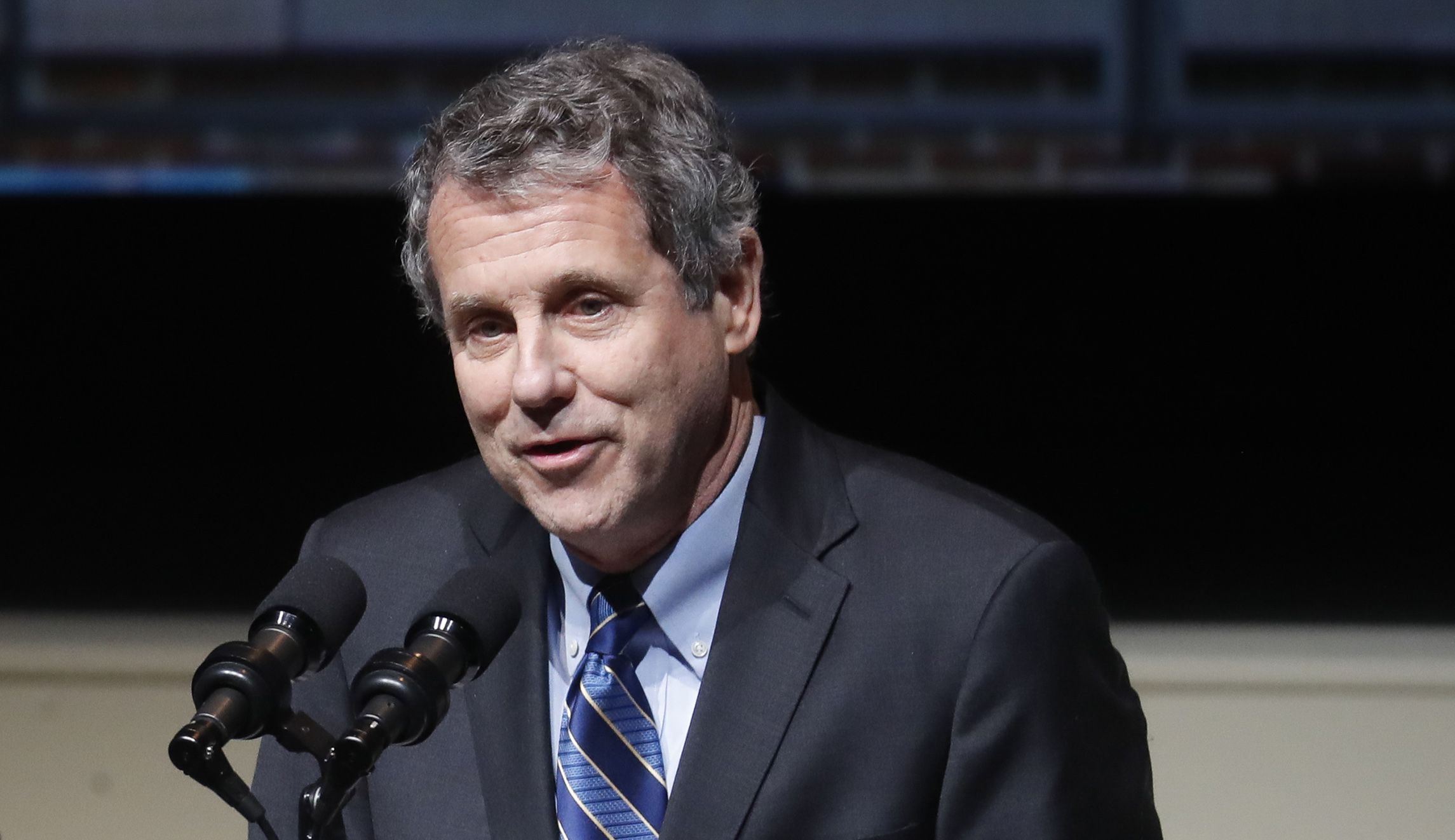
He may lack the star power and profile of other 2020 hopefuls, but Democrats are paying increasing attention to Sherrod Brown, U.S. Senator for Ohio, as they search for the person who could eject President Trump from the White House.
The liberal, populist Democrat managed to win a third term in culturally conservative Ohio, where the Trump coalition held together in state and federal contests and resisted the blue tide that swept Republicans from power across America. Now, as Democrats look for someone who can defeat Trump, they are wondering whether Brown’s combination of unabashed progressivism and labor populism could be the answer to recapturing Midwest voters.
Recommended Stories



[Read: Sherrod Brown ‘seriously’ thinking about running for president in 2020]
“Sherrod is one of the few guys that can hold the Trump coalition and be competitive on the coasts,” Capri Cafaro, a Democrat who served in the Ohio Legislature, told the Washington Examiner.
Trump won a solid Electoral College victory two years ago, largely on the strength of his populist appeal. He smashed through the Democratic Party’s “blue wall” in Michigan, Pennsylvania, and Wisconsin, while capturing battlegrounds Iowa and Ohio. He succeeded because he tapped into the cultural conservatism prevalent in those states, but protectionist on key economic issues like international trade.
Democrats regained some ground in the midterm elections, with a convincing takeover of the House of Representatives and victories in key U.S. Senate seats and gubernatorial contests. Yet, the Republicans withstood this strong blue tide in Florida and Ohio.
Brown, a liberal bright spot in those two typically swing states, could be the answer to their 2020 dilemma. After initially appearing reluctant, he now says he is open to the idea and said he and his wife, Connie, would spend the holiday season mulling it over.
[More: 2020 Dems: Beto No. 1, edges Harris, Warren, Biden]
“I love serving Ohio in the U.S. Senate and I’m grateful to Ohioans for giving me the chance to continue serving them. Running for president has never been my dream,” Brown said. “Connie and I are grateful to everyone who’s reached out to urge us to think about it, particularly since the election on Tuesday. So, as we look forward to spending more time with our children and grandchildren over the holiday, this is something we’ll talk about as a family.”
Brown is suddenly an attractive option. He defeated Republican Rep. Jim Renacci by 6.4 percentage points, a margin that could grow with the counting of provisional ballots, even as a Trump-inspired GOP turnout sparked carried Republicans to a 4.3 percent victory in the governor’s race and wins in all House seats where GOP incumbents were threatened.
In garnering more than 53 percent, Brown finished at least 10 points better than Democratic presidential nominee Hillary Clinton.
A decision to push Brown as a nominee would reflect a decision by Democrats that the president’s persistent popularity with blue-collar voters in the industrial Midwest takes priority over appealing to cosmopolitan liberals and minorities — the other blocs that elevated Barack Obama to the presidency.
Democrats such as Brown, who position themselves as old school labor liberals that align with Trump on trade, have shown an ability to reclaim some of the ground lost to the GOP since 2016. In Maine, self-described “labor Democrat” Jared Golden, who also breaks with his party on gun rights, was neck and neck with a Republican Rep. Bruce Poliquin in a plus-10 Trump district as the votes continued to be tallied.
But even if some Democrats decide Brown is the answer, he may not be the nominee. He would first have to survive the opposition research dump that his Democratic primary opponents would drop on him. Some party insiders speculate that past turbulence in Brown’s personal life could hamper any presidential bid, although it didn’t matter in 2018.
And to some extent, former Vice President Joe Biden is already seen as someone who can excite working-class Democrats.
“The problem for Sherrod Brown is that [former Vice President] Joe Biden is considered the ‘working class whisperer’ for Democrats nationally. Democrats feel that Biden gets it and connects with working-class voters,” said John Anzalone, a Democratic pollster.
Brown is “great,” Anzalone added, but not well known by Democrats outside of Ohio, and could find himself competing with Biden, “someone who has a graduate degree in connecting with voters in the middle class, while Sherrod is still in school.”
Among Republicans, there is a grudging respect for Brown’s political acumen and everyman appeal — a Democrat is authentic and connects with average voters because he understands the issues that concern them most. At the same time, Brown can navigate the corridors of power in Washington and is a prodigious fundraiser.
His main hurdle in a national campaign, argue Republicans, is his lack of flash for an electorate that might prefers pizzazz. Republicans also contend that Brown is too progressive for the sort of Trump voter that abandoned the Democratic Party because they felt alienated by the dominant coastal elites. Republicans also note that Brown’s victory this year came against a weak GOP nominee who never attracted the support of the big-money conservative groups.
“Ohio would make him a very serious candidate, because you’d have to assume he’d have the home state advantage there,” said David McIntosh, president of the Club for Growth, a top conservative group that like others, spurned Renacci in favor of other Republican Senate candidates. “Outside of the Midwest, his style is going to be — it’s a little too flat, like Bob Dole from Kansas, for the rest of the country.”
