

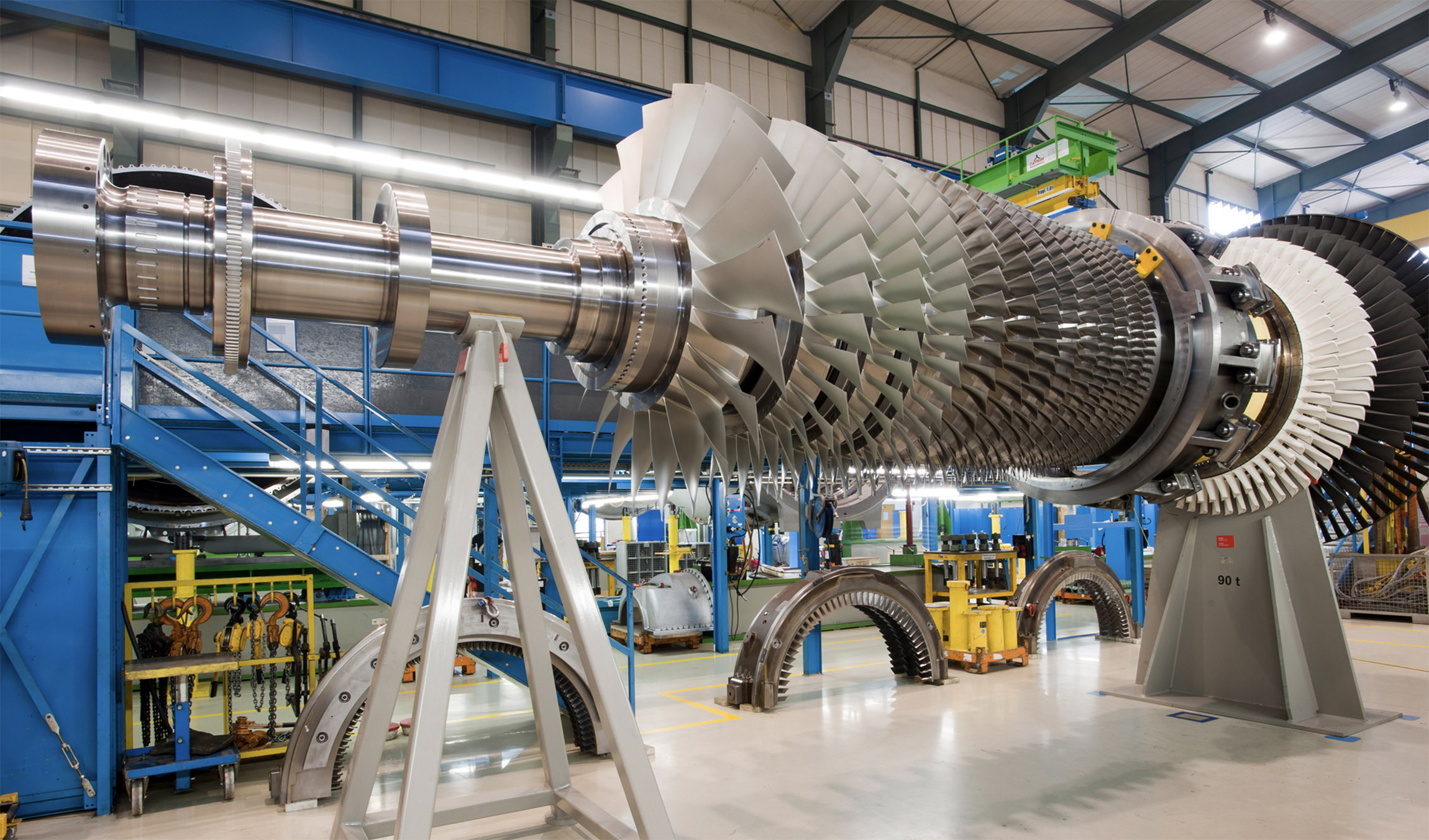
The Obama administration wants to find out if technology used in space can make climate-friendly fossil-fuel power plants a reality down here on Earth.
The Energy Department’s National Energy Technology Laboratory, based in West Virginia’s coal country, on Monday awarded GE and two private research groups with $80 million to build a pilot-scale power plant that recycles carbon dioxide emissions from natural gas to produce clean, climate change-friendly electricity.
Recommended Stories


The boon in natural gas production from fracking has made gas-fired power plants the dominant source of the nation’s electricity supply. The switch from coal to natural gas has also helped to lower the nation’s greenhouse gas emissions to a 25-year low, according to the Energy Information Administration, the independent agency in charge of keeping tabs on the nation’s energy mix.
But eventually, the carbon dioxide emissions from natural gas power plants will have to be cut in order to meet global emission targets that the Obama administration sees as crucial to curbing the threat of global warming.
Carbon emissions are blamed by many scientists for causing the Earth’s temperature to rise, resulting in more floods, drought and severe weather. The Obama administration has made it a priority to limit the emissions in order to meet the president’s broader climate change agenda, and to achieve the obligations under last year’s global climate deal made in Paris.
The new power plant technology highlighted in Monday’s announcement, known as “supercritical carbon dioxide,” is taken from the aerospace industry and typically found in deep space probes.
This type of energy generation has historically “been used in spacecraft applications where compact, lightweight, high-energy-density power conversion is required,” explained a statement from the Gas Technology Institute, one of Monday’s Energy Department awardees. “But these advantages are now being applied to terrestrial power generation for the step-change increase in efficiency and corresponding reduction in emissions they offer,” it added.
Rather than boiling water to produce electricity and venting off the carbon emissions, as is the case in conventional power plants, the pilot plant would recycle its carbon gas by first transforming it into a liquid. The liquid carbon would then be used to drive a turbine to create electricity from natural gas, or another fossil fuel.
“Supercritical” also refers to a technology used in advanced fossil fuel power plants, which burn coal at higher temperatures than conventional plants to more efficiently produce electricity.
But the pilot plant is focused on natural gas, an official with the Gas Technology Institute explained in an email. The technology would also reduce the amount of fossil fuel required to produce electricity.
“The goal is to perform energy conversion at higher efficiencies, where CO2 emissions are reduced by reducing the amount of fossil fuel that is burned in producing the same amount of electricity,” Michael McDowell, program manager at the Institute, told the Washington Examiner.
Republican lawmakers from West Virginia and other coal states have argued that the Obama administration has abandoned its fossil energy research and development activities at the Energy Department in favor of renewable energy like solar and wind.
Nevertheless, the Energy Department has argued that it continues to push for new technologies that will make coal, natural gas and other fossil fuels a viable source of energy into the future while reducing greenhouse gas emissions and combating global warming.
Monday’s announcement is one example of the administration’s attempt to adhere to what the president had coined in his first term as an “all-of-the-above” energy policy.
At the same time, new regulations included in Obama’s climate plan, which are being contested in federal appeals court, make it nearly impossible to build a new coal power plant in the country without the use of cost-prohibitive technologies. Some fear the same fate is in store for natural gas power plants in the future if new technologies aren’t developed to reduce their carbon emissions.
