

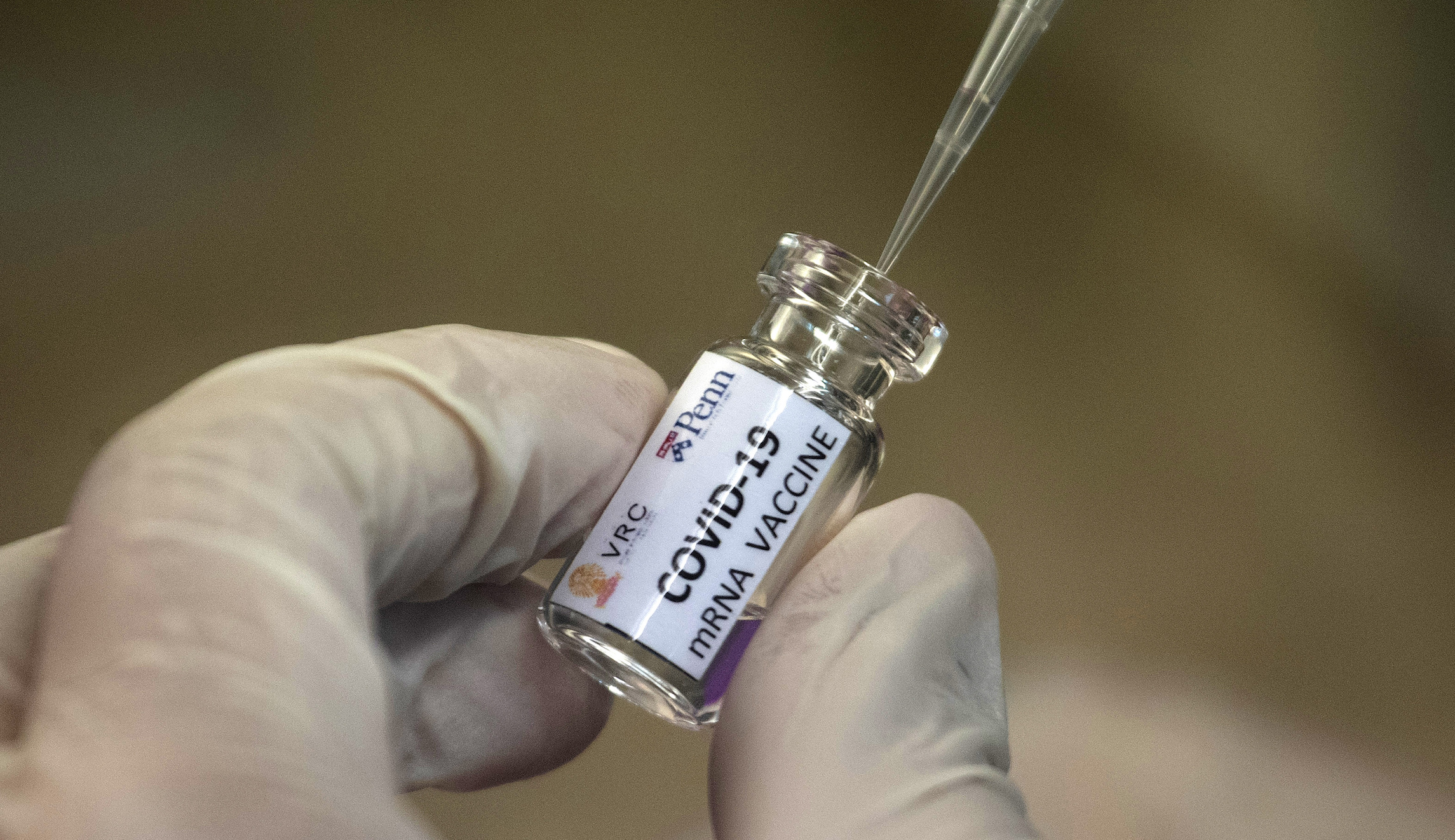
On Tuesday, Some anti-abortion partisans questioned the ethics of a promising coronavirus vaccine, voicing fears that the treatment was developed using the cell lines of aborted fetuses.
Joseph Strickland, the Catholic bishop in Tyler, Texas, said that the vaccine candidate, produced by the company Moderna, was not created “morally.”
Recommended Stories



“Unborn children died in abortions and then their bodies were used as ‘laboratory specimens,'” he tweeted. “I urge all who believe in the sanctity of life to reject a vaccine which has been produced immorally.”
After receiving significant backlash, Strickland, who is a prominent voice for conservative Catholics, claimed that the vaccine was developed with tests involving the cell lines of aborted fetuses. Production of the vaccine did not involve the use of aborted fetal matter, a practice the Catholic Church teaches against and many other Christians oppose. Strickland did not immediately respond to a request for comment.
At the same time that Strickland ignited a debate on Twitter, many Facebook users began spreading a similar claim arguing that the vaccine, as well as another vaccine developed by Pfizer, presents ethical challenges for Christians. A viral video claimed that the vaccine, which was reported to be highly effective, contained aborted fetal matter.
Similar claims arose in October concerning a coronavirus treatment administered to President Trump and developed by the company Regneron. Many news outlets at the time claimed that the drug contained aborted fetal matter and that Trump’s promotion of it undermined his administration’s anti-abortion positions.
Several doctors at the time took issue with that characterization, clarifying that while the drug was developed in a setting where it was tested with cell lines from aborted fetuses, the material is nearly 40 years old.
David Prentice, research director of the Charlotte Lozier Institute, an anti-abortion think tank, told the Washington Examiner that the drug, while “tainted” with the commonality of abortion’s involvement with medical research, did not pose significant moral quandaries because its production “was not an instance of testing with fresh, aborted fetal tissue or any new cells.”
The same is true of the Moderna and Pfizer vaccines, Prentice said. Fetal stem cells were not used in the production of either vaccine. They are considered “ethical” by the group, which has been scrutinizing vaccine treatments since Trump kicked off Operation Warp Speed earlier this year. Like Trump’s treatment, however, both were involved in tests using material taken from decadesold aborted fetal cell lines. In June, the Trump administration placed restrictions on the use of new aborted matter in research.
The questions of distinction between vaccine and development and testing have dogged Christian ethicists for years, with some arguing that any use of aborted matter in producing drugs is immoral. Most, however, opt for a compromise.
“We can concede the ethical validity of vaccine use, while not making total peace with the means of its development,” wrote Andrew Walker, a professor at the Southern Baptist Theological Seminary with regard to the Moderna news.
