

On Nov. 8, the U.S. will conduct its 58th presidential election since the adoption of the Constitution. It’s part of a sequence that goes back some 227 years, a longer period of continuous representative government than in almost any other nation.
Yet at the same time, the American experience with presidential elections has been limited. Three of those 58 elections were uncontested: George Washington in 1789 and 1792 and James Monroe had no opposition, with one electoral vote cast against Monroe so that Washington would be the only president unanimously elected.
Another seven early presidential elections, from 1796-1824, were conducted under rules so different from today’s as to make comparisons exiguous.
That leaves the number of comparable presidential elections less than 50, a sample size so small most pollsters don’t consider it statistically meaningful. And it’s only the 12th presidential election, starting with 1972, in which the major parties’ nominations have been determined largely in primary elections.
So perhaps it should not have been so surprising that one political rule of thumb after another has proved inoperative during the 2016 election cycle. Those supposedly ineluctable rules have been based on a small number of events.
On Nov. 8, the U.S. will conduct its 58th presidential election since the adoption of the Constitution. (iStock Photo)
On the surface, each of the major parties has broken one of the supposedly ancient rules: The Democratic Party has nominated a woman and the Republican Party a man with no experience in public or military office. But neither, looked at in the right light, is quite so startling or entirely unprecedented.
There is no obvious reason to believe that Americans have been less reluctant to elect a female head of government than the populaces of Britain, Germany, Turkey, India, Israel, Sri Lanka, South Korea, the Philippines and Indonesia, which have done just that, in some cases repeatedly.
What is more startling, and something associated more with royal than Republican rule, is that Hillary Clinton is seeking the presidential office in which a member, a living member, of her nuclear family has served.
There are two precedents, but in both cases the presidential predecessor had conspicuously retired from public life: John Quincy Adams was elected in 1825, months before his long-retired father John Adams turned 90, and George W. Bush was elected in 2000, when his father was 76 and had left off politicking after his defeat for re-election eight years before.
Clinton’s husband is 70 and has been out of the Oval Office for twice as long as the elder Bush was in 2000, but he has returned to partisan politics periodically while being careful not to overshadow his wife or to suggest that she is running as a stand-in for him. And like George W. Bush 16 years before, Hillary Clinton is campaigning with different priorities and different policies than her family member predecessor.
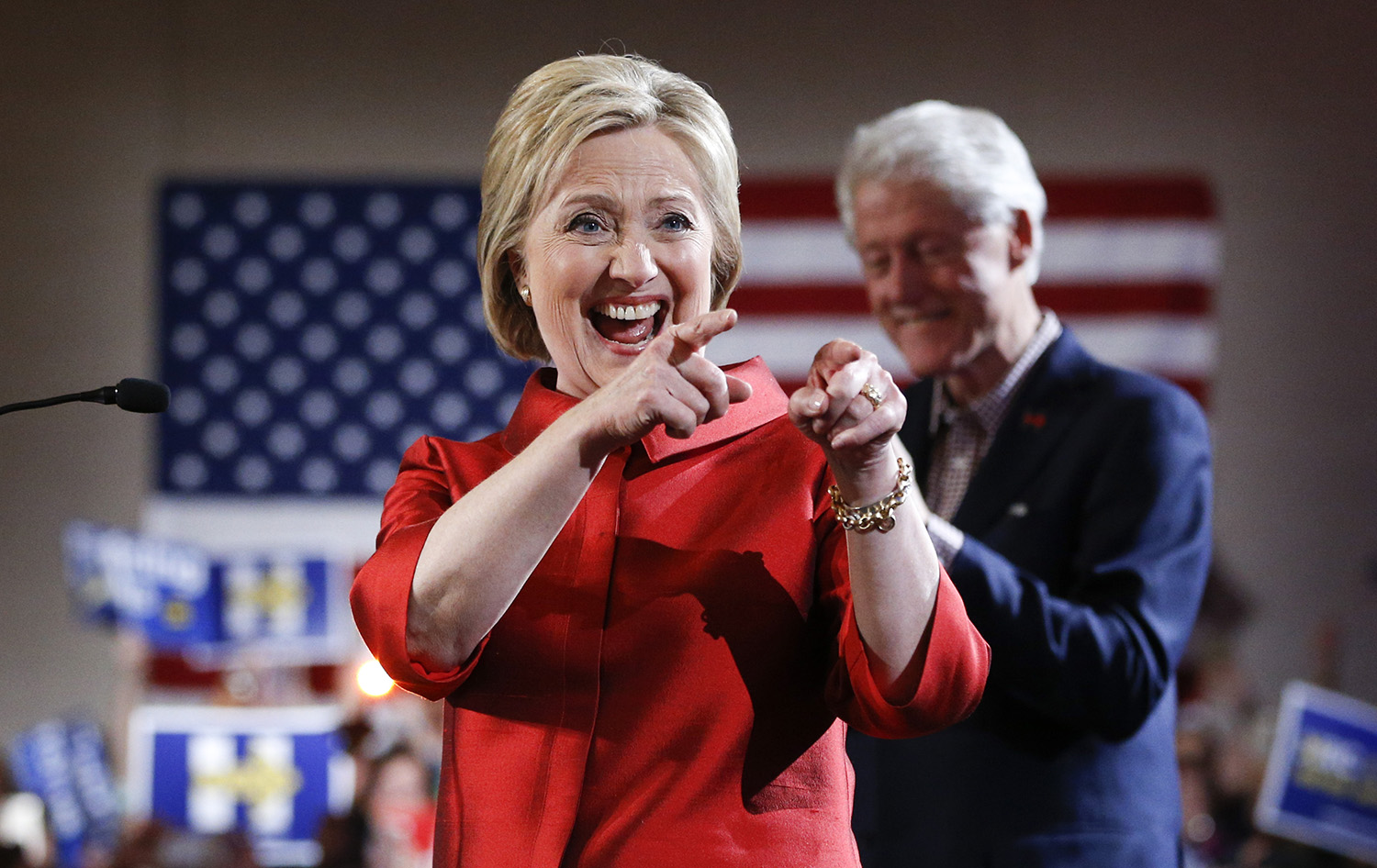
Like George W. Bush 16 years before, Hillary Clinton is campaigning with different priorities and different policies than her family member predecessor. (AP Photo)
George W. Bush campaigned and Hillary Clinton has been campaigning on different priorities and postures than his father and her husband. The former presidents, a couple of impolitic statements by Bill Clinton notwithstanding, have mostly remained in the background.
As for Donald Trump, he is the second, not the first, major-party nominee with no experience in public office or military service, a rare but not unique background. He also had some things in common with that predecessor, Wendell Willkie in 1940, a wealthy businessman who lived in an apartment on Fifth Avenue in New York and even had some exposure in mass media, as a panelist on the radio program “Information, Please.”
But Willkie’s candidacy was launched and supported by the 1940 version of the Republican establishment: Manhattan lawyers, newspaper and magazine editors and advertising agency founders. Trump’s candidacy was self-generated and opposed by almost all party contributors and officeholders. And Willkie had a knack, missing in Trump, for appealing to ordinary voters in the hinterland as an outside reformer while reassuring financial, media and intellectual elites that he was knowledgeable and responsible.
What sets Trump apart from all major party nominees going back more than a century is that he executed a hostile takeover of one of our two political parties. Against the wishes of most party panjandrums and officeholders, repudiating policies of the party’s past presidents and congressional delegations, Trump was as alien and hostile to the Republican Party’s leaders as the populist William Jennings Bryan was to the leaders of his Democratic Party when he seized its presidential nomination in 1896.
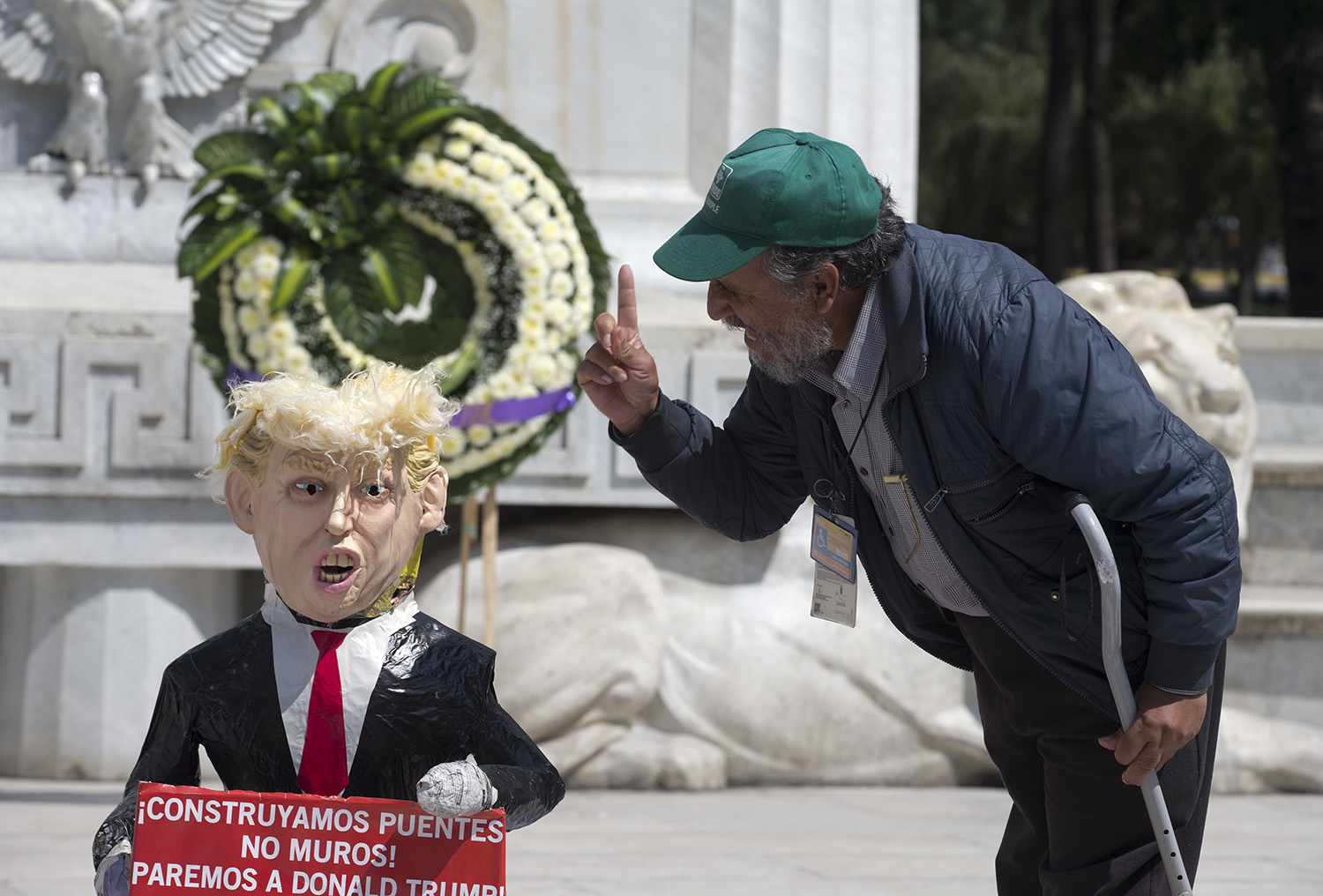
What sets Donald Trump apart from all major party nominees going back more than a century is that he executed a hostile takeover of one of our two political parties. (AP Photo)
Just as Trump championed positions on issues such as trade and immigration contrary to those of previous Republican nominees and presidents, so Bryan championed inflationary silver-based money over the gold standard championed by his party’s incumbent president, Grover Cleveland.
Cleveland, the only living former Democratic presidential nominee at the time, endorsed Bryan’s Republican opponent, William McKinley. Similarly, the Republicans who have won five of the party’s last six presidential nominations have declined to support Trump and one let it be known he is voting for Hillary Clinton.
Bryan came out of his national convention, much as Trump came out of his, with an original message and a chance of winning, as Karl Rove explains in his recent book on the 1896 campaign, The Triumph of William McKinley. Bryan toured the country delivering orations against bankers, financiers and both parties’ establishments, and heaped invective and ridicule against his critics.
But eventually the steady-tempered Republican nominee McKinley settled on a strategy and won a solid but not landslide victory, as Bryan’s free-silver policy attracted farmers and miners but repelled factory workers and immigrants. For years thereafter, the Democratic Party was split between urban and rural bases, and had trouble winning majorities.
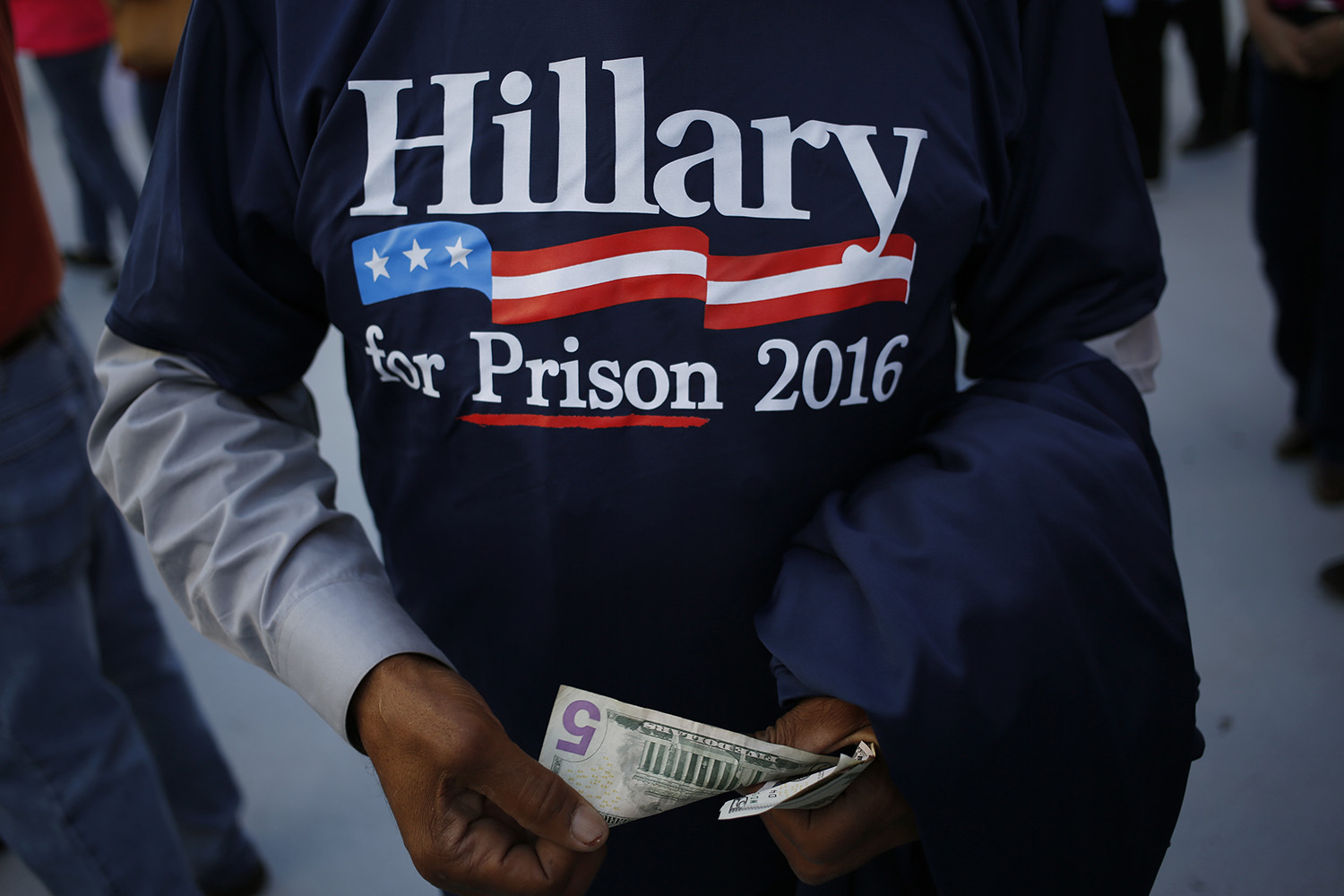
Hillary Clinton’s candidacy, and the response to it in the Democratic primaries, threatens to pull the Democratic Party much further to the left. (Bloomberg Photo)
Bryan, only 36 in 1896, remained a major figure for nearly 30 years. Trump could remain active and a political flashpoint in the years ahead, but he starts off this year at age 70. Whether he or his example can sustain a movement that goes beyond one billionaire’s candidacy is unclear.
If Trump’s candidacy threatens to split the Republican Party and thrust it into continued turmoil and internal strife for years, Hillary Clinton’s candidacy, and the response to it in the Democratic primaries, threatens to pull the Democratic Party much further to the left. Clinton’s candidacy deterred many younger Democrats from running and debate-season polling made it clear Democratic voters were interested in a candidate who would follow the first black president as the first something else.
The year of the first female nominee also gave us a surprise challenge from a socialist, Bernie Sanders. Never previously identified as a serious presidential candidate, and six years older than Clinton, Sanders nonetheless won 42 percent of Democratic primary and caucus votes.
Examination of the returns shows that he trailed Clinton among blacks, Hispanics and high-income whites, but that he may have run ahead or even among whites below the highest income levels. During the primaries and to a perhaps surprising extent afterward, Clinton has maintained platform positions that compete with Sanders for support from the statist Left.
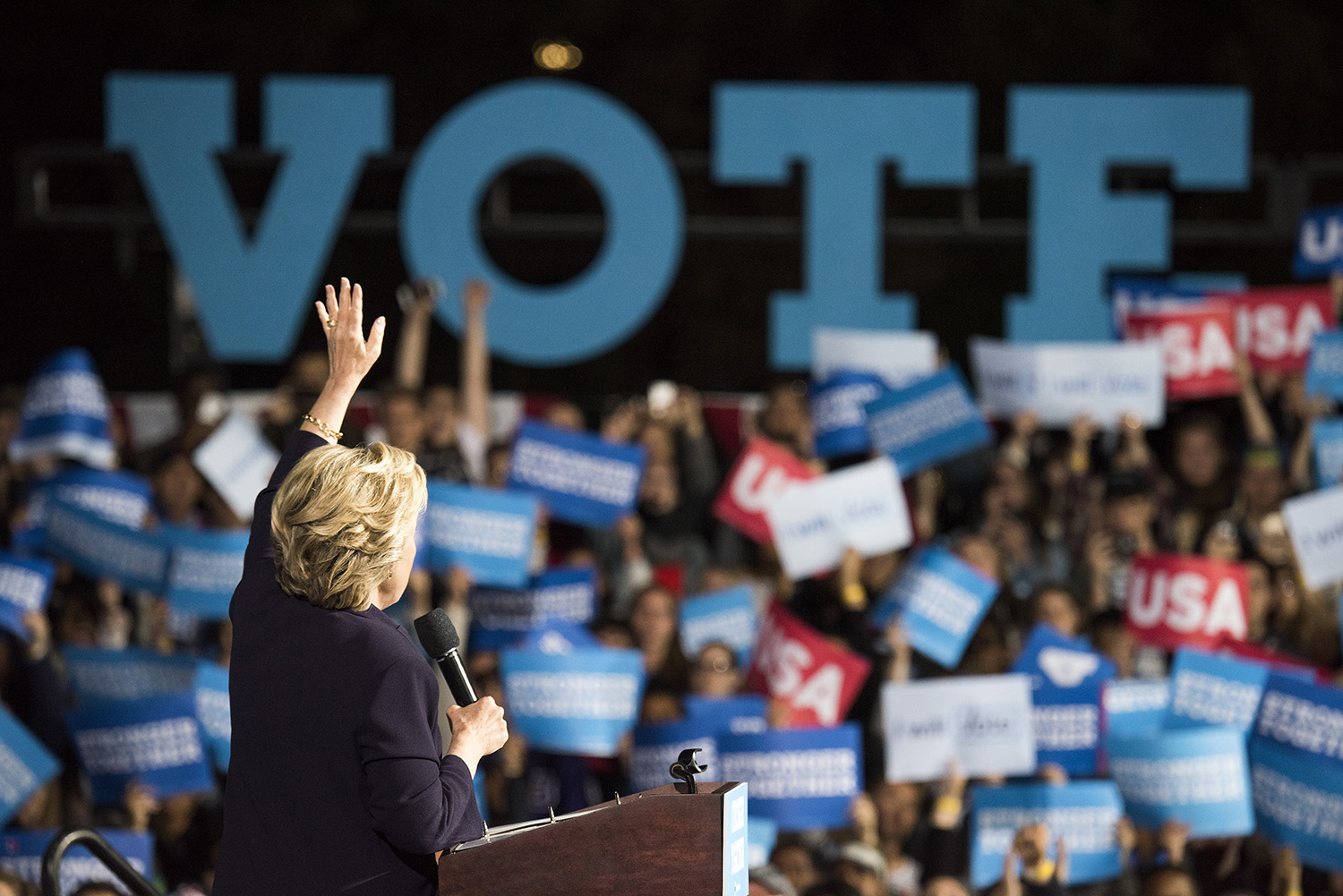
Clinton’s candidacy deterred many younger Democrats from running and debate-season polling made it clear Democratic voters were interested in a candidate who would follow the first black president as the first something else. (Bloomberg Photo)
At the beginning of the 2016 presidential cycle, not many political observers or insiders expected the race to produce an anti-establishment surge toward protectionist and slow-immigration populism in the Republican Party and an anti-establishment surge toward the socialist Left in the Democratic Party.
The former surge looked like a repudiation of the two George Bush administrations, the latter like an almost total repudiation of the Bill Clinton administration and at least a partial repudiation of Barack Obama’s.
In retrospect, it’s possible to see underlying causes for these movements: 21st-century Americans have seen sluggish economic growth, punctuated by a severe financial crisis and significant recession; they have seen multiple American military involvements with little in the way of victorious or even satisfactory conclusions, or any conclusions at all.
These discontents might have provoked responses different from the populist Right and the socialist Left, but that is what the parties’ primaries brought forward and put before the voting public in the fall.
The 2016 presidential campaign cycle may stand out in history not just for the unusual characteristics of the nominees, but for the unpredicted and sharp lurches on policy produced, to some greater or less extent, by each nominee during the process.
