

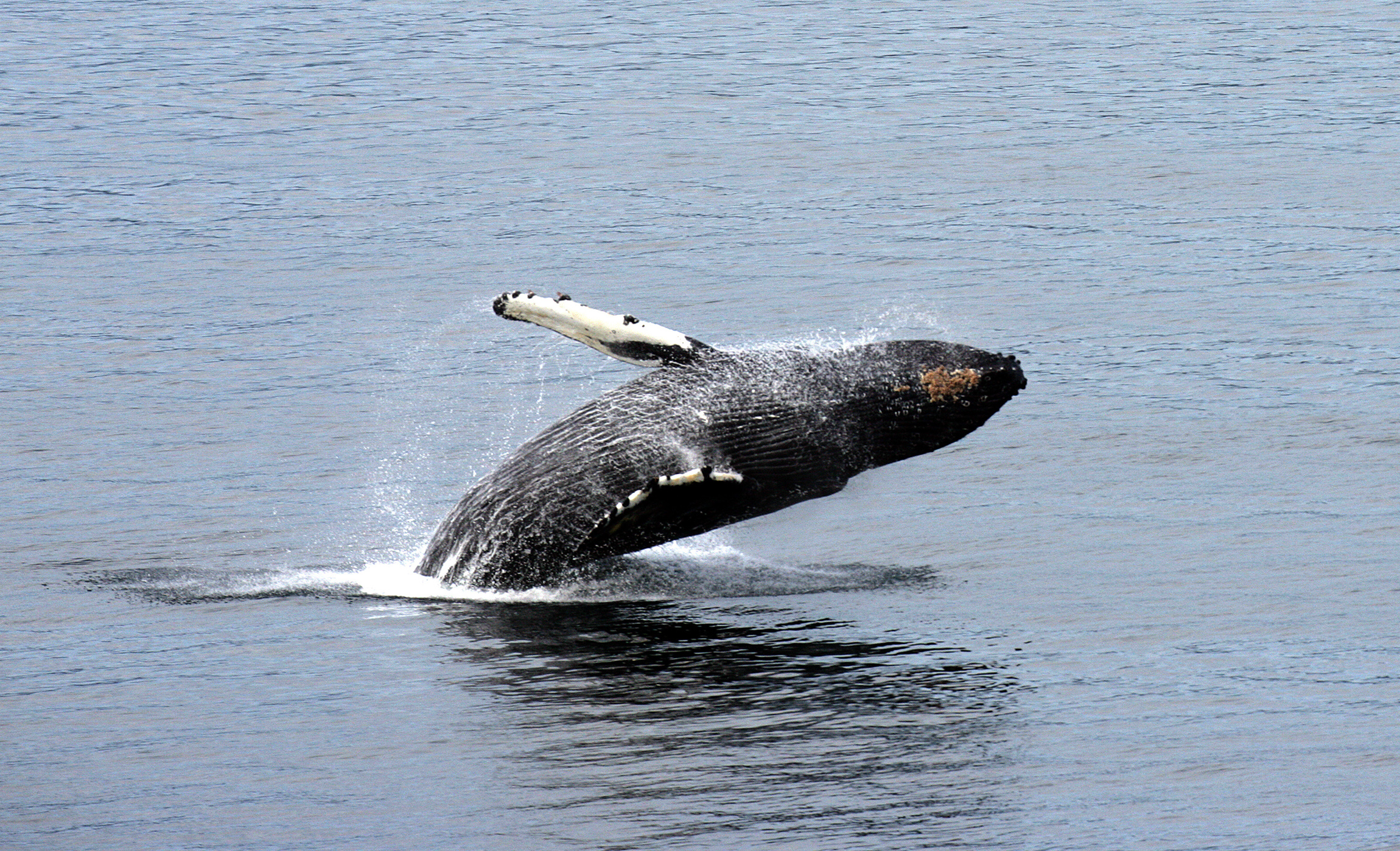
President Obama may be a stalwart in confronting climate change, but his administration said it won’t be bullied over the issue, at least when it comes to removing the humpback whale from the endangered species list.
The National Marine Fisheries Service, a division of the National Oceanic and Atmospheric Administration, decided Wednesday that nine out of 14 populations of the whale no longer required protections under the law despite growing concerns about global warming.
Recommended Stories



The fisheries service in publishing the decision Thursday in the Federal Register said it was confronted repeatedly before the decision by environmental and conservation groups who said it wasn’t taking global warming seriously enough in proposing to take the whales off the list.
“Several commenters asserted that [the service] makes nothing more than a passing reference to climate change and ocean acidification, despite repeatedly recognizing that threats from climate change are likely to increase,” the agency said in explaining its decision in the final rule.
It said one group said the agency had “failed to adequately analyze the threat … and improperly and summarily dismissed these threats in its analysis for the [populations of humpback whales] not proposed to be listed” as endangered.
It added that another commenter said the humpback whales “have not recovered to abundances that could sustain a rapid decline due to expected climate changes in the foreseeable future.”
But the agency said it wasn’t going to speculate on what could happen, warning that it would not be goaded into judging the effects of global warming above what the science shows.
“We cannot merely speculate that climate change and ocean acidification contribute significantly to the extinction risk of any humpback whale [populations], but must base our listing determinations on evidence sufficient to indicate that a particular effect is likely to lead to particular biological responses at the species level,” the agency said in its final response to the climate critics.
The agency said it “evaluated the effects of climate change and ocean acidification on each humpback whale [group], as discussed in our proposed rule, but found no basis to conclude they contribute significantly to extinction risk for most [whales], now or in the foreseeable future,” according to the agency.
The agency said that the only evidence for the effect of climate change on the humpback’s food supply is the whales’ move northward to the Arctic. But that is actually a “positive effect” for the species’ survival because it means their range is expanding, the agency said.
The number of humpbacks, which can be found in all major oceans, is increasing, estimated at about 80,000, but below pre-whaling levels of 125,000. Major threats to their survival come mainly from commercial fishing by entanglement in fishing gear, ship strikes, whale watch harassment, habitat impacts and being harvested by countries that prize their meat and blubber.
Agency officials told reporters on a call earlier in the week that the work done in identifying the risks to the whales was adequate, including with regard to climate change. They said they will continue to monitor the whales to judge whether or not any new risks emerge, but the rule stands.
Rep. Rob Bishop, R-Utah, chairman of the House Natural Resource Committee, welcomed the agency’s stance.
But it was a rare instance for the Obama administration sticking to the science, instead of ignoring it, especially when the issue of climate change is involved, according to his office.
“Chairman Bishop applauds [the fisheries service’s] stance that speculative impacts of climate change are not credible in [Endangered Species Act] decisions,” said committee spokeswoman Elise Daniel in an email. “On the other hand, they’ve really put their foot in their mouth on this one.”
“This is a praiseworthy, although rare, moment of lucidity for an administration, but they don’t always base their decisions on science,” Daniel said.
She noted an example from a recent decision by the Interior Department to refuse to remove protections for a bird species, even though it wasn’t sure the bird species was distinct enough to deserve the protections.
“This is the same administration that recently declined a petition to remove the California gnatcatcher from the Endangered Species List because, in part, they expect to be able to detect genetic evolution of the bird at some point in the future,” Daniel said.
On the gnatcatcher, industry groups in California had argued that the coastal species of the bird that was under federal protections was not a sub-species at all, but the same species as the more inland variety that is not protected. But the federal wildlife service didn’t agree because they think the bird is a separate species, which tests conducted sometime in the future will show, as Bishop’s spokeswoman argues.
Federal protections for the bird have made it difficult for housing and commercial developers to build on land along California’s coast near Mexico. The GOP argues that endangered species reviews are too focused on placing new species under federal protections and less involved in removing the protections once it is shown that the protections are no longer required.
