

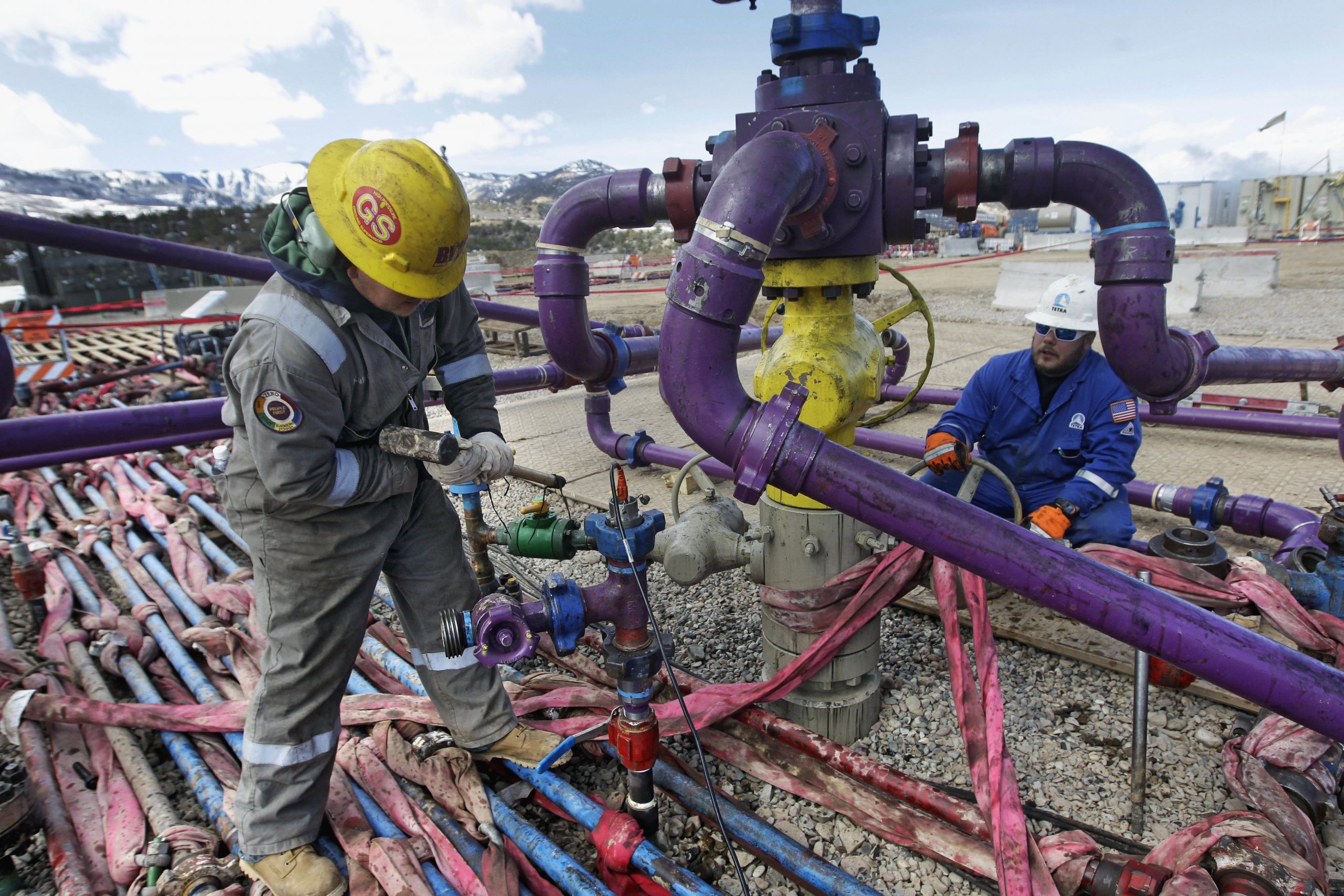
Colorado is becoming ground zero in an environmentalist push to use state ballot initiatives to ban fracking, which is expected to encourage the tactic in other parts of the country.
The push follows a decision by the state’s Supreme Court last week that ruled against two towns imposing their own local bans on the drilling practice. Environmentalists say the court decision won’t stop the push to keep fossil fuels in the ground as part of a climate change agenda. Some conservative groups tend to agree.
Recommended Stories



“Obviously, that was a win for consumers, but I think it will intensify the political process,” said Tom Pyle, director of the conservative American Energy Alliance, which supports fracking as an economic gamechanger. “We are definitely going to see some ballot initiatives.”
The court ruling is spurring environmentalists to take their chances at the ballot box. “The companies are on the ropes” from the low price of oil, Pyle said. “If I am the environmentalists, which are flush with cash, I would put my foot on the gas.”
Colorado “is kind of ground zero” on the use of the ballot initiatives to stop fracking, Pyle said.
A ballot initiative, or citizens initiative, uses a petition process to force a vote on an issue by voters, instead of by a state legislature.
About half the states allow for the use of ballot initiatives. The groups Coloradans Resisting Extreme Energy Development, or CREED, and Food and Water Watch are leading the ballot initiative effort in the state, trying to get a referendum on a ban on the November ballot.
The oil and gas industry has vowed to block it.
At the same time, environmentalists will continue their push to stop fracking at the local level without a statewide ban, dubbing it “local control.”
The Colorado court ruled against local governments taking actions to ban fracking, which some states, including Texas and Ohio, have also blocked.
The “fight for local authority to limit fracking has yielded mixed results,” said Environment America, a federation of environmental groups opposing fracking. The group says state legislatures and courts in Texas, Ohio, North Carolina and now Colorado sided with the oil and gas industry by pre-empting local laws, while in Florida a state Senate committee “narrowly defeated” a measure to block all local bans on fracking.
Rachel Richardson, director of Environment America’s Stop Drilling campaign, says the “local control debate” was spurred in the town of Denton, Texas, which moved to Florida and North Carolina, where towns were enforcing their own bans.
Although she was disappointed by the court’s action in Colorado, she is optimistic the fight will continue in other states.
“I don’t think that one state court’s decision will set precedent for how other states will act,” Richardson said.
“There’s a lot of activism in Florida right now,” she said, with renewed movement in Maryland, which has instituted a temporary moratorium on fracking. “Given all the fracking impacts … the only responsible solution is to ban it completely,” she said. “We’re working across the country to build a local control effort.”
“More and more communities are becoming concerned with fracking,” with the practice being used quite literally in their own backyards, Richardson said. “So you see them passing bans.”
“From earthquakes and ruined infrastructure, to increased air and water pollution, fracking causes local harm,” Richardson said in a statement after the two bans were overturned in Colorado. “Until we ban it altogether, it should be subject to local control.”
