

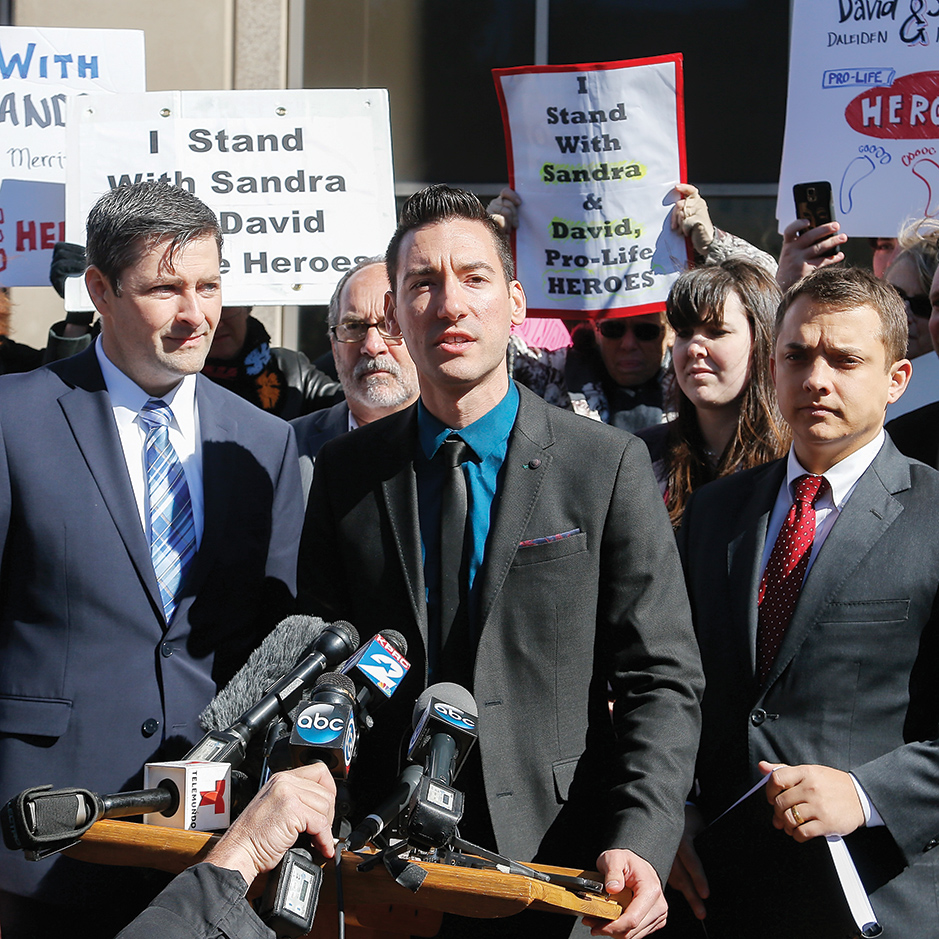
On March 28 California attorney general Xavier Becerra threw the book at anti-abortion activists David Daleiden and Sandra Merritt. The penal code book, that is. Becerra’s office charged the pair, famous for their undercover Planned Parenthood recordings, with 14 felony violations of California Penal Code Section 632, which forbids recording confidential private communications, plus a single count of criminal conspiracy. If the pair are convicted, each could wind up serving around 15 years in prison and paying close to $40,000 in fines.
There is much to be observed about this move on the part of Becerra, a former Democratic congressman from Los Angeles who was appointed to the state’s top law enforcement post after its previous Democratic occupant, Kamala Harris—who had begun the criminal investigation of Daleiden and Merritt—was elected to the U.S. Senate. But one of the most salient observations is this: Becerra is one lucky prosecutor. Although nearly all states have anti-eavesdropping laws on their books that bar such devices as recorders and hidden cameras placed by third parties, in most of those states and in the District of Columbia people are free to record their own conversations with others without obtaining consent. California is one of only eleven states with a “two-party” anti-recording law. California requires “all parties to a confidential communication” to consent before the conversation can be filmed or recorded.
Real journalism.Trusted by millions.
Unlimited access to in-depth reporting, expert analysis, and the stories that shape our country.
Already a member? Log in
