

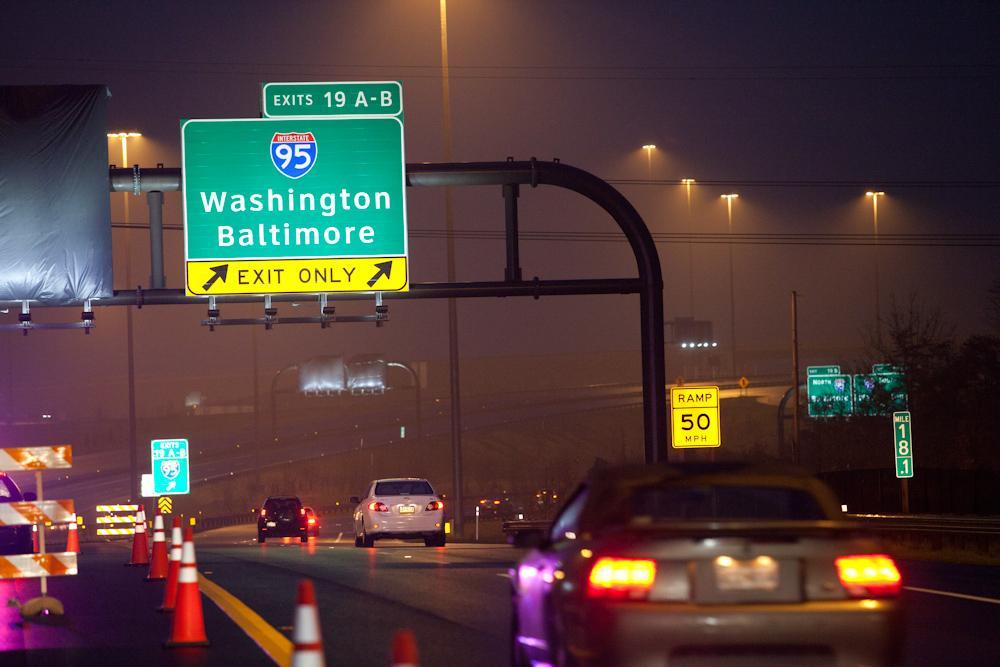
More than 20,000 cars zoom down the new $2.5 billion Intercounty Connector every day, and the zooming is driving its neighbors crazy.
“There are mornings it honestly sounds like an airplane is taking off from the neighborhood,” said Silver Spring resident Ellen Slepitza. “I think everybody realizes when a road goes in you’re going to have noise. But nobody was ready for this kind of noise. And I hate to say it, but I think the government would just like to ignore it.”
Dick Bartlett’s property in Fairland Estates backs up to a sound barrier that’s supposed to deaden ICC noise. But the wall doesn’t help, he said.
| For turtles, there’s help |
| Human neighbors might be upset with Maryland’s InterCounty Connector, but there’s good reason to believe the turtles next door are happy. |
| State officials spent $300,000 to relocate more than 900 turtles that lived near the ICC and put transponders on 100 of them. |
| The state put up special netting to keep turtles away from construction and built special tunnels turtles and deer can use to pass under the highway. |
| The turtle accommodations were part of $100 million spent on “environmental mitigation” — measures taken after environmental lawsuits held up the project in courts for years. |
“It’s created a wind tunnel. The noise is horrible,” he said. “It’s noisier than what we were told it was going to be.”
At least three separate groups of ICC neighbors have petitioned the state to erect additional sound barriers and other noise fixes to no avail.
“Their attitude seems to be that we have got to suck it up and get used to it,” said John Speakman, who blogs about the noise.
Project officials, following a federal policy, will only install sound walls if the sound in a neighborhood was expected to jump by 10 decibels from previous levels or go higher than 66 decibels — louder than the level of a raised voice from three feet away — based on measurements done before the highway opened, said ICC project spokesman Ray Feldmann.
“It’s done that way so every community is treated fairly,” Feldmann said. “If you come to a meeting and scream and cry and we say, ‘OK, we’ll give you a sound wall’ – it can’t work that way. It has to be based on data and facts, and not anything else, not the average income of the community.”
Feldmann said the state installed 1.4 million square feet of sound wall along the highway and planted hundreds of trees in communities that didn’t qualify for sound walls.
Even if the trees are still young, propped up by metal poles, they’ll help in time, Feldmann said.
But those answers aren’t good enough for those dealing with nightly noise.
“Money was spent to put transmitters on box turtles during the construction of the ICC,” Slepitza said. “There always seems to be money to spend if you’re not a human being.”
