

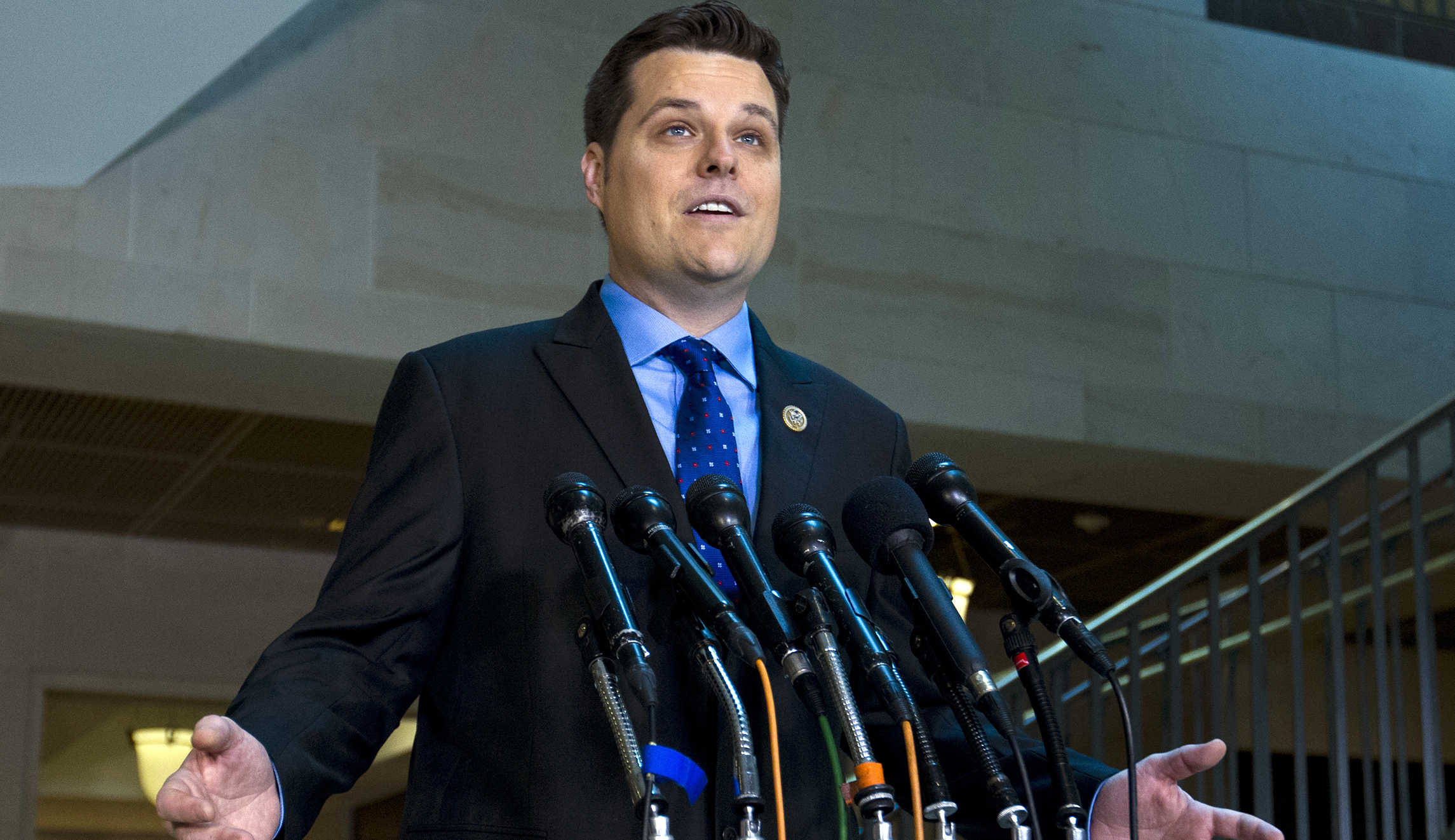
Rep. Matt Gaetz, R-Fla., reintroduced a bill previously proposed five years ago by top Democratic Rep. Adam Schiff that would change the way Foreign Intelligence Surveillance Act judges are picked, shifting the responsibility from being solely choice of the chief justice of the Supreme Court to the appointees chosen by the president followed by Senate confirmation.
Speaking on the House floor Tuesday evening, Gaetz explained the importance of finding “bipartisan solutions to revise the FISA process” following the public release of a Republican memo from the House Intelligence Committee on alleged FISA abuses by the U.S. government to spy on former Trump campaign official Carter Page.
Recommended Stories


“Because I expect Republicans and Democrats to both be in power at some point in the future, we should be looking for bipartisan solutions to revise the FISA process so that what happened to President Trump never happens to another American president,” Gaetz said.
The congressman said that during his search he uncovered Schiff’s 2013 legislation, which, if passed and signed into law, would have given former President Barack Obama the authority to appoint FISA judges.
According to Gaetz, “if it was good enough to give President Obama these powers, it’s good enough to give President Trump these powers.”
He encouraged Schiff to join him in co-sponsoring the his bill, H.R. 5210.
In 2013, Schiff, as a senior member of the House Intelligence Committee, introduced a number of bills to reform the FISA Court to “increase transparency and accountability.” His bill on FISA Court judge appointees had bipartisan support, but never got a vote.
“In light of the significance of the FISA Court opinions, their classified nature and their virtual unreviewability, the American people — through the Senate — should have the opportunity to probe nominees on their Fourth Amendment views and other key matters,” he said of his bill at the time.
This year, as the ranking member of the House Intelligence Committee, Schiff strongly opposed the release of the “misleading” GOP memo and spearheaded the effort to create a counter memo designed to provide rebuttals and context to many of the assertions made in majority party’s document.
The Democratic memo was released over the weekend, with redactions.
Schiff has repeatedly drawn the ire of President Trump, who earlier this month said the California Democrat is “desperate to run for higher office” and is “one of the biggest liars and leakers in Washington.”
After the release of Schiff’s memo, Trump called him a “bad guy.”
